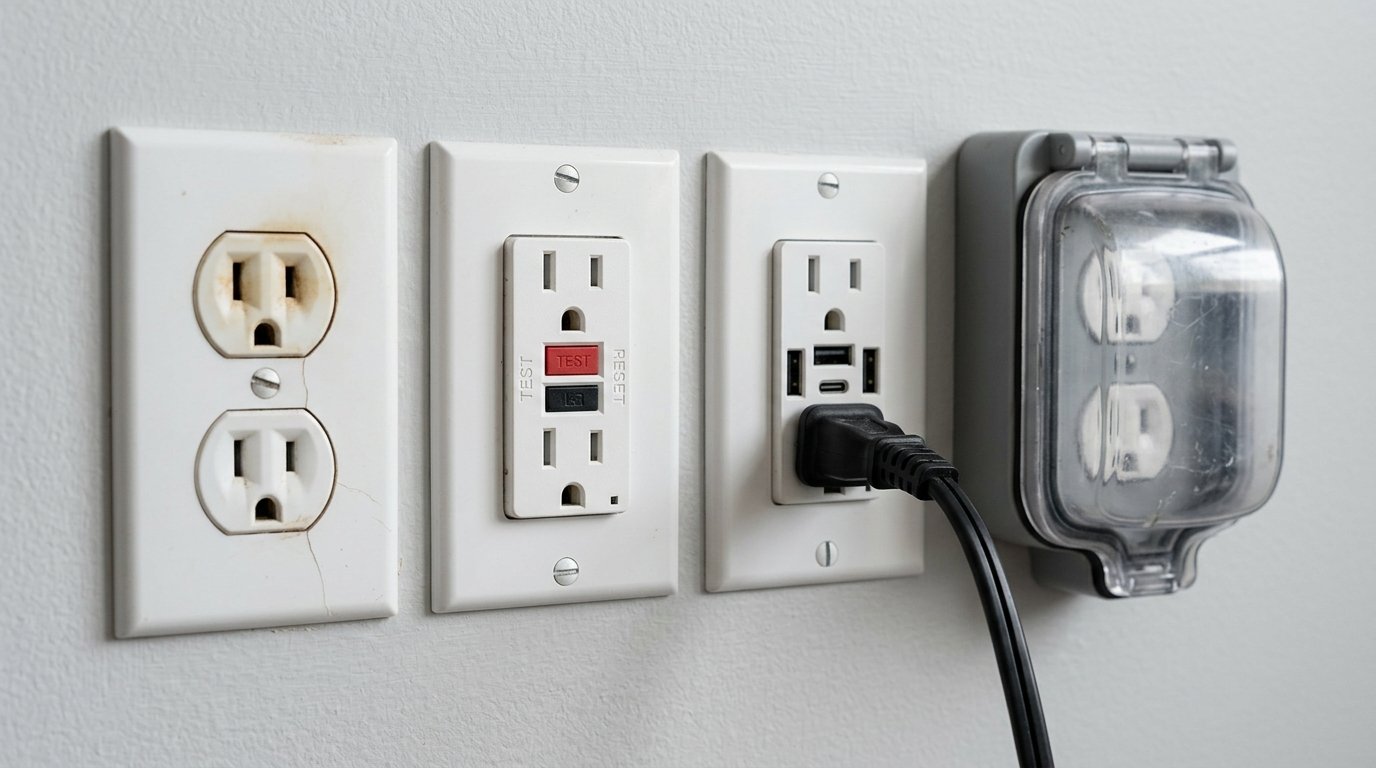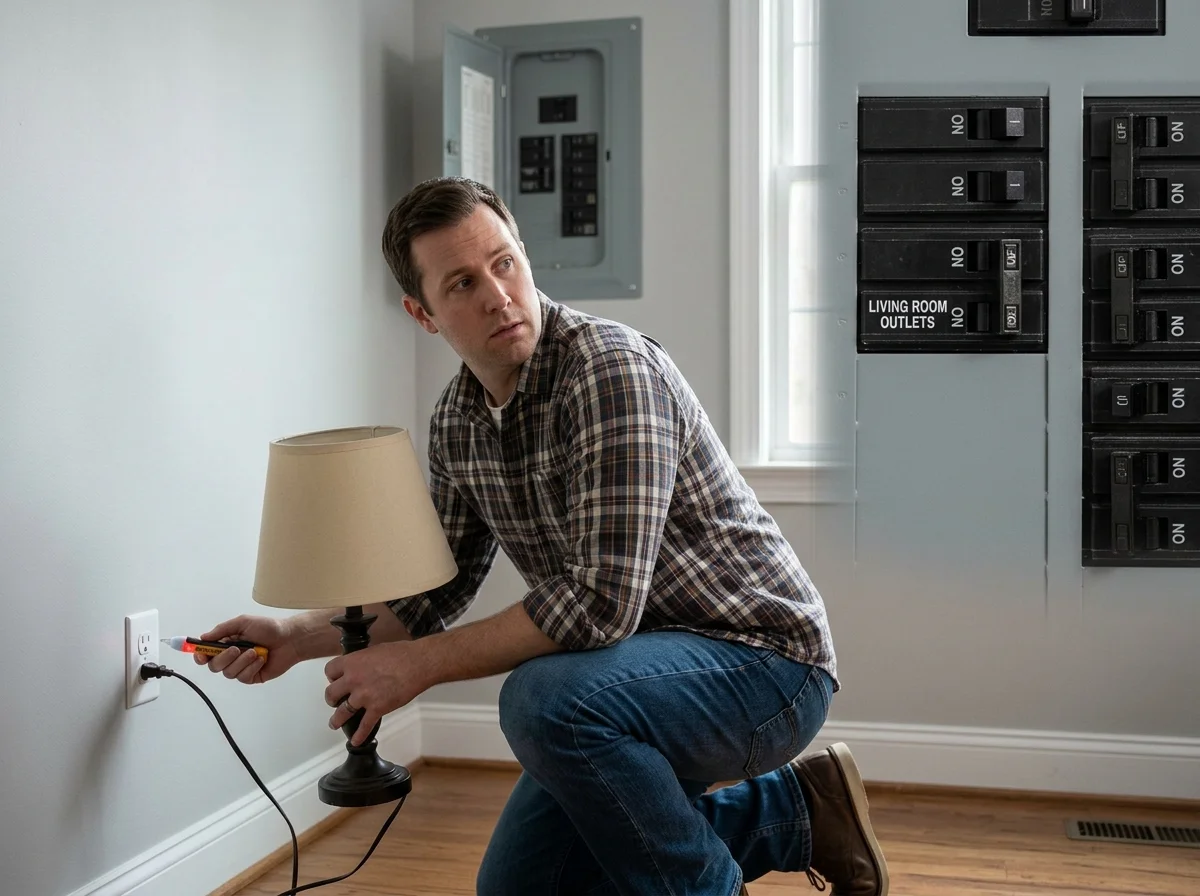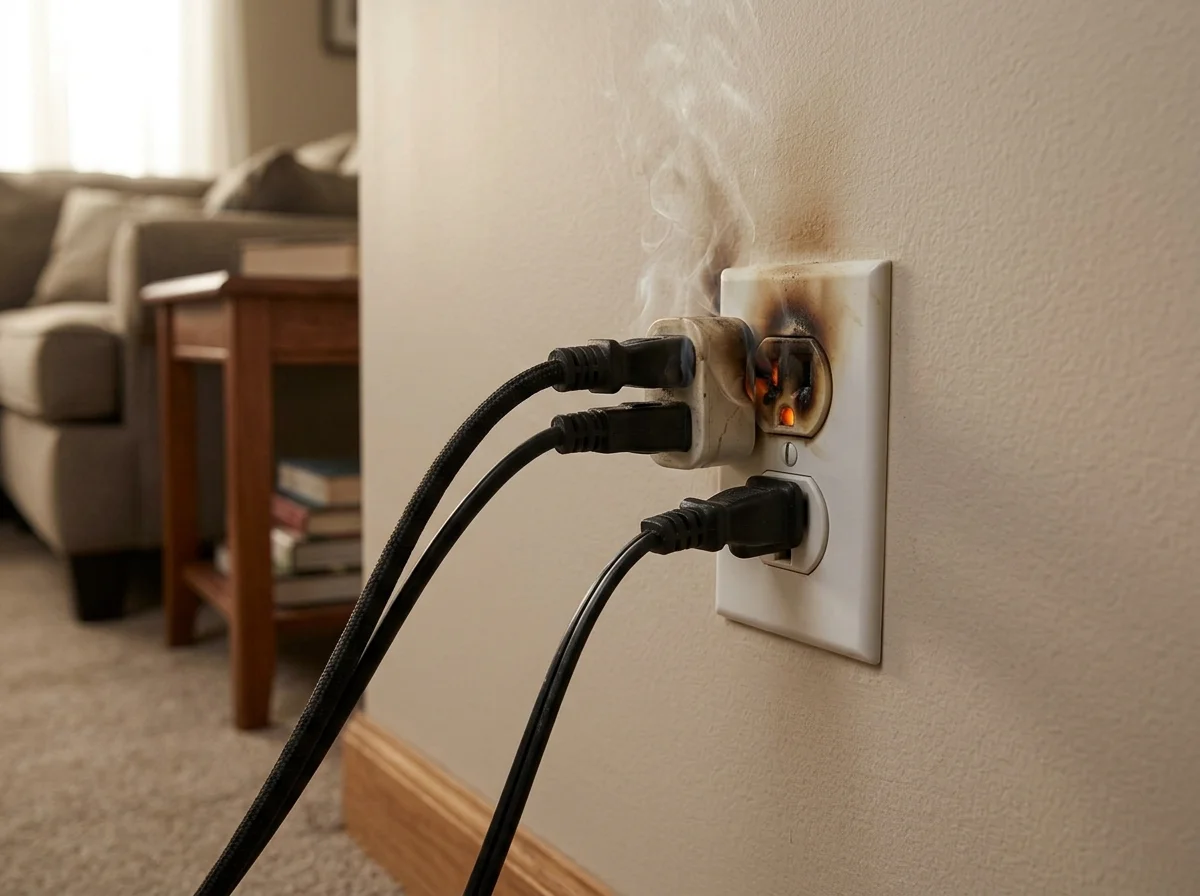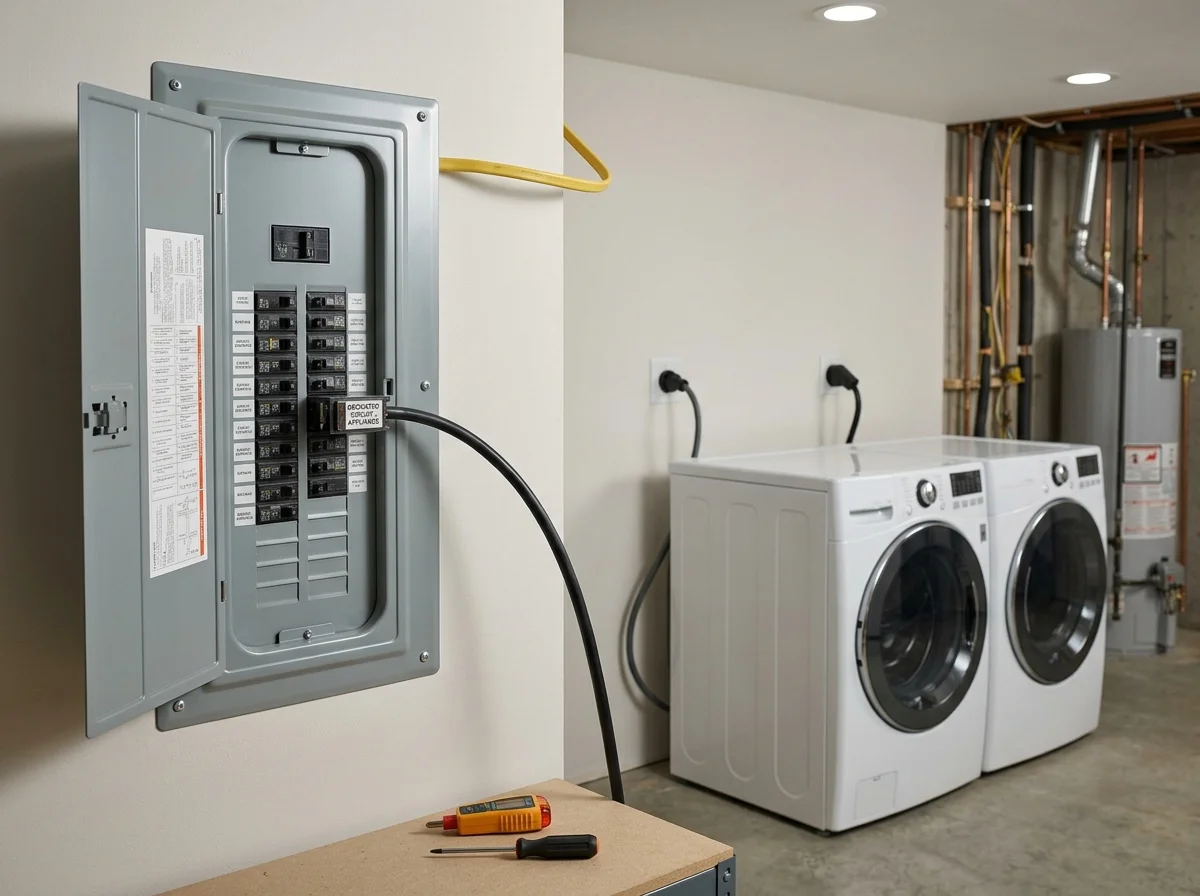
A whole house surge protector guards your home against sudden power spikes, the kind that come from storms, utility switching, bad wiring, or even your own appliances cycling on and off. One bad power surge can wreck your HVAC system, fridge, washer, dryer, computer, smart TV, or garage door opener. This page breaks down what a whole house surge protector actually does, how installation works, what it tends to cost, and why so many Indianapolis homeowners are getting whole home surge protection installed before anything goes wrong.
A lot of people assume a power strip covers them. It doesn’t. A power strip protects one device, maybe two. It can’t do anything for the rest of your house. A whole home surge protector gets installed at, or right next to, your electrical panel, which means it can stop extra voltage before it ever spreads through your wiring. If you’re in Indianapolis, Carmel, Fishers, Noblesville, Westfield, Zionsville, Brownsburg, Plainfield, or one of the nearby areas, this upgrade is worth a serious look. It’s a small cost compared to replacing fried appliances one at a time.
What Is a Whole House Surge Protector?
A whole house surge protector, sometimes called a whole home surge protector or surge protection device, blocks excess voltage from traveling through your home’s wiring. The unit is essentially a whole home surge protection device installed to intercept dangerous voltage before it reaches your circuits, usually right at the main electrical panel. When a surge hits, the device redirects that extra voltage away from your system instead of letting it flow through the walls.
The idea isn’t complicated. Your home runs on a set voltage range, and when that voltage jumps too high, things start to break down. Sometimes it’s instant a dead control board, a burned-out motor. Other times the damage creeps in slowly. Small surges wear down electronics over months, sometimes years, before anything visibly fails.
What Does It Protect?
Kitchen appliances. HVAC equipment. Home office gear. Smart home devices. Entertainment systems. A whole house surge protector covers all of it, including things that were never plugged into a surge strip in the first place.
That matters more now than it used to. Homes are packed with electronics that didn’t exist a decade ago, and even basic appliances run on control boards these days. One damaged board can shut down an entire appliance, and that’s rarely a cheap fix.
Is It the Same as a Power Strip?
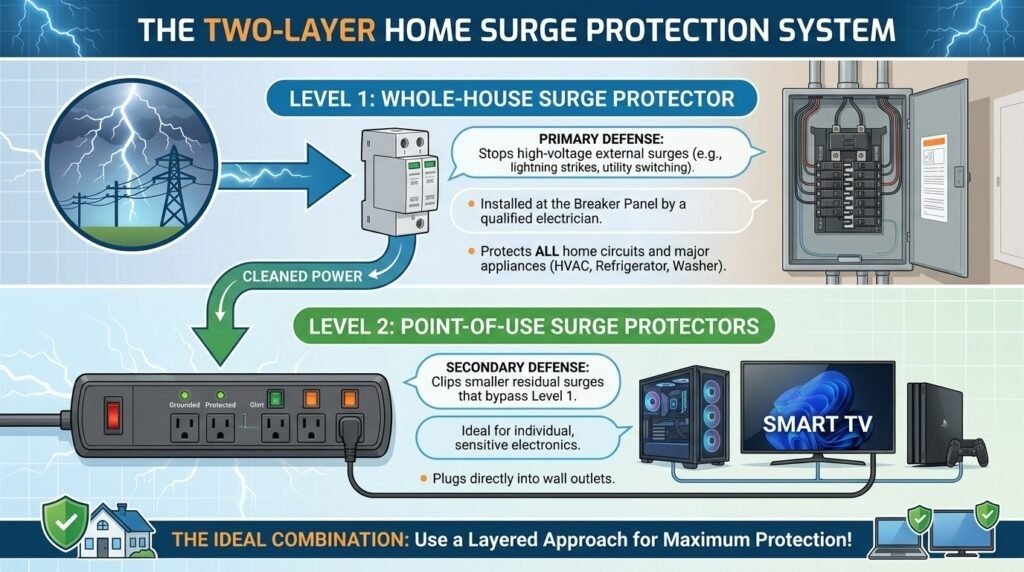
No, not even close. A power strip protects a single outlet. A whole home surge protection device works at the panel level, covering your entire electrical system at once.
You’ll still want good surge strips for computers, TVs, and gaming setups. Think of it like locking your front door and also locking a safe inside. Different jobs, both worth doing. Layered protection just works better than betting on one line of defense.
Why Do Indianapolis Homes Need Whole House Surge Protection?
Storms roll through Indianapolis. Utility lines get worked on. Grids shift load around during peak seasons. Any of that can trigger a power surge, and a surge doesn’t have to be dramatic to cause real damage. Even a small spike wears down the sensitive parts inside your devices.
Here’s what most homeowners don’t realize: the damage isn’t always visible right away. Your TV might still turn on. Your HVAC might still run fine, for now. But the components inside can weaken with every hit, and eventually something gives out for good.
Common Causes of Power Surges
Lightning gets blamed first, and sometimes it deserves it. But plenty of surges start inside your own home. Utility switching, downed lines, faulty wiring, and yes, even your own appliances.
Air conditioners. Refrigerators. Sump pumps. Dryers. All of these cycle on and off constantly, and each cycle can send a small surge through your electrical panel. None of them feel dangerous in the moment. Add them up over a few years, though, and that’s how electronics quietly die early.
Who Should Consider Surge Protection?
Own expensive appliances? Smart devices? Run a home office? Any of that puts you in the “should probably get this” category. If you’ve already lost an appliance to a surge, that’s not a coincidence worth ignoring.
Home surge protection isn’t only for people who’ve already had a scare. It’s cheap insurance for everyone else too, especially older electrical panels that haven’t been checked in years. Rinder Electric can inspect your setup through its electrical panel services and help you decide what actually makes sense for your house.
How Does Whole House Surge Protector Installation Work?
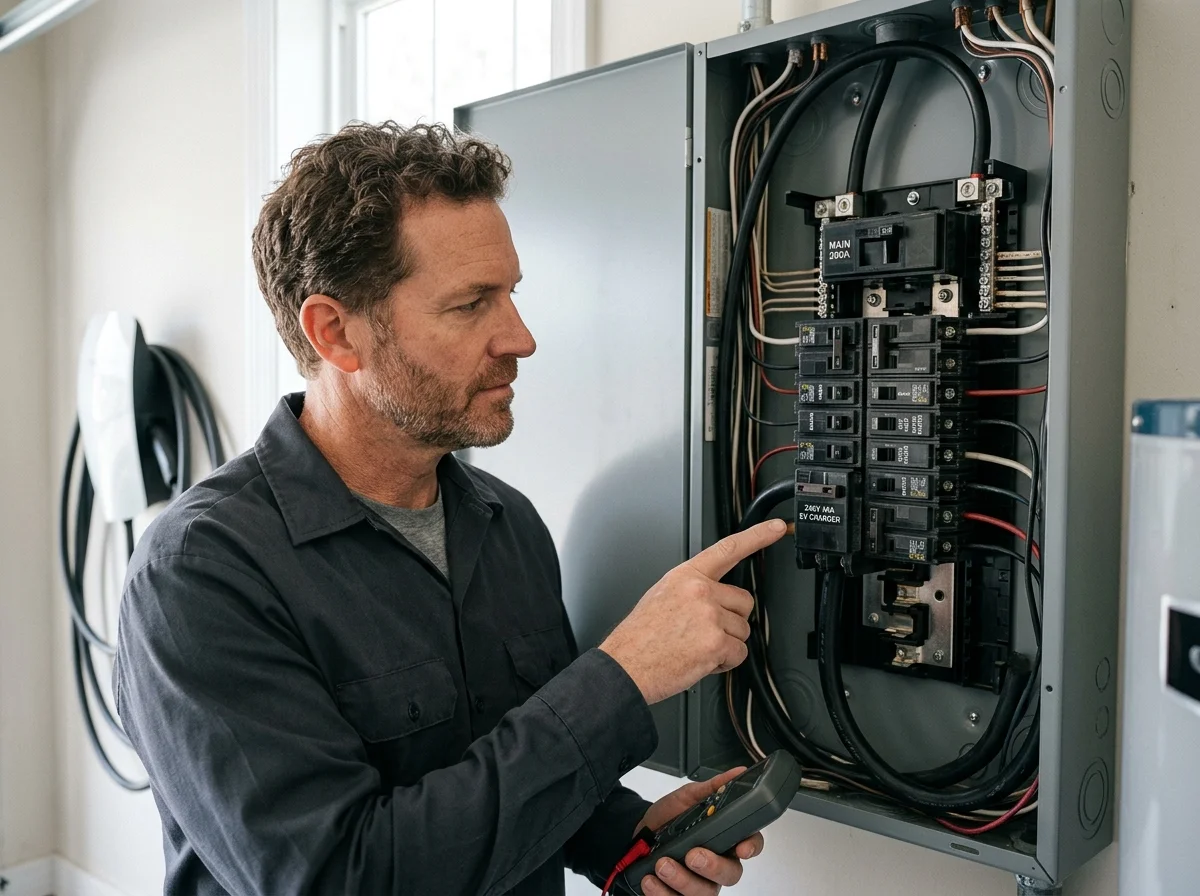
Good surge protection installation always starts the same way: at the panel. An electrician checks the panel itself, the grounding, the available space, and how your service is set up. From there, the right surge protection device gets chosen, installed, and tested.
This isn’t a weekend project you guess your way through. It touches your main electrical system directly, and getting it wrong can create real safety risks, or just leave you with a device that doesn’t protect anything at all. A licensed electrician should handle surge protector installation. No exceptions here.
Step 1: Electrical Panel Check
First, the panel gets inspected. Type, age, condition, available breaker space, anything overloaded or unsafe.
This step isn’t optional. The surge protector’s performance depends entirely on your panel and grounding system. Weak grounding means weak protection, no matter how good the device is. If something’s off with the panel, it gets addressed first. Worth scheduling a full electrical inspection if it’s been a while since your last one.
Step 2: Device Selection
Not all surge protection devices are built the same, and grabbing the cheapest option off a shelf isn’t a real strategy. Different homes, different panels, different protection levels. The device needs to actually match the house.
Bigger homes with more electronics, or newer smart home systems, usually need something stronger. This is where experience shows. A rushed decision here leaves gaps you won’t notice until something breaks down the road.
Step 3: Installation and Testing
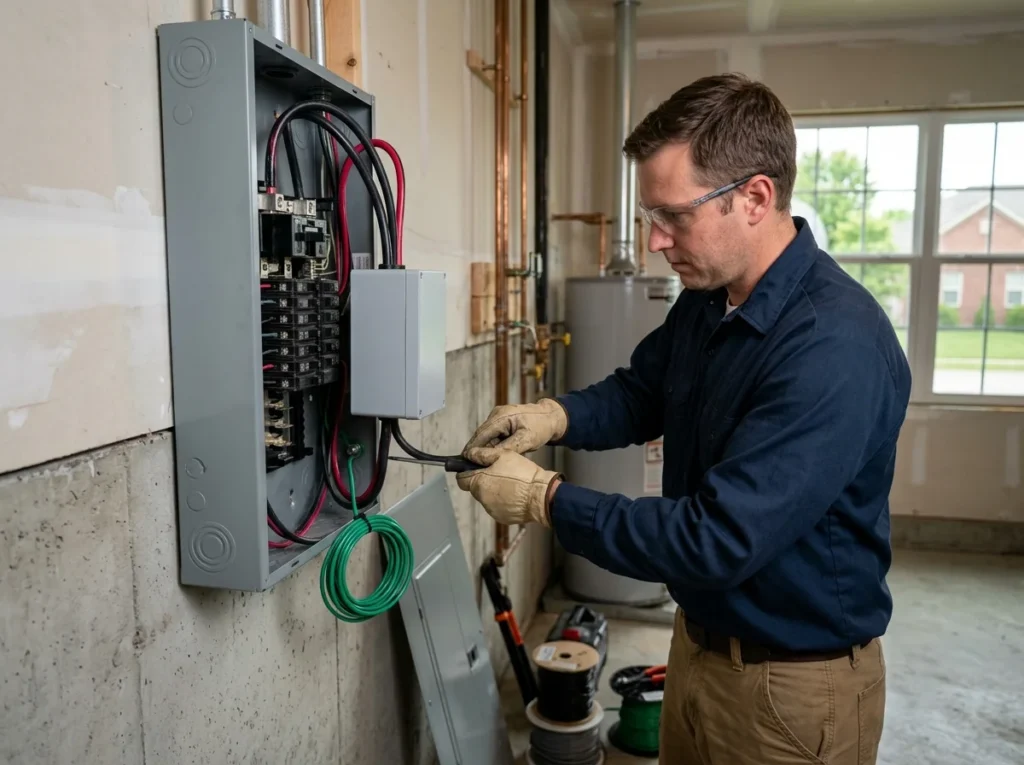
The unit typically goes in at or near the main panel. Once it’s connected, the electrician checks everything and confirms it’s working. Most units include an indicator light for exactly this reason.
Skipping the testing step isn’t an option. It needs to be seated properly, wired correctly, and verified before the job is considered done. A good electrician also explains what that indicator light means, so you’ll know later if the device needs service.
What Type of Surge Protector Does a Home Need?
Most homes end up with a Type 1 or Type 2 surge protector installed at the panel. A Type 3 device is really just a point-of-use protector, the power strip category. Each one plays a different role in the system.
You don’t need to memorize electrical code to get this right. You just need someone who already has. A licensed electrician can match the device type to your panel and your home’s actual needs. Whether you call it an electrical panel surge protector, a panel surge protector, or a breaker panel surge protector, it’s doing the same essential job: protecting everything downstream of your main panel.
Type 1 Surge Protector
A Type 1 surge protector sits on the line side of your electrical service, catching surges from outside before they ever reach your home’s main system. It’s a strong first layer, and some homes genuinely need that extra buffer.
Not every setup calls for it, though. Panel type, service equipment, and local code all factor in, which is exactly why the inspection step matters so much. Don’t buy based on a label without knowing what your home actually requires first.
Type 2 Surge Protector
A Type 2 surge protector installs at or near the breaker panel, and it’s the more common choice for residential surge protection, honestly one of the most popular residential surge protector picks in this market. It handles surges coming from outside the home and ones generated internally.
For a lot of Indianapolis homes, Type 2 is the practical, sensible option. A solid main layer that pairs well with plug-in surge strips for anything especially sensitive. Together, that combination covers most of what a household actually deals with day to day.
How Much Does a Whole House Surge Protector Cost?
Whole house surge protector cost depends on the device itself, your panel setup, labor, permits, and whatever upgrades might be needed first. Some jobs are quick. Others take more work before installation can even happen safely. A real quote beats a guess every time.
Everyone wants a straight number when they search this, and that’s fair. But the cheapest installer isn’t automatically the best one, especially if your panel is old, cramped, or poorly grounded to begin with.
What Affects the Price?
Device quality plays a role. Higher-rated units cost more, usually for good reason. Panel access matters too. A panel with enough room, in decent shape, makes for an easier job than one that’s crowded or outdated.
Grounding affects the price as well. Surge protection only works if there’s a safe path for that extra voltage to travel. If grounding issues exist, those often need fixing first, both for your safety and so the surge device can actually do its job right.
Is It Worth the Cost?
For most homes, yes. The cost usually comes out far cheaper than replacing a fried HVAC board, refrigerator, computer, or smart appliance down the line. It’s not a magic shield, but it is smart risk management.
No surge protector guarantees full protection from everything. A direct lightning strike can still cause damage no device fully stops. Still, a good one meaningfully lowers your risk from the surges that actually happen most often, and that alone is worth something.
When Should You Install a Whole House Surge Protector?
Before the damage happens. That’s really the whole answer. Waiting until after a surge fries something puts you in the wrong order entirely, since once an appliance is gone, no amount of protection brings it back.
This upgrade fits naturally into panel work, home renovations, or new appliance installs. It also makes sense if you run a home office or a house full of smart devices. More devices simply means more that’s actually at risk.
Signs Your Home May Need Surge Protection
Flickering lights. Breakers tripping more than they should. A recent appliance failure. Visible wear on the panel. Any one of these is worth paying attention to, and none of them should get brushed off for long.
If your home runs expensive electronics, it’s worth a look regardless of age. Older panel? Get it checked soon. Rinder Electric also handles electrical repairs directly if you’re already seeing warning signs like these around the house.
Best Time to Add It
Right alongside electrical panel work, honestly. Or during a remodel, an inspection, or a wiring project already in progress, so the electrician can check related components in the same visit.
If wiring and rewiring is already on your list, ask about surge protection while the crew is already there. It’s easier to plan for upfront, and it usually saves you from paying for a separate visit down the road.
Why Choose Rinder Electric for Surge Protector Installation?
Rinder Electric handles safe, practical electrical work across Indianapolis and the surrounding areas. Whole house surge protector installation isn’t just bolting a device onto your panel. It’s checking the panel first, choosing the right unit, and installing everything the right way from the start.
That’s where an actual Indianapolis electrician earns their keep. The surge protector has to tie into your electrical system correctly. If there’s a problem with the panel, it needs to get found first. If the wrong device gets picked, you won’t get the protection you’re actually paying for.
Local Electrical Service
Rinder Electric serves Indianapolis along with Carmel, Fishers, Noblesville, Westfield, Zionsville, Brownsburg, Plainfield, Lawrence, and other nearby areas. That local focus isn’t just marketing. Homes, panels, and service needs genuinely differ from one area to the next.
Check the full service area to see if your location is covered, or browse the services page if your home needs more than just surge protection. Electrical issues tend to be connected. One problem often points to another one hiding nearby.
Simple Estimate Process
It should be straightforward. You explain what’s going on, the electrician takes a look at your setup, and you get clear next steps. No guessing games, no scare tactics, just straight information.
If your panel is ready to go, the job can move quickly. If it needs work first, that gets explained clearly before anything starts. Use the contact page to schedule service and ask about whole house surge protector installation.
FAQs About Whole House Surge Protectors
Are Whole House Surge Protectors Worth It?
For most homeowners, yes. They lower the risk of damage from surges that can wreck appliances, HVAC systems, and electronics throughout the house. They won’t stop every single surge event; nothing does. But they add a strong first layer of defense. If your home has costly devices or smart systems running through it, this upgrade earns its keep pretty fast.
Can I Install a Whole House Surge Protector Myself?
Not unless you’re qualified to work inside electrical panels. This job touches your main electrical system directly, and a bad install can mean shock risk, fire risk, or a device that just doesn’t work right. It can also void the warranty. Hire a licensed electrician so it gets installed and tested properly the first time around.
Where Is a Whole House Surge Protector Installed?
Usually at or near the main electrical panel, though the exact spot depends on your panel type and the device itself. Some connect through a breaker directly. Others mount close by instead. An electrician checks your setup first and places the device where it can respond fastest when a spike actually hits.
Do I Still Need Power Strips After Whole Home Surge Protection?
Yes, and it’s worth keeping good ones around. Whole home surge protection covers your first layer. Power strips add a second layer right at the outlet, which helps for computers, TVs, gaming systems, routers, and office equipment specifically. Think of it as backup for the stuff you really can’t afford to lose.
Does a Whole House Surge Protector Protect Against Lightning?
It helps with plenty of surge events, including some storm-related ones. But no device on the market promises full protection from a direct lightning strike; that kind of hit is simply too extreme for any surge protector to fully absorb. Even so, it meaningfully cuts your risk from the everyday voltage spikes that are far more common, especially with the storms and utility shifts this area sees.
How Long Does a Whole House Surge Protector Last?
Years, typically, though not forever. Lifespan depends on how much surge activity your home sees, the quality of the device, and your overall electrical system. Most units include an indicator light showing whether protection is still active. If that light changes, that’s your signal to call an electrician, since the device may need service or a full replacement.