
People moving into a home, opening a business, or taking over a commercial lease often ask, what electric company does Indianapolis use? The direct answer is AES Indiana. It is the primary regulated electric utility serving Indianapolis and parts of the surrounding Central Indiana area. AES Indiana provides electricity, manages customer accounts, maintains utility infrastructure, and responds to outages within its assigned service territory.
The part that often causes confusion is the difference between an electric utility and an electrician. AES Indiana supplies power to the property. A licensed electrician works on much of the electrical system inside the home or business. Knowing who handles each type of problem can save time, prevent delays, and help you respond safely when the power goes out.
Who Provides Electricity in Indianapolis?
AES Indiana is the answer for most people asking who provides electricity in Indianapolis. The company provides retail electric service to residential, commercial, and industrial customers in Indianapolis and nearby Central Indiana communities. Its service territory covers more than 500,000 customers.
AES Indiana is responsible for the utility system that delivers electricity to customers in its territory. Its work includes power generation, transmission, distribution, utility meters, service accounts, and outage response.
However, the property address still matters. Electric utilities operate within assigned territories. A property near the edge of Indianapolis or in a nearby community may be served by another utility. The Indiana Utility Regulatory Commission provides an electric service territory map that can be used to check which provider is assigned to an address.
Is AES Indiana the Same as Indianapolis Power & Light?
Yes. AES Indiana is the current brand name for Indianapolis Power & Light Company, often called IPL.
IPL officially announced the change to AES Indiana on February 24, 2021. The company remains Indianapolis Power & Light Company as a legal business entity while operating under the AES Indiana name. Some longtime residents and business owners still use “IPL” in conversation, but new bills, websites, outage tools, and customer materials use AES Indiana.
You may still see the older IPL name on:
- Old property documents
- Electrical drawings
- Equipment labels
- Lease records
- Past utility bills
- Older permits or construction documents
The old name does not mean a different company serves the building. In most cases, IPL and AES Indiana refer to the same electric utility.
Can You Choose a Different Electric Company in Indianapolis?
Most standard customers cannot choose a different company to deliver electricity to the same property.
Electric utilities in Indiana operate within defined service territories. The provider assigned to the address owns or manages the local distribution system used to deliver electricity. That includes the nearby power lines, utility equipment, and service infrastructure.
This is different from shopping for internet service or choosing among several phone companies. Your property’s location usually determines the Indianapolis electric utility that provides service.
You may still have choices involving:
- Energy-saving improvements
- Lighting upgrades
- Backup power
- Building automation
- Electric vehicle charging
- Equipment efficiency
- How your building uses electricity
Those choices involve the building’s electrical system rather than selecting another utility company.
What Does AES Indiana Handle?
AES Indiana handles services connected to the utility account and the delivery of electricity to the property.
Contact the utility for matters such as:
- Starting electric service
- Stopping or transferring service
- Utility billing questions
- Reporting a full power outage
- Reporting a downed power line
- Utility meter concerns
- Utility-owned equipment
- New utility service for construction
- Certain service-capacity changes
- Outdoor lights owned or maintained by the utility
AES Indiana has separate customer service channels for residential customers, businesses, and construction projects. Its official account tools also allow customers to manage billing, energy use, and service requests.
How Do You Start or Transfer Service?
A person moving into an existing property should contact AES Indiana to connect or transfer the utility account.
The utility may request information such as:
- Customer name
- Service address
- Contact information
- Requested start date
- Identity and credit details
- Billing address
AES Indiana currently advises new residential customers to request service several business days before the preferred start date. Business accounts may have different requirements, especially when a deposit, surety bond, new meter, or construction work is involved.
Starting an account does not repair defects inside the property. If power is available at the address but outlets, lights, or equipment do not work, an electrician may need to inspect the building.
What Does an Electrician Handle?
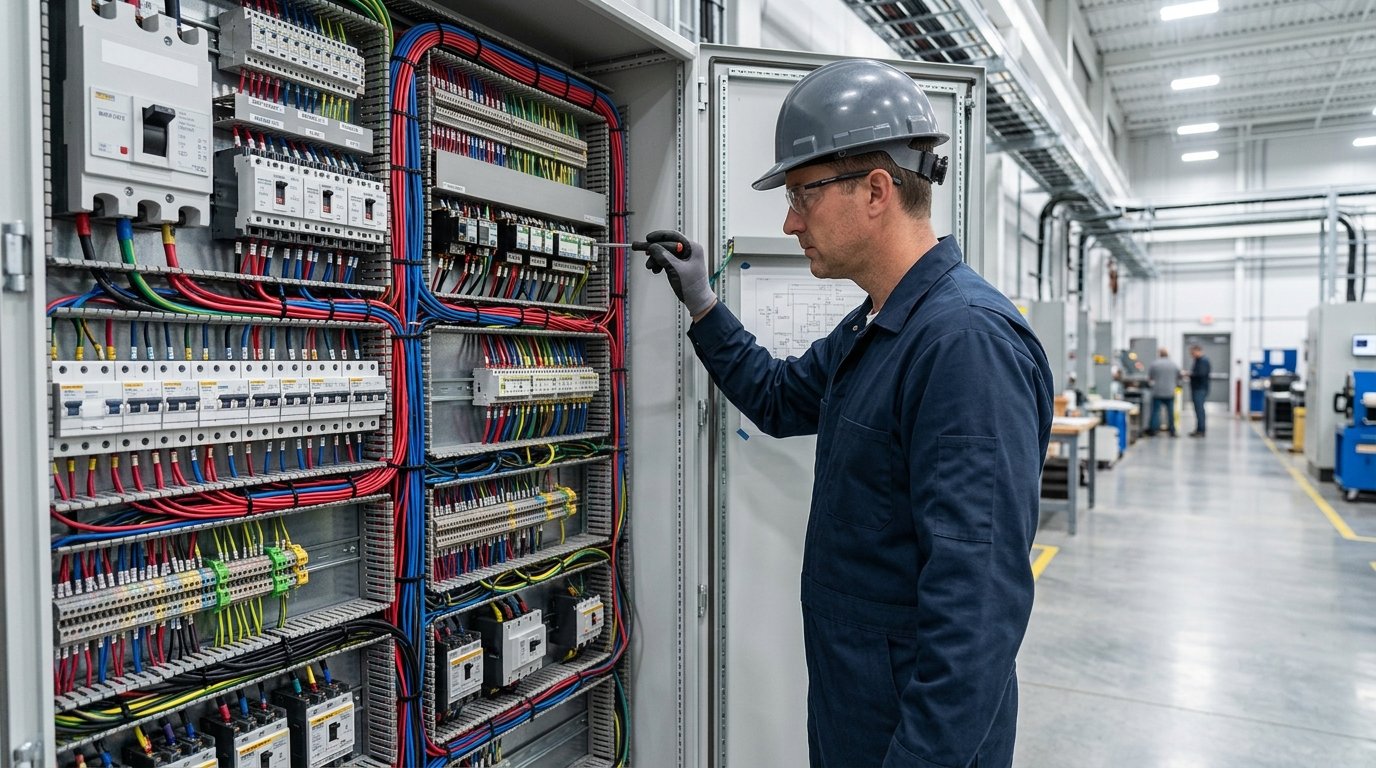
An electrician handles electrical work on the customer’s side of the system. This usually includes wiring, panels, breakers, switches, fixtures, outlets, and circuits inside the property.
Call an electrician for problems such as:
- A breaker that keeps tripping
- Flickering lights inside one building
- Dead outlets
- Burning smells
- Warm switches
- Buzzing panels
- Damaged wiring
- Overloaded circuits
- Lighting failures
- Equipment that loses power
- A panel that cannot support new loads
A utility does not normally repair these building-side problems. Rinder Electric provides professional electrical repairs for faults involving panels, circuits, wiring, lighting, and other parts of the property’s electrical system.
Should You Call AES Indiana or an Electrician?
The easiest way to decide is to look at how much of the area has lost power and where the problem appears to be.
Call AES Indiana When:
- The whole building has lost power
- Nearby properties are also dark
- Streetlights and surrounding buildings have lost power
- A power line is down
- Utility equipment appears damaged
- You need to start, stop, or transfer service
- You have a billing or account issue
- A utility-owned streetlight has failed
AES Indiana advises customers to report outages rather than assuming someone else has already reported the problem. Its outage tools combine customer reports and meter data, but customers should still submit an outage report when their power fails.
Call an Electrician When:
- Only one room has lost power
- Only part of the building is affected
- One breaker keeps tripping
- Lights flicker when equipment starts
- Outlets or switches feel warm
- The panel makes buzzing or crackling sounds
- AES Indiana confirms that utility service is available
- The issue appears to be inside the building
If the cause is unclear, both parties may need to be involved. The utility can inspect its side of the connection, while an electrician checks the property’s wiring and equipment.
What Should You Do During a Power Outage?
Start by checking whether the outage affects only your property or a wider area.
Look outside without approaching utility equipment. Check whether neighboring buildings, parking lot lights, or streetlights still have power. You can also safely check the normal breaker controls without removing the panel cover.
If the neighbors still have power but only one part of your building is dark, a tripped breaker or building-side problem may be responsible. AES Indiana’s outage safety guidance notes that a partial loss of power may require an electrician when the issue is inside the property.
Stay Away From Downed Power Lines
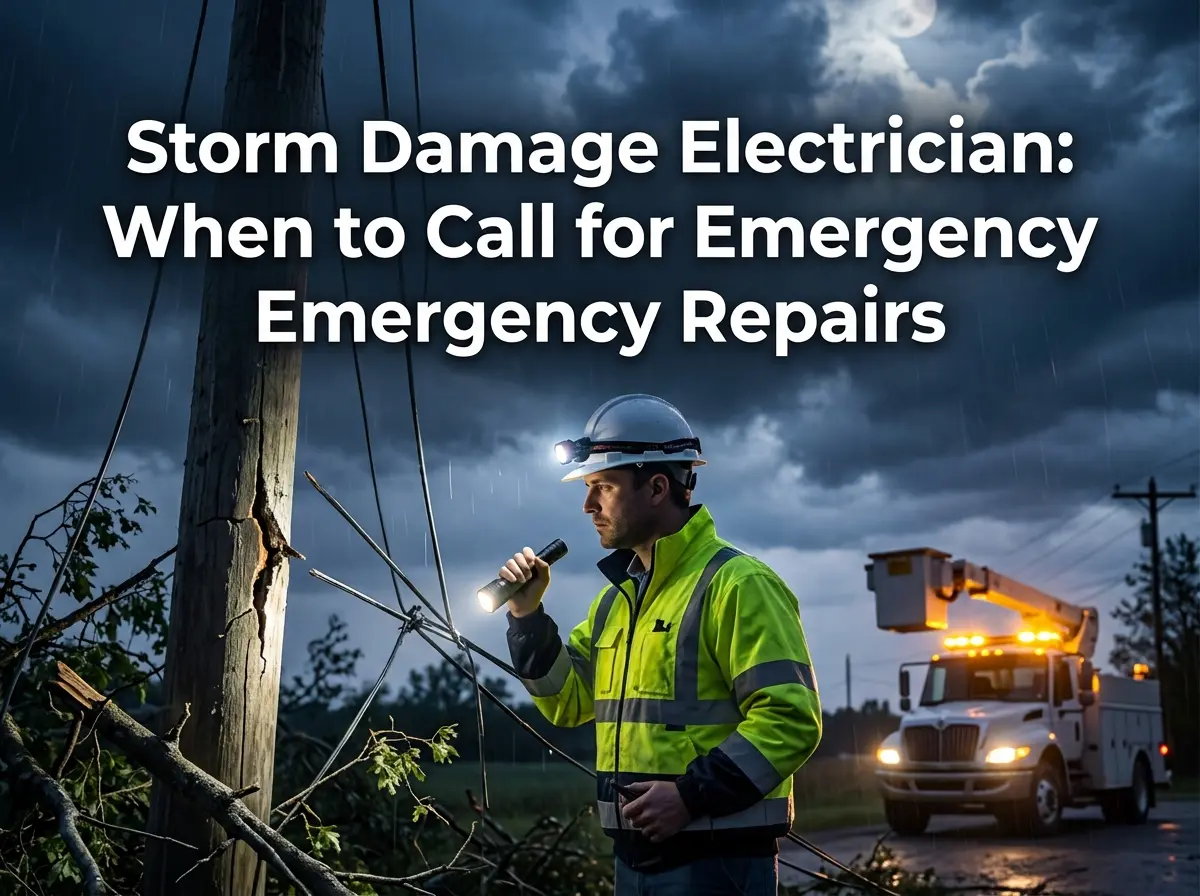
Never approach, touch, or drive across a downed line. Treat every fallen wire as energized.
Keep employees, customers, children, and animals away from the area. Report the line to AES Indiana. Call emergency services when there is an immediate threat to people, fire, or traffic. AES Indiana specifically instructs customers to assume downed lines are live.
What Should Indianapolis Businesses Know About Electric Service?
Commercial properties often need more planning than a basic residential account.
A business may require:
- Higher electrical capacity
- Three-phase service
- More than one meter
- Larger panels
- Dedicated equipment circuits
- Exterior lighting
- Emergency and exit lighting
- EV charging equipment
- Backup power
- Utility coordination for new construction
AES Indiana has separate resources for business customers, builders, and contractors. Its construction process requires customers and project teams to provide service, load, billing, and site information before new utility work can be completed. Missing information can delay the project.
A commercial electrician Indianapolis business owners hire can evaluate the building-side system and help prepare the electrical work needed before utility service is connected or increased.
Rinder Electric’s commercial electrical services include panels, circuits, lighting, repairs, equipment power, and electrical planning for active business spaces.
When Does a Project Need Utility Coordination?
Utility coordination may be needed when a project changes how electricity enters or serves the property.
Examples include:
- New building construction
- A larger electrical service
- A new or relocated meter
- A major panel and service upgrade
- A new commercial facility
- Large equipment additions
- Major increases in electrical load
- Some renewable energy systems
- Utility disconnects and reconnections
AES Indiana publishes an Electric Service and Meter Manual, known as the Goldbook, for contractors, engineers, architects, and others who plan electric service and metering installations on its system.
The utility and electrician have different responsibilities. The Indianapolis electrical contractor designs and installs eligible customer-side work. AES Indiana reviews and completes the utility-side steps required for connection.
Planning should begin early. Waiting until equipment arrives or a tenant is ready to open can lead to delays if the available service is too small.
How Can a Business Check Its Electrical Capacity?
Start with the planned use of the property.
List the equipment, lighting, HVAC systems, chargers, kitchen appliances, machines, workstations, and other loads the business expects to operate. Then have an electrician compare those needs with the existing service, panel, and circuits.
Warning signs that the system may need attention include:
- Regular breaker trips
- Lights dimming when equipment starts
- No room for new circuits
- Extension cords used as permanent wiring
- An old or poorly labeled panel
- Equipment sharing circuits that should be dedicated
- Previous tenants making undocumented changes
A business should complete this review before signing off on a major build-out or purchasing power-heavy equipment.
What If the Property Is Outside Indianapolis?
Do not assume AES Indiana serves every property in the Indianapolis metropolitan area.
Electric service territories cross city and county boundaries. Some nearby addresses may be served by Duke Energy, a municipal utility, or an electric cooperative. The correct provider depends on the exact service address, not only the city name or ZIP code.
You can confirm the provider by:
- Reviewing a recent utility bill
- Asking the property owner or manager
- Checking the meter or utility account records
- Contacting the suspected utility
- Using Indiana’s electric service territory map
Business owners should verify the provider before planning a service upgrade, meter change, or new facility.
What Is the Difference Between an Electric Utility and an Electrical Contractor?
The difference is ownership and responsibility.
The utility generates or purchases electricity, delivers it through the grid, manages accounts, and maintains utility-owned infrastructure. An electrician installs, repairs, and upgrades much of the electrical equipment inside the customer’s property.
A simple way to remember it is:
The utility delivers the power. The electrician makes the building ready to use it safely.
Both may be involved in a large project, but one cannot fully replace the other.
Know Who to Call Before a Problem Happens
The answer to what electric company does Indianapolis use is AES Indiana for most properties within the city. Contact the utility for accounts, outages, downed lines, and utility-side service. Contact a licensed electrician for panels, circuits, wiring, lights, outlets, and other building-side problems.
For commercial properties, early planning matters. A new tenant, equipment upgrade, lighting project, or larger electrical load may require both utility coordination and electrical work inside the building.
Rinder Electric helps Indianapolis-area property owners diagnose electrical problems and plan safe upgrades. Schedule your consultation to discuss the building-side work your home or business needs.
Frequently Asked Questions
What electric company serves Indianapolis?
AES Indiana is the primary electric utility serving Indianapolis and parts of the surrounding Central Indiana area. The exact provider still depends on the property’s assigned service territory.
Is AES Indiana the same as IPL?
Yes. Indianapolis Power & Light began operating under the AES Indiana brand in February 2021. Many residents still use the older IPL name.
Can I choose another electricity provider in Indianapolis?
Most customers cannot choose a different company to deliver power to the same address. Electric utilities operate within assigned service territories, so the provider is usually determined by location.
Should I call AES Indiana when only one room loses power?
Usually, start by safely checking the breaker. If nearby properties still have power and only one room or circuit is affected, the problem may be inside the building and require an electrician.
Who repairs a damaged electrical panel?
A licensed electrician repairs or replaces customer-owned electrical panels. The utility may become involved when the work requires a service disconnect, reconnection, meter change, or utility-side upgrade.
Who should a business call about a new electrical service?
The business may need both AES Indiana and a commercial electrician. The utility handles the service application and utility-side connection. The electrician plans and installs the eligible building-side system.
How do I confirm the utility for a specific address?
Check a recent bill, contact the property owner, ask the utility to verify the service address, or use the Indiana Utility Regulatory Commission’s electric service territory map.
What should I do if I see a downed power line?
Stay far away and assume the line is energized. Keep other people and animals away, report it to the utility, and contact emergency services if anyone is in immediate danger.