You’ve reset it once. Maybe twice. And now you’re standing in front of your breaker box again, wondering why does my circuit breaker keep tripping like this is somehow your fault. It isn’t. Breakers trip for a reason every time, even when that reason isn’t obvious from where you’re standing.
We hear this one a lot around Indianapolis, from 1920s bungalows in Irvington to five-year-old builds out past Fishers. Sometimes it’s nothing much. Sometimes it’s the first sign of something you really don’t want sitting behind your wall unattended. Below is how to tell the difference, what’s safe to check yourself, and when this stops being a DIY afternoon.
What Is a Circuit Breaker Actually Doing When It Trips?
Your breaker’s job is boring on purpose. It watches electricity move through a circuit, and the second something’s off, too much current, current going where it shouldn’t, it cuts the power. That’s it. That’s the whole function.
Picture a bouncer who only has one rule: not too many people at once. The wires in your wall can only carry so much before they start heating up, and heat plus wiring is how houses catch fire. So the breaker trips first. Every single time it goes off, something tripped it. Your job is figuring out what.
What’s Actually Causing the Breaker to Trip?
Three causes show up more than anything else. Two of them you can probably handle. One of them, you really shouldn’t.
Overloaded Circuit — The Usual Suspect
This is the one we see constantly, especially in older Indianapolis homes that weren’t wired with modern appliance loads in mind. Run a microwave, a toaster, and a coffee maker off the same kitchen circuit and watch what happens. Most household circuits max out around 15 or 20 amps. Push past that and the breaker does exactly what it’s supposed to.
Usually the fix is boring too: spread things out across different outlets. If that doesn’t help and the same breaker keeps going no matter what’s plugged in, the circuit itself might be undersized for what you’re asking it to do.
Short Circuit — Not a Weekend Project
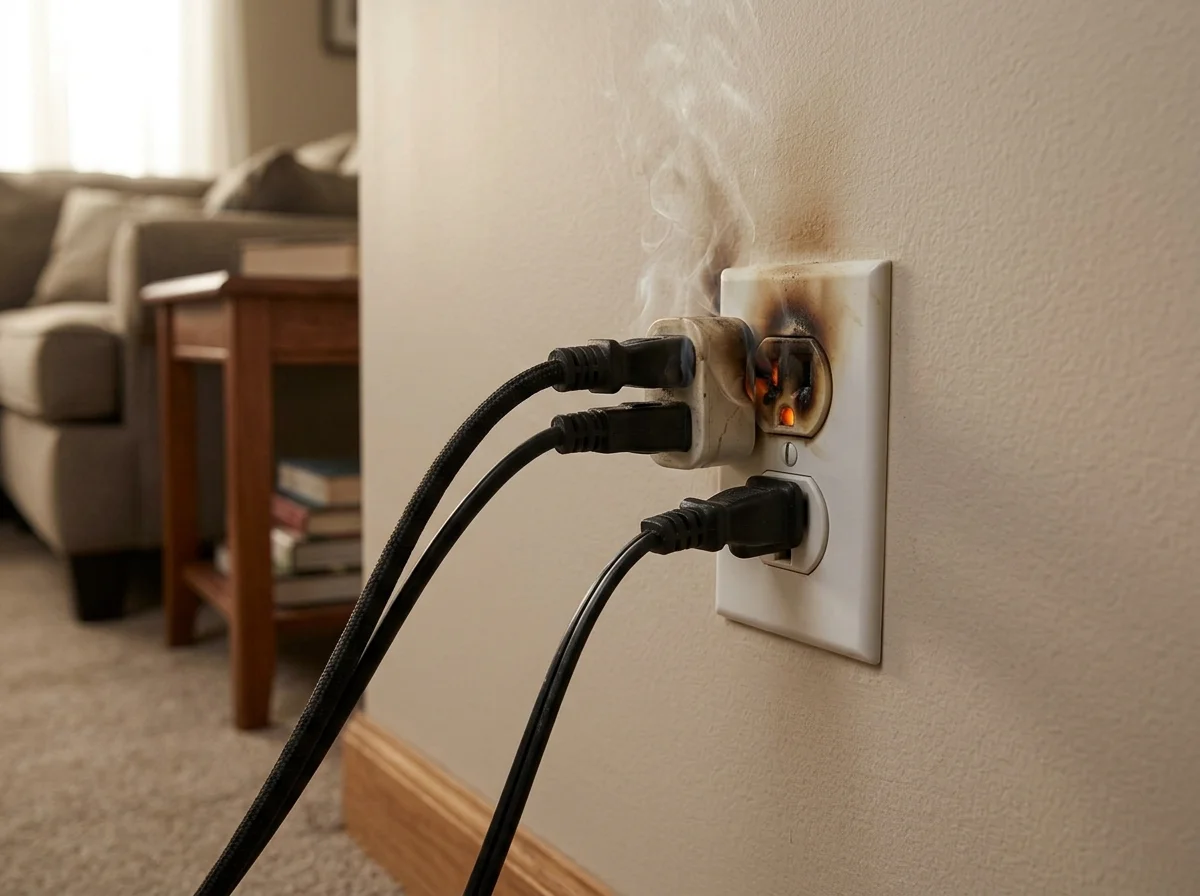
A short happens when a hot wire touches a neutral wire, or another hot wire, and current suddenly has almost nothing standing in its way. It’ll usually trip the breaker instantly. Sometimes there’s a burning smell. Sometimes scorch marks near an outlet. Sometimes a pop.
Here’s the part that matters: don’t keep resetting a breaker that does this. A short circuit is a fire hazard, full stop, and it needs someone who can safely find where the wiring’s actually failing. In older homes, damaged or outdated wiring may require professional wiring and rewiring services to restore safety.
Ground Fault — The One GFCIs Exist For
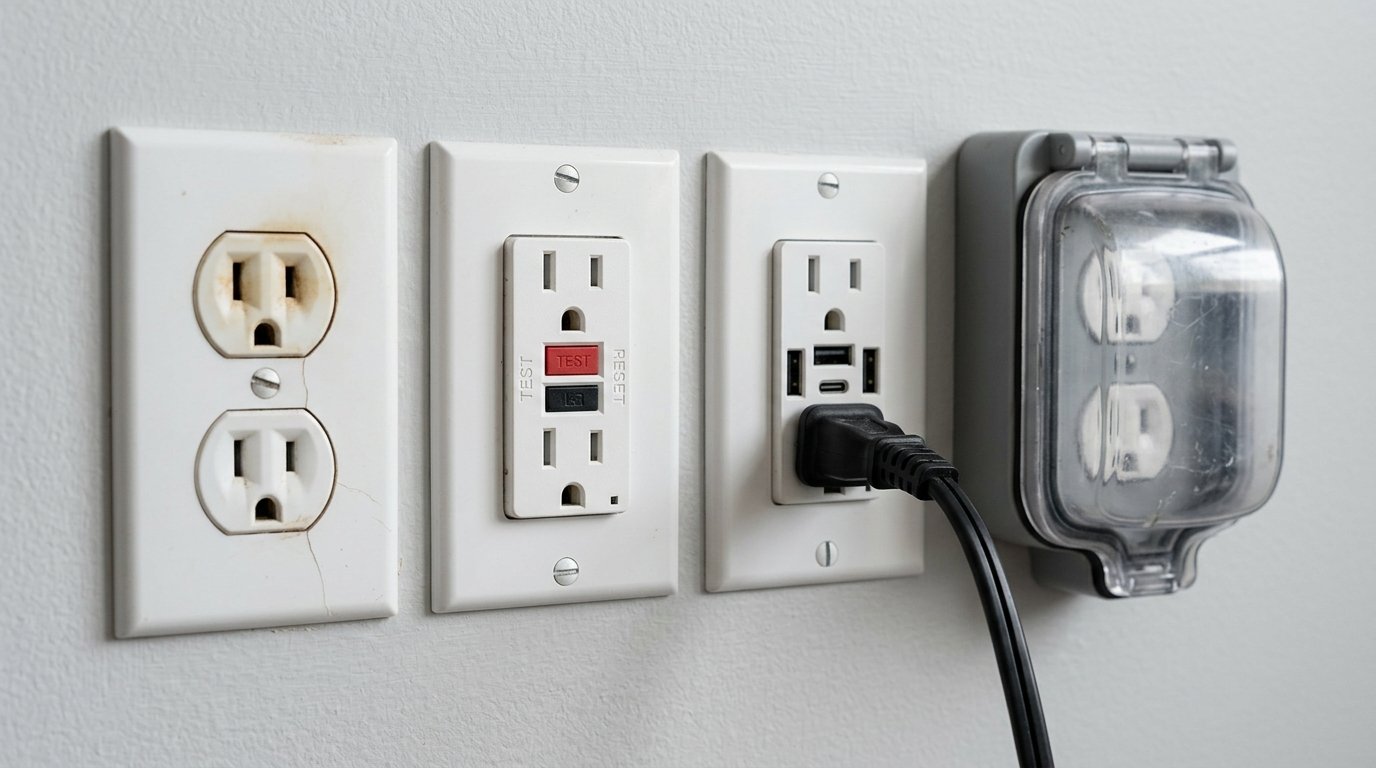
Similar idea to a short, except the hot wire’s touching something grounded instead, an appliance frame, a damp junction box, whatever. This is exactly why kitchens, bathrooms, garages, and anything outdoors are required to run on GFCI protection.
If a GFCI outlet or breaker near water won’t stay reset, that’s not a glitch. That’s the safety feature doing its job and telling you something’s wrong nearby.
Beyond the Big Three: Other Reasons Breakers Trip
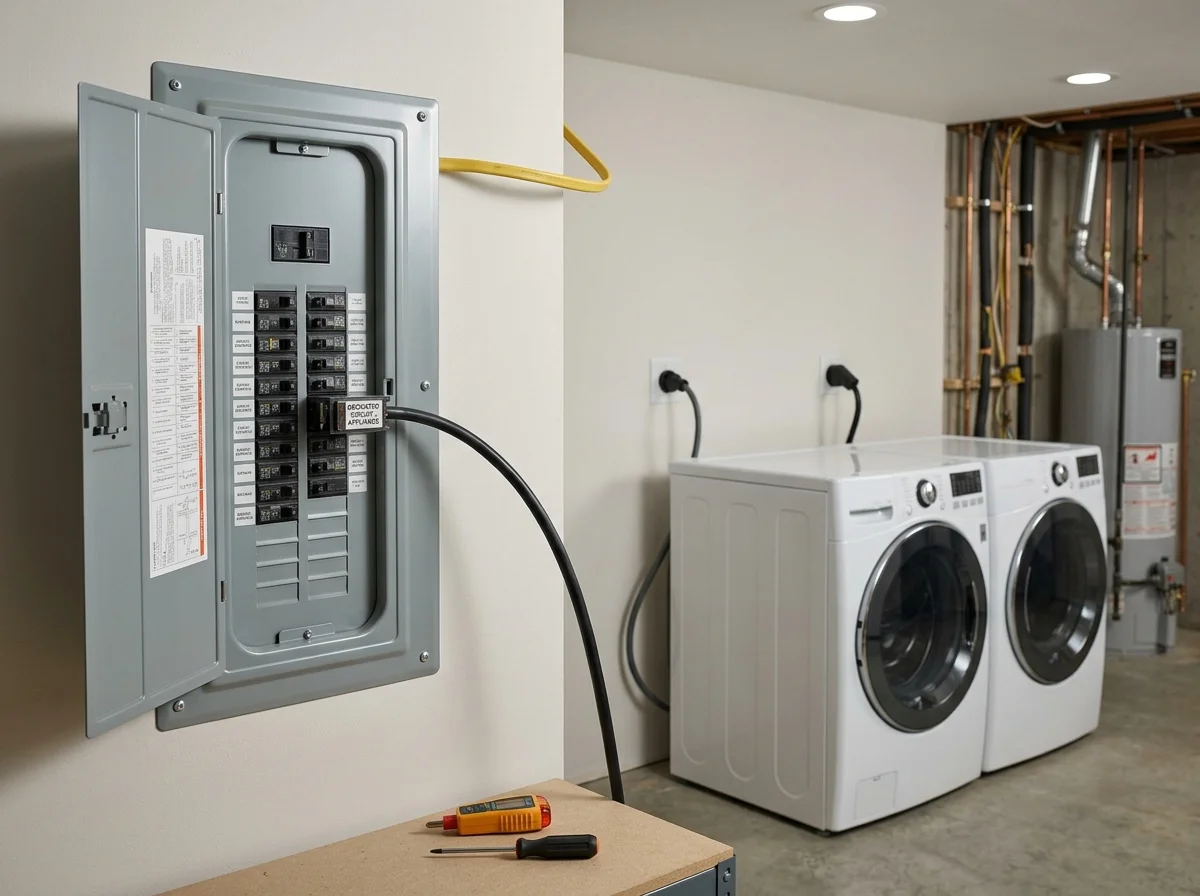
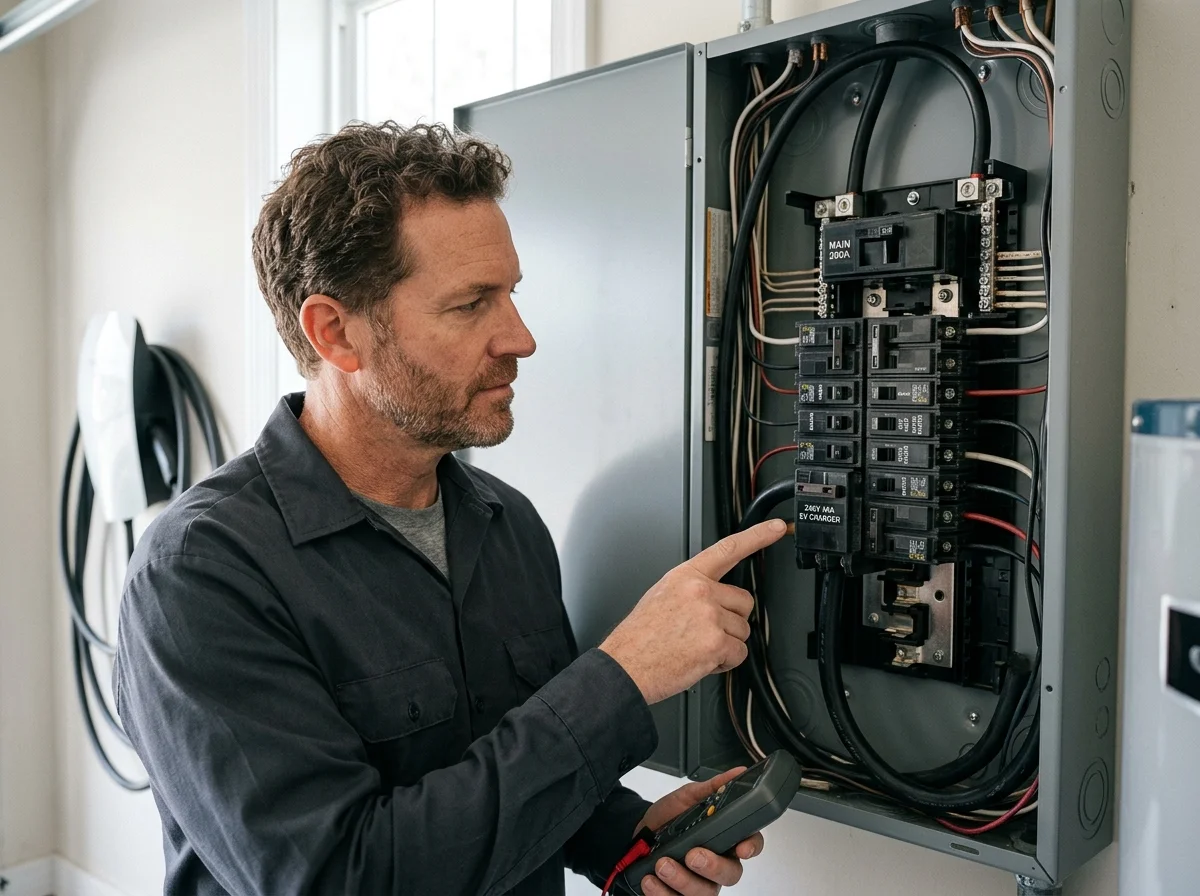
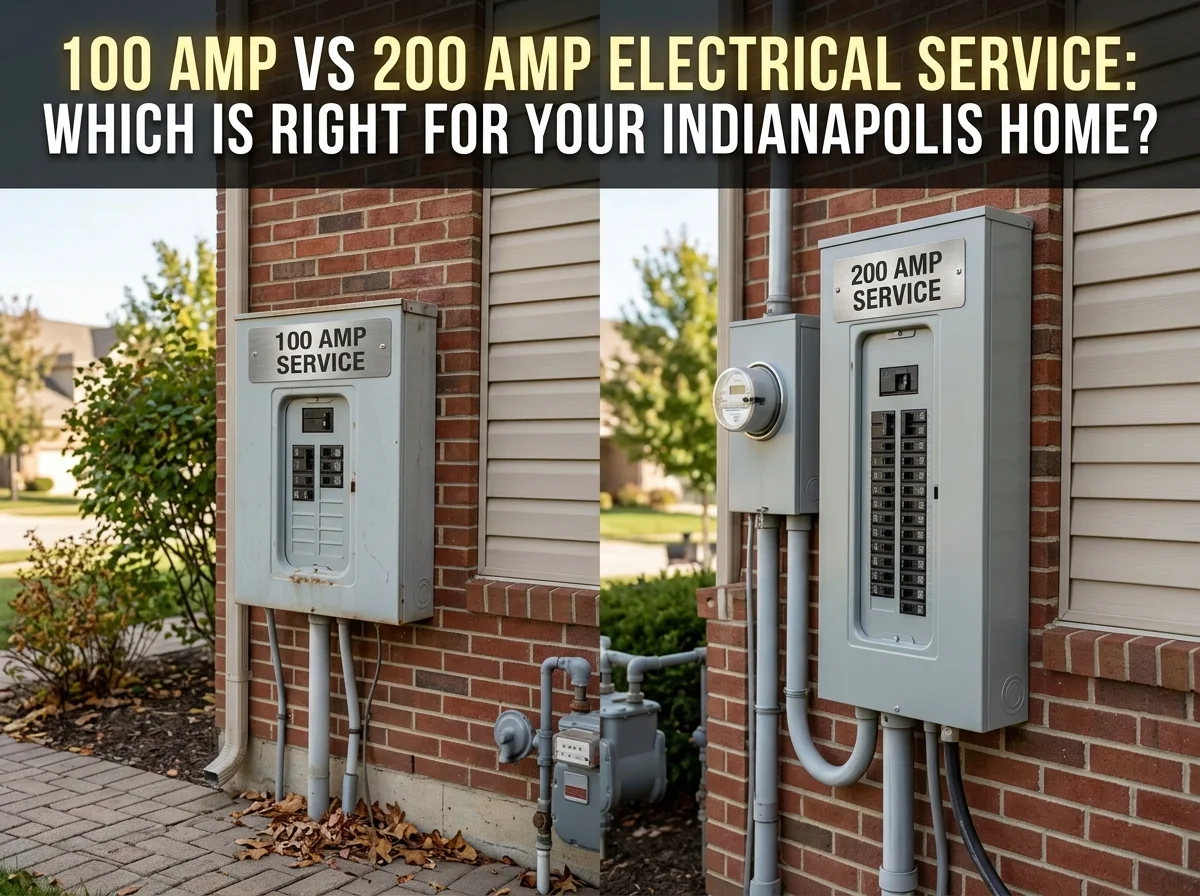
Sometimes none of the above quite fits, and there’s a smaller list of usual suspects worth ruling out. A worn-out breaker is one of them. They don’t last forever, and after enough years of flipping, some just get twitchy and trip under a totally normal load. An outdated panel is another, and a common one in this city. A lot of Indianapolis homes still run on panels sized for how houses used electricity thirty or forty years ago. Add central air, an EV charger, a home office setup, and the panel’s suddenly working harder than it was ever built for. A professional electrical inspection can identify hidden issues like overloaded circuits, outdated components, and safety concerns before they become bigger problems.
Then there’s the appliance itself. Not every tripping breaker is a wiring problem. Sometimes one specific device, a space heater, an old refrigerator, whatever, is pulling more current than it should or has developed an internal fault. Unplug it and see what happens. That five-minute test solves more mysteries than you’d think.
What You Can Safely Check Before Calling Anyone
A handful of quick checks, none needing special tools, can tell you a lot before you pick up the phone.
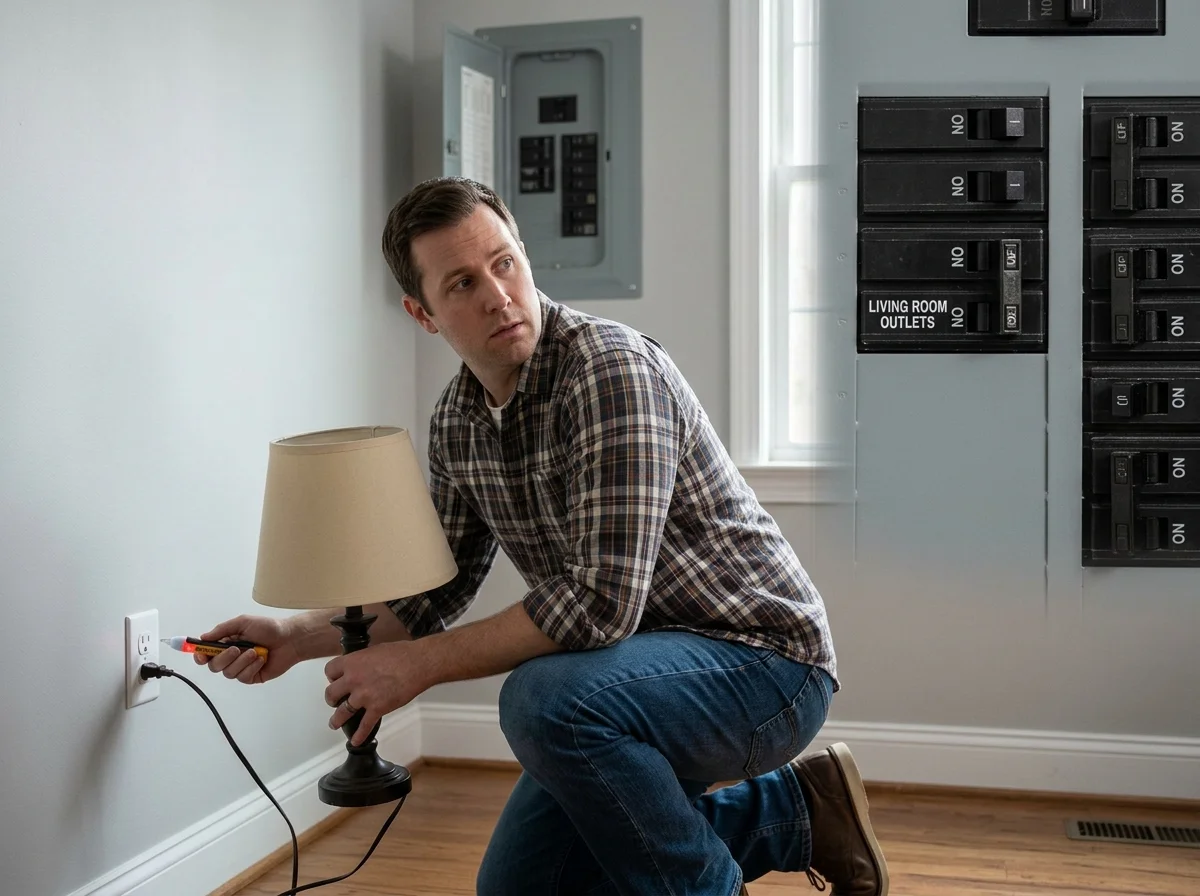
Start by noting what was actually running when it tripped. That alone answers a surprising number of overload questions. From there, unplug everything on that circuit and reset the breaker. Holds fine? Add devices back one at a time until it trips again, and now you know your limit. Trips instantly with nothing plugged in at all? Stop right there. That’s wiring, not appliances, and it’s outside DIY territory. And if the circuit in question runs a kitchen, bathroom, or anything outdoors, check nearby GFCI outlets too. Sometimes that’s the whole fix.
When Should You Actually Call an Indianapolis Electrician?
A few situations mean stop troubleshooting now, not after one more attempt. Breaker trips instantly on reset, even with nothing plugged in anywhere on that circuit. Burning smell. Warm or discolored outlets. Buzzing, crackling, popping, any sound your electrical system shouldn’t be making. And if your home’s still running an old fuse box, aluminum wiring, or knob-and-tube, that’s worth a professional look regardless of whether anything’s tripping right now. These warning signs often require professional electrical repairs rather than repeated breaker resets.
It’s also just the law here. Indiana requires this kind of work to go through a licensed electrician, and that’s not bureaucracy for its own sake. Poking around a live panel without training is how people get hurt.
Why Indianapolis Homeowners Call Rinder Electric for This
We’ve been doing this for Indianapolis families for over 7 years now, and tripping breakers are one of the calls we get most. Makes sense. Nobody’s thrilled about losing power to half the kitchen mid-dinner.
Our team is licensed, bonded, and insured, and we cover Indianapolis plus Brownsburg, Carmel, Fishers, Lawrence, Noblesville, Plainfield, Westfield, and Zionsville, with 24/7 emergency service for when this can’t wait until Monday. Our complete electrical services in Indianapolis cover everything from troubleshooting and repairs to upgrades and installations.We show up, find the actual cause, whether that’s an overload, a short, a ground fault, or a panel that’s simply outgrown your house, and explain what we found before we touch anything. Pricing’s upfront. No surprise numbers at the end.
Breaker still tripping after all this? Call Rinder Electric at (317) 701-1713, or reach out online, and we’ll get someone out to look at it.
Frequently Asked Questions
Is it dangerous if my circuit breaker keeps tripping?
Depends what’s causing it. An overload tripping now and then isn’t an emergency, just annoying. But a breaker that won’t hold a reset, or comes with any burning smell, is a different story, that’s usually a short circuit or ground fault, and both are real fire risks. If you’re not sure which one you’re dealing with, treat it as the more serious case and get an electrician to look before it becomes something worse.
Why does my breaker only trip when I use one specific appliance?
That’s usually the appliance’s fault, not your wiring. Older devices especially can pull more current than they should, or develop an internal short as they age. Try plugging it into a different circuit. Still trips? The appliance is probably your answer. Only trips on that one circuit no matter what’s plugged in? Then the circuit itself might be undersized for what you’re running.
Can I just replace the breaker myself?
You technically can, but we’d steer you away from it. You’re working inside a live panel, and one wrong move there isn’t a minor mistake, it’s a shock or fire risk. Indiana code also has requirements around this kind of work. A licensed electrician can swap a worn breaker safely and check whether anything else in the panel is quietly contributing to the problem too.
How do I know if I need a whole panel upgrade instead of just a new breaker?
A few signs point that direction: multiple breakers tripping regularly, a panel older than 25 years or so, or major additions since it was installed, think EV charger, central air, a finished basement. An electrician can actually inspect the panel and tell you honestly whether it needs replacing or whether smaller fixes will hold you over.
Why does my kitchen or bathroom breaker specifically keep tripping?
Water and grounded metal surfaces make these rooms prime spots for ground faults, which is exactly why GFCI protection is required there. If a breaker or outlet in one of these rooms keeps kicking, moisture or a grounding issue nearby is the likely cause. Worth having someone check it, especially if it’s happening in the same spot over and over.
Does resetting the breaker over and over make things worse?
It can, depending on the cause. If it’s a short circuit or ground fault, every reset lets more current surge through wiring that’s already damaged, which raises fire risk each time. Occasional overload trips are fine to reset without much worry. But if the same breaker keeps going on the same circuit, that’s your cue to stop resetting and start asking why, not just flipping it back on.