You plug in a metal toaster every morning without a second thought. That trust rests on a wire you will probably never see. Electrical grounding gives stray current a planned route when something inside your wiring or equipment fails. Instead of sitting on metal you might touch, that current flows back toward the electrical panel. When enough of it moves, the circuit breaker can trip and cut the power. Grounding won’t make shocks impossible. It does give your protective devices a real chance to work. Here is how the pieces fit together.
What Is Electrical Grounding?
Grounding is a set of deliberate connections in your home’s wiring. Some tie the system to the earth. Others link metal equipment back to the panel so fault current has somewhere safe to go. Each piece does a different job.
The Purpose of a Grounded Electrical System
A grounded electrical system keeps voltage stable relative to the earth. It also limits the voltage that lightning or a utility line problem could push into your home. For equipment, it gives fault current a low-resistance path back to the source so a breaker can open quickly. Grounding is one layer of protection. It works with breakers and insulation rather than replacing them.
How Grounding Relates to Everyday Electrical Use
The grounding wire in your walls carries no current on a normal day. Your lights and appliances run on the hot and neutral conductors. The ground wire just waits, attached to metal boxes and the round third prong on many plugs. It only goes to work when a wire comes loose, or insulation wears through.
How Electrical Grounding Works During a Fault
A ground fault starts when a hot conductor touches something it shouldn’t, such as a metal appliance cabinet. That metal can suddenly carry voltage. What happens next depends on the grounding path.
The Grounding Path and Fault Current
Normal current goes out on the hot wire and returns on the neutral. The equipment grounding conductor stays out of that loop. During a fault, current flows from the energized metal into the grounding conductor and back toward the panel. At the main service panel, grounding and neutral are joined at one point. From there, current returns to the utility transformer. Soil resists current too much to trip a breaker reliably, so the earth plays only a small part.
How Circuit Breakers Help Interrupt Faults
A standard breaker trips when current climbs past its rating. A solid grounding path lets fault current rise high and fast enough to get there. The ground wire never shuts anything off by itself. A weak path can leave current too low to trip the breaker while metal stays energized.
- A fault creates an unintended electrical connection.
- An effective grounding path can carry the fault current.
- Sufficient fault current can cause a suitable protective device to disconnect the circuit.
Real faults don’t always follow this script. The outcome depends on the fault, the system design, and the protective devices installed.
Main Components of an Electrical Grounding System
A grounding system has several parts, and they are not interchangeable. This table shows what each main part does.
| Component | Main role | Why it matters |
| Equipment grounding conductor | Provides an intended path for fault current | Supports operation of suitable protective devices |
| Grounding electrode | Connects the grounding system to the earth | Helps set the earth reference and limit surge voltage |
| Grounding electrode conductor | Connects the electrode to the service grounding point | Maintains the required electrode connection |
| Bonding jumper | Electrically connects specified conductive parts | Helps maintain continuity where bonding is required |
Ground Wire and Equipment Grounding Conductor
The ground wire in an outlet box is usually bare copper or green insulated wire. Its formal name is the equipment grounding conductor. It runs with the circuit and connects to devices and metal boxes. Unlike the hot and neutral, it isn’t meant to carry current during normal operation.
Grounding Electrode and Grounding Electrode Conductor
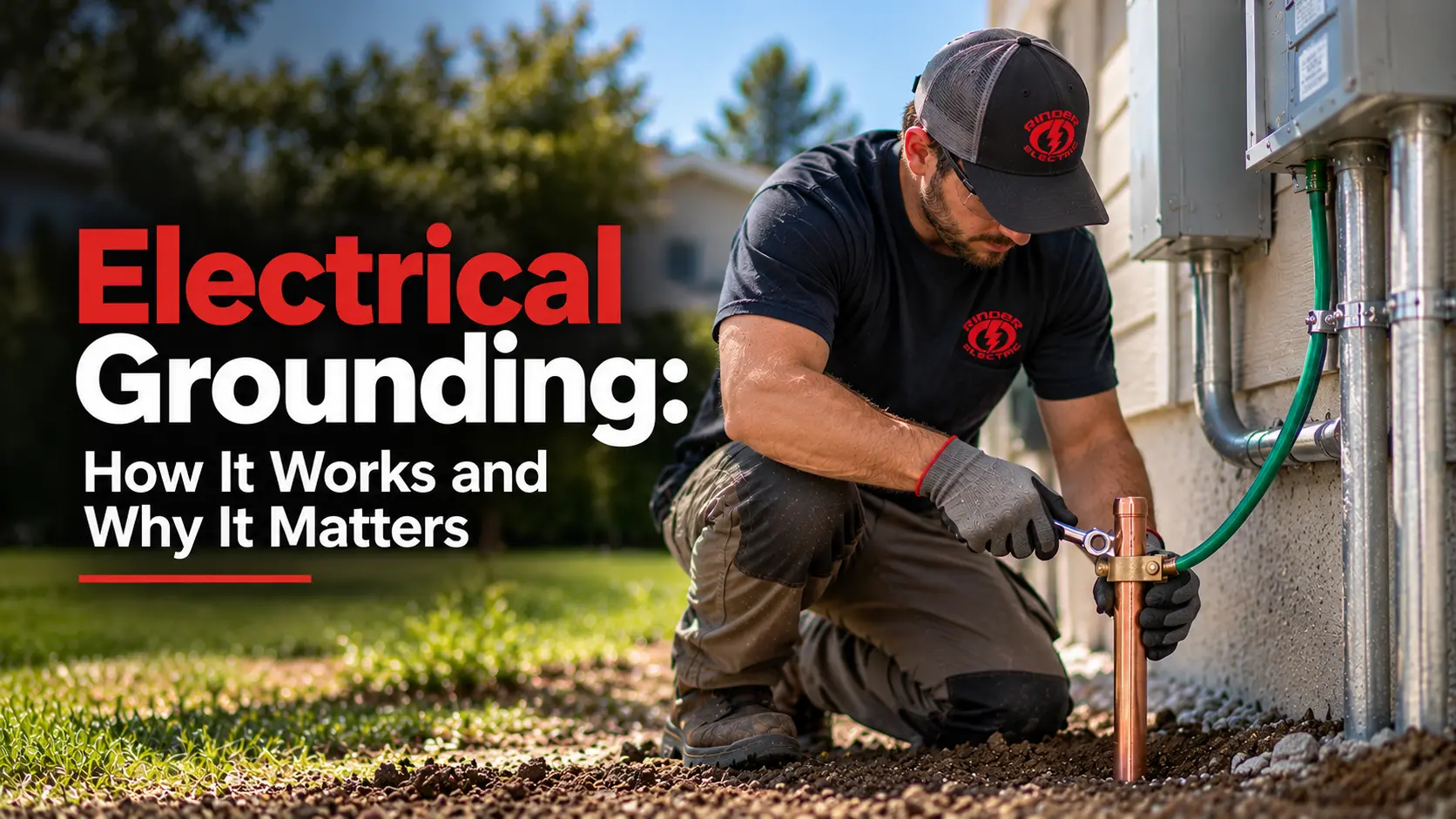
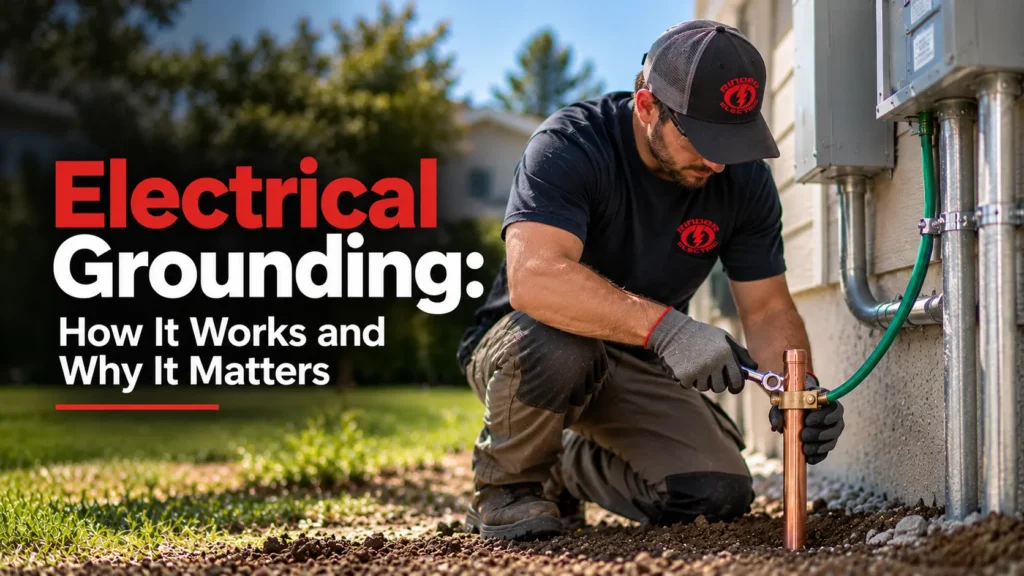
The grounding electrode is the part that touches the earth. A grounding rod is one common type. Many homes also use a metal underground water pipe or steel bar in a concrete footing. The grounding electrode conductor is the heavy wire linking those electrodes to the service equipment. This connection helps with voltage stability and surges. It is not the main path that trips breakers.
Electrical Panel and Grounding Connections
Everything ties together at the electrical panel. Equipment grounding conductors land on a ground bar. At the main service panel, a main bonding jumper joins neutral and ground at one point. Subpanels keep them separate so normal current stays off grounding paths. One loose or corroded connection can weaken the whole fault path.
Electrical Grounding vs. Bonding
Grounding and bonding show up together on nearly every job. They are related, but they solve different problems.
What Grounding Does
Grounding connects the system and its equipment to the earth through the electrode system. That sets a voltage reference and gives lightning surges a place to go. An earth connection alone won’t clear a fault, though.
What Bonding Does
Bonding links metal parts so they stay at the same electrical potential. Codes may require bonding for metal water and gas piping along with metal raceways. A bonding jumper bridges gaps like a water meter. With continuity in place, a fault on bonded metal has a clear path back to the panel.
Why Both Matter
Neither one replaces the other. Strong grounding with poor bonding can leave metal energized during a fault. Good bonding without grounding leaves the system without its earth reference.
| Aspect | Grounding | Bonding |
| Main purpose | Connects the system or equipment to ground as designed | Electrically connects designated conductive parts |
| Main focus | Earth connection and system reference | Continuity between bonded parts |
| Safety role | Supports the overall protection arrangement | Helps maintain an effective fault-current path where required |
Why Electrical Grounding Matters for Safety
Grounding safety comes down to the seconds after something fails. A good arrangement shortens the time metal stays energized.
Helping Reduce the Risk of Electric Shock
Picture a washing machine with a worn wire touching its metal cabinet. Without a ground path, that cabinet could stay energized. With a sound path, fault current flows to the panel and the breaker can trip. Grounding lowers the risk. It doesn’t erase it.
Supporting Protective Devices
Breakers need high current to react quickly to a ground fault. A low-resistance grounding path supplies it. GFCI devices sense current imbalance and don’t need a ground wire to trip. The two often work side by side.
Supporting Equipment and Electrical System Protection
Proper grounding and bonding help hold voltage on metal equipment within safer limits. They won’t prevent every fire or equipment failure.
Warning Signs of Possible Grounding Problems
Symptoms alone can’t confirm a grounding fault. The same sign can have several causes. These deserve a safe professional check:
- A tingle or shock when touching an appliance’s metal surface
- Visibly burned or corroded ground connections, seen without opening anything
- An outlet a qualified person finds lacking a required ground connection
- Repeated electrical problems that call for professional evaluation
A tripping breaker or flickering light alone doesn’t prove the ground is bad.
| Electrical Safety NoteDo not touch exposed wiring, open your electrical panel, or try live testing to check a grounding connection. If equipment seems unsafe, stop using it when you can do so without touching damaged parts. Then contact a qualified electrician. |
When Should Electrical Grounding Be Professionally Inspected?
Some situations call for a professional look even when nothing seems wrong. Planned work is often the best time.
- During renovations or upgrades that affect grounding connections
- In older homes with uncertain grounding arrangements
- After a suspected fault or a shock from equipment
- When a test turns up a questionable ground connection
A qualified electrician can inspect the electrode connection and bonding jumpers along with panel terminations. They use proper equipment to verify a ground connection. Cheap plug-in testers can miss certain wiring faults.
Frequently Asked Questions
Does Electrical Grounding Prevent Electric Shocks?
Not entirely. Grounding can reduce shock risk from a faulted appliance and help a breaker trip. It can’t protect someone who touches a live conductor directly.
Can a Three-Prong Outlet Work Without a Ground Wire?
Yes, and that’s the problem. It can power devices with nothing connected to its ground terminal. Codes allow certain alternatives for ungrounded circuits, such as GFCI protection with specific labeling. An electrician should confirm what’s permitted before any outlet gets swapped.
How Can You Tell Whether an Electrical Grounding System Is Working?
Appearance can’t tell you. A qualified electrician can inspect the connections and run appropriate tests.
Final Thoughts
Electrical grounding gives fault current a planned path that helps your breakers do their job. It works alongside bonding and other protective devices. Grounding ties your system to the earth. Bonding gives a fault a continuous route back to the panel.
Rinder Electric is a locally owned electrical contractor serving Indianapolis and Central Indiana. The company is licensed, bonded, and insured, and its team handles electrical repairs, panel upgrades, and rewiring. If an appliance has given you a tingle or you’re unsure how your older home is grounded, call Rinder Electric at (317) 701-1713. Free estimates are available, and emergency service runs 24/7.