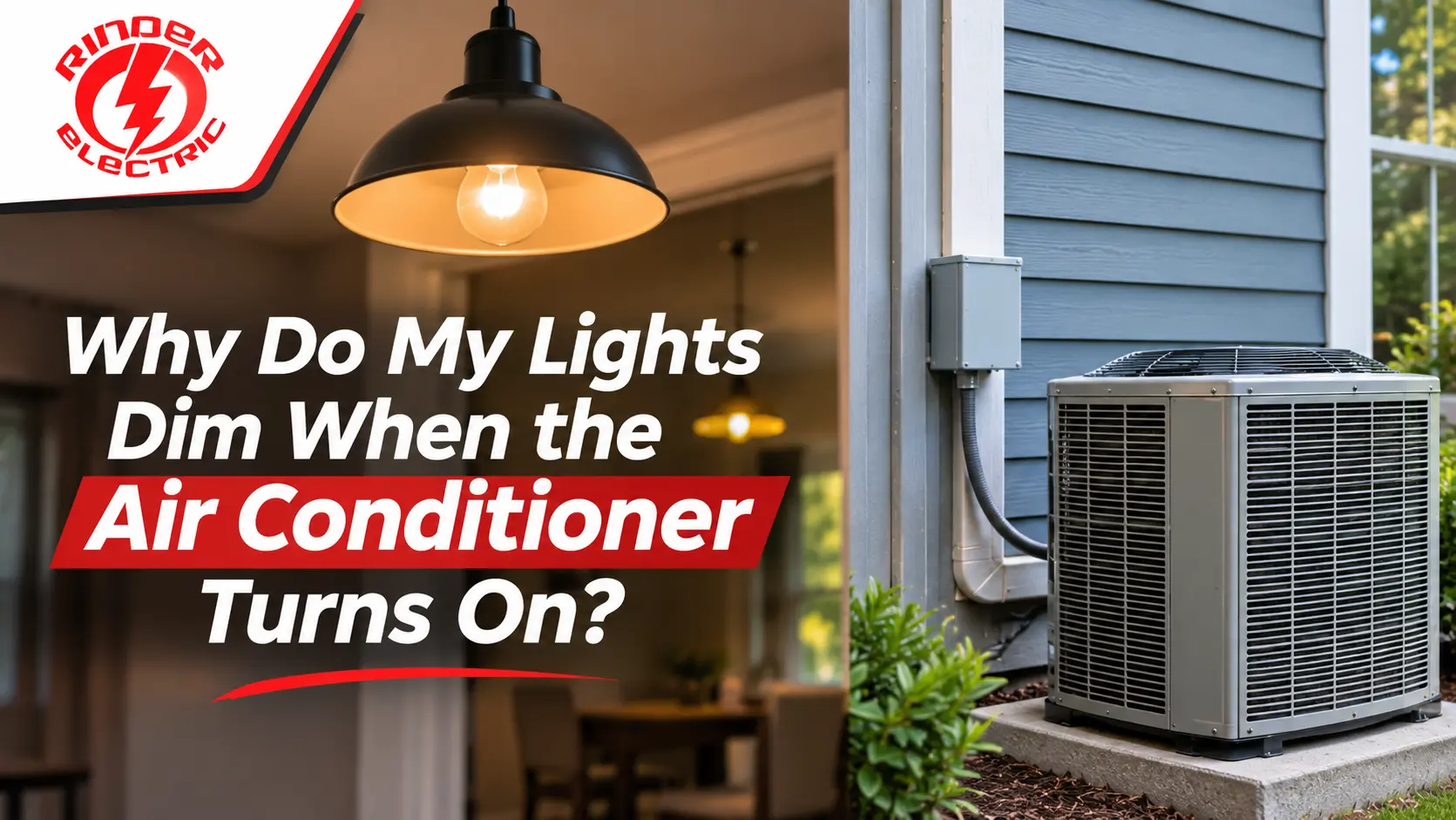
You hear the outdoor unit click on, and the kitchen lights drop a shade darker for a split second. If your lights dim when the AC turns on, you’re seeing a real electrical problem. The compressor inside your air conditioner pulls a big rush of current the moment it starts. That rush is far larger than what the compressor uses once it’s running, so it can cause a short voltage sag across the house. A quick, faint dip is common. Dimming that lingers or keeps getting stronger is a different story. Below, you’ll learn why it happens and when to get help.
Why Do Lights Dim When the AC Compressor Starts?
Your air conditioner is one of the biggest electrical loads in your house, and most of that demand hits the instant the compressor starts.
The Compressor Draws More Current During Startup
The HVAC compressor is a unit that circulates the refrigerant inside your cooling system. It is not moving until it is turned on and needs a good push to get it moving from a standstill. This initial start-up current from the compressor may be several times the running current, but in a healthy system, it decreases quickly. Your lights share the same incoming power, so they feel that spike in electrical load demand.
How a Temporary Voltage Sag Affects Household Lights
Voltage is the push that moves electricity through your wires, and every wire and connection resists it a little. When current suddenly climbs, the wiring eats up more of the push, which leaves less for everything else. That short dip is a voltage sag. Older incandescent bulbs fade and recover, while LEDs may hide the dip or briefly flicker when the AC starts.
Why Some Homes Experience More Noticeable Dimming
Two houses on one street can react very differently when the AC kicks on. A larger or older unit may need more starting current, and worn wiring adds resistance. On hot Central Indiana afternoons, neighbors on your utility transformer may be running their AC too. None of this automatically means your electrical panel is too small.
Is It Normal for Lights to Dim When the AC Turns On?
A slight, quick dip during AC startup happens in plenty of homes. What matters is the pattern over time. Notice how deep the dip goes and how long it lasts, then watch whether it changes. The table below matches common patterns with what they may mean.
| What Happens | What It May Indicate | What to Do |
| Slight dimming only as the AC starts | A brief startup voltage drop | Make sure it stays quick |
| Lights stay dim after the AC starts | An electrical or equipment issue | Schedule an electrical or HVAC check |
| Dimming gets stronger over time | A problem that’s developing | Find the cause |
| Major changes across several rooms | A wider supply or connection issue | Call an electrician or your utility |
| Some lights dim while others brighten | A possible serious neutral or supply problem | Get professional help right away |
A dip that clears in a blink usually comes from a healthy motor doing its job. Electrical voltage variations that linger or spread point to resistance or a fault somewhere. No set ratio or time limit can prove your home is safe. If the same dimming effect keeps showing up, have a professional check it.
What Electrical Problems Can Make an AC Startup Voltage Drop Worse?
Normal startup current explains a quick dip, but strong or worsening dimming usually has another cause. That cause may sit in your home’s wiring or in the utility supply. Sometimes it lives inside the air conditioner itself. Each source needs its own fix, so it helps to know the signs.
Loose or Deteriorated Electrical Connections
A loose connection works like a pinch in a garden hose. The drop in voltage at that weak spot is much greater than at a solid joint when the compressor pulls hard. Loose electrical connections can also cause heat buildup that can break down the insulation and increase fire danger. Leave the panel cover on and let a qualified electrician find them.
Overloaded Circuits or Electrical Load Imbalance
A branch circuit is a single run of wiring to a set of outlets or lights from a circuit breaker. Central AC typically is on its own circuit and may not be shared with the lights. One main service is the source of electricity for all your home electrical circuits. An electrician can check whether big loads crowd one side of your panel.
Limited Electrical Service Capacity or Utility Voltage Problems
Your electrical service brings utility power to your main panel, and its size caps what your home can draw. Some older Indianapolis homes had services sized before central air was common. An electrician can run a load calculation to check yours. Call your power company if neighbors see the same dimming, since the cause may be on their side.
An Air Conditioner That Is Having Trouble Starting
If the compressor in the AC is worn, then it may struggle to get moving and prolong the high current moment. A number of systems also employ a capacitor, a small component that helps the motor of the compressor start and run. Look out for multiple attempts to start, or listen for humming and clicking noises. Those signs call for an HVAC technician.
How Can You Tell Whether the Problem Comes From Your Home’s Electrical System?
Where the dimming shows up can tell you a lot, and so can its timing. You can gather these clues without touching any equipment. Keep simple notes over a week or two of normal AC use. They give an electrician a head start, but they can’t replace real testing.
- Notice which lights are affected: Does the dimming stay in one room or spread?
- Pay attention to when it happens: Note if the dryer or other big appliances cause it too.
- Watch for changes over time: Look for dimming that comes more often or lasts longer.
- Look for other warning signs: From a safe distance, note any breaker trips or buzzing.
| Important: Do Not Inspect Live Electrical Equipment YourselfNever remove an electrical panel cover or handle exposed wiring. Don’t try live electrical testing either. If something seems unsafe, call a qualified electrician. |
When Should You Call an Electrician About Lights Dimming With the AC?
Repeated or unusual dimming isn’t just normal AC behavior, and it means something deserves a closer look. Call an electrician if you notice any of the signs below. One sign on its own is enough reason to book a visit, even if the lights seem fine otherwise.
- Lights dim sharply when the AC starts.
- Lights stay dim after the compressor begins running.
- The dimming has gotten worse recently.
- Several rooms show unusual brightness changes.
- Breakers trip or equipment buzzes when the AC starts.
- You notice a burning smell or damaged wiring.
- Outlets feel warm to the touch.
- Some lights get unusually bright while others dim.
An electrician can inspect your electrical panel and test the connections on related circuits. They’ll also measure voltage under load to see if the trouble starts inside your home or with the utility. Faults in the compressor or capacitor call for an HVAC technician instead.
| Sparks, Smoke, or a Strong Burning Smell?Treat it as urgent and stay away from any equipment that looks unsafe. If you see smoke or fire, get everyone out and call 911. |
How Can Electrical Problems Behind AC Startup Dimming Be Addressed?
The right fix depends on where the problem starts. It might sit in your wiring or service, or in the utility supply or the AC itself. Testing comes first, because the wrong repair wastes money and leaves the real cause in place. No single device or upgrade fixes every case.
- Repairing loose or damaged connections: An electrician finds worn spots and fixes them.
- Correcting circuit or load issues: An electrician decides if circuit loading needs changes.
- Evaluating electrical service capacity: Upgrade the panel or service only if an inspection shows a real need.
- Inspecting AC starting components: An HVAC technician tests the start or run parts.
- Investigating utility supply problems: Your utility checks the transformer or incoming line.
- Adding a soft starter or hard-start kit: Use one only when the equipment and the maker’s guidance support it.
Frequently Asked Questions
Should I Worry If My Lights Dim for a Second When the AC Starts?
A slight, brief dip during startup can happen in a healthy home. It’s usually just the compressor motor getting up to speed. Dimming that is severe or getting worse needs a pro to look at it. So does dimming that hangs on after the AC is already running.
Can a Bad AC Capacitor Cause Lights to Dim?
Yes. In systems that use one, a failing capacitor can make the compressor strain every time it starts. That harder start can pull your lights down more than usual. An HVAC technician should test the capacitor and confirm whether it’s involved before anyone replaces it.
Can an Electrical Panel Upgrade Stop Lights From Dimming When the AC Starts?
It may help if an inspection finds a real limit in your service or panel. An upgrade won’t fix loose connections, though. It also won’t solve a faulty AC part or a utility supply problem, so testing should come before any choice about new equipment.
Final Thoughts
A quick dip in your lights when the AC starts usually comes from compressor startup current. Dimming that is severe or keeps getting worse can point to an electrical or equipment problem. Finding the actual cause beats assuming your panel, wiring, or air conditioner needs replacing.
Rinder Electric helps homeowners across Indianapolis and Central Indiana track down problems like this through electrical troubleshooting and repairs. The company is licensed, bonded, and insured, and you get upfront pricing before work begins. If your lights keep dimming when the AC starts, give Rinder Electric a call. Their 24/7 emergency service is there when something feels unsafe.