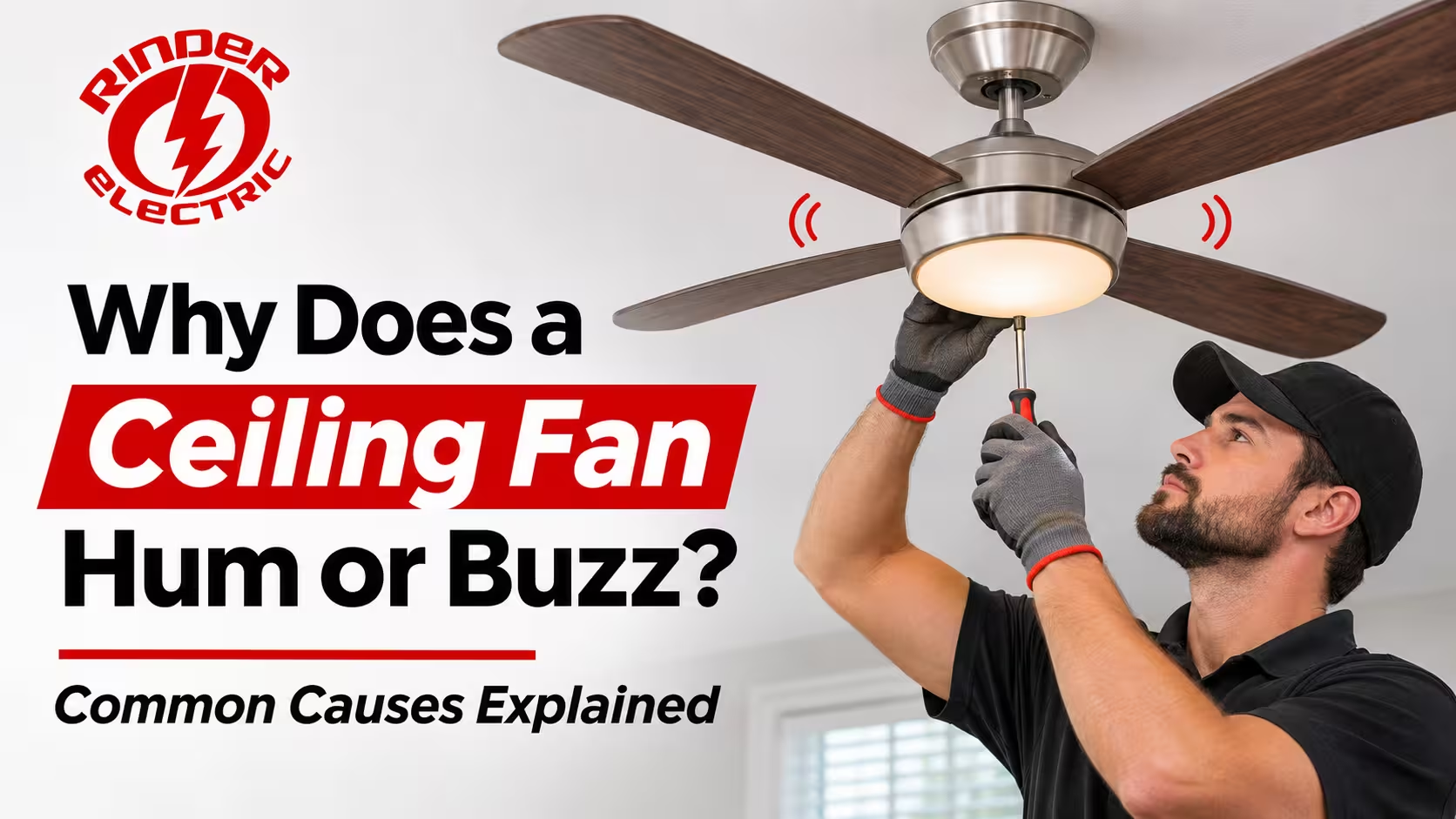
A ceiling fan usually hums or buzzes because the wall control doesn’t match the motor, the capacitor is weak, a connection is loose, or the fan is vibrating. Some of these causes are minor, while others need an electrician before the fan runs again.
A ceiling fan humming noise is normally a low, steady tone coming from the motor or the wall control. Rattling, clicking, and grinding sounds are choppier and usually point toward loose or worn hardware. Timing offers clues too, since a hum that appears only at low speed tells a different story than one that starts instantly. Sound can narrow the list without confirming a diagnosis. Treat a buzz that keeps going, gets louder, or comes with heat or odd smells as a real warning.
What Does a Humming or Buzzing Ceiling Fan Usually Indicate?
The type of sound gives you a starting point, not a final answer. Knowing the difference between electrical and mechanical noise helps you describe the problem clearly when you call an electrician.
A Steady Electrical Hum Can Point to a Control or Motor Issue
A steady hum with no rhythm usually comes from electricity moving through the motor or its control. That kind of ceiling fan motor noise can come from a mismatched wall control, electrical interference, or normal vibration inside an AC motor. Change the speed and listen. If the hum jumps at one setting and fades at another, the control or the motor’s speed circuit may be the source. A hum that is new or louder each week deserves attention.
Rattling, Clicking, and Grinding Usually Sound Different
Mechanical noise has a beat you can almost count. A rattle that repeats with each turn often means a screw, glass shade, or canopy cover has worked loose. Clicking can come from a blade holder tapping as the fan spins, while grinding points toward worn parts inside the housing. One fan can have a loose blade and a buzzing control at the same time, so don’t pin every sound on a single cause.
What Electrical Problems Can Make a Ceiling Fan Hum or Buzz?
A ceiling fan motor needs steady, clean power to run quietly. The wall control, the receiver in the canopy, and small parts inside the fan can all disturb that supply and change how the motor sounds.
An Incompatible Dimmer Switch Can Create Motor Noise
Standard light dimmers cause more fan noise than most people expect. They lower brightness by clipping the electrical wave many times per second, which suits a bulb but not a fan motor. An AC motor fed that choppy power often hums and can run hotter than it should. That’s why fan manufacturers call for controls built specifically for fans rather than an incompatible dimmer switch.
A Fan Speed Controller or Receiver May Be Causing the Buzz
A fan speed controller adjusts motor speed in a way the motor can safely handle. Even so, a cheap or mismatched controller can still add a buzz, especially at the lowest setting. Remote-control fans add a receiver inside the canopy, and a failing or incompatible receiver may hum on its own. Manufacturers list the controls approved for each fan model, and staying on that list prevents many noise problems.
A Faulty Capacitor or Electrical Connection May Affect Fan Operation
Many AC ceiling fans use a capacitor to help the motor start and to set its speeds. A weak ceiling fan capacitor can leave the fan slow to start, stuck at reduced speed, or humming without spinning properly. Loose or damaged connections cause different trouble, because a wire that isn’t secure can arc, buzz, and heat nearby parts. These components sit inside the fan or the ceiling fan junction box, so a qualified electrician should test and replace them.
Which Mechanical Problems Can Cause Ceiling Fan Noise?
A spinning fan packs a lot of movement into a small space. Loose parts and uneven blades turn that movement into sound, which many homeowners mistake for an electrical hum.
Loose Fan Mounting or Hardware Can Cause Vibration
Loose fan mounting is a common source of rattles and low vibration. Blade screws and canopy screws can slowly back out as the fan runs, and a downrod pin can work loose if its retaining clip isn’t properly secured. The mounting bracket holds the fan to the ceiling, so any play there lets the fan shift and knock. The box above it matters just as much, since a ceiling fan junction box needs a rating for fan support that a standard light box may lack.
Wobbling Blades Can Produce Repeated Noise
Check for visible fan wobbling at each speed. A warped, chipped, or unevenly weighted blade throws the fan off balance, and the wobble often grows at higher settings. That fan motor vibration then travels through the downrod and bracket into the ceiling, where it can sound like a hum or a steady thump.
Worn Motor Bearings or Internal Wear Can Create Noise
Bearings let the motor spin smoothly, but they wear down after years of daily use. Worn bearings tend to grind, whine, or hum, and the noise usually builds over months. Have persistent or worsening motor noise checked before the motor locks up. On an older or budget fan, a full replacement may cost less than a motor repair.
How Can Homeowners Identify the Source of a Ceiling Fan’s Noise?
You can gather useful clues without tools, a ladder, or any electrical work. Leave the covers on, run the fan through every speed, and pay attention to these points:
- When the sound starts: Notice whether it begins right away, shows up after several minutes, or appears only at certain speeds.
- Where it seems to come from: Listen for whether the motor housing, blades, light kit, or wall control sounds loudest.
- Whether the fan wobbles: Look for side-to-side movement or a swaying downrod while it runs.
- Whether speed changes the noise: Track whether the hum gets louder or quieter as you switch settings.
- Whether other warning signs appear: Watch for a warm switch plate, a burning smell, or crackling or flickering lights.
Jot down what you notice. These details help an electrician narrow down noisy ceiling fan causes faster, but they can’t replace a hands-on inspection of the fan and its wiring.
When Should You Turn Off a Noisy Ceiling Fan and Call an Electrician?
A loose blade screw is an annoyance, not an emergency. Some ceiling fan electrical problems are more serious, though, and certain symptoms mean the fan should stay off until a qualified electrician looks at it.
- Burning smell: Turn the fan off at the switch and stop using it.
- Crackling or sizzling: Shut it off and schedule a professional inspection.
- Unusual heat or smoke: Treat these as serious warning signs and keep the fan switched off.
- Persistent electrical buzzing: Book an inspection if the buzz keeps going or gets worse.
- Severe wobbling or a loose-looking fan: Stop using it until someone secures the mount.
- Repeated electrical interruptions: A breaker that keeps tripping or a switch that cuts in and out points to a circuit problem.
| Safety Warning: If you see smoke or flames, leave the room and call 911.Don’t open the fan housing, handle exposed wiring, swap a capacitor, or probe live connections yourself. Those jobs belong to a licensed electrician. |
What Should a Professional Check When a Ceiling Fan Makes Noise?
A good electrician works from the simplest explanation toward the more involved ones. You don’t need to know every step, but it helps to know what they’re looking at:
- Whether the fan and its speed control or receiver are compatible
- Accessible wiring connections and the power supply feeding the fan
- The mounting bracket, junction box, and visible hardware
- The motor, capacitor, and other internal components
From there, the electrician can tell you whether the fix calls for one new part, a different control, or a replacement fan. The right answer depends on the fan model, the noise source, and the condition of its parts.
Frequently Asked Questions
Is it normal for a ceiling fan to make a humming sound?
A faint hum during normal operation is common, especially with AC motors. A hum that is new, constant, or noticeably louder than before deserves a closer look.
Can an incompatible dimmer switch make a ceiling fan buzz?
Yes, because a standard light dimmer isn’t built to regulate a fan motor. Use a fan-rated control that your fan’s manufacturer approves for that model.
Should I stop using a ceiling fan that makes a buzzing noise?
That depends on the other symptoms. Switch the fan off and have it inspected if you notice a burning smell, crackling, smoke, unusual heat, or an unstable mount.
Final Thoughts
Ceiling fan noise usually traces back to a mismatched control, a weak capacitor, a worn motor, a loose connection, or hardware that has worn out. Each sound points in a different direction. Don’t ignore any of them when the buzzing persists or comes with heat, smells, or crackling.
Rinder Electric helps homeowners in Indianapolis and Central Indiana track down problems like this. The licensed, bonded, and insured team handles electrical repairs and lighting work with upfront pricing and 24/7 emergency service. Contact Rinder Electric to schedule an inspection and find out what’s behind that hum.