The power drops out, and the house goes quiet. The lights die, the fridge starts warming, and the furnace or AC stops. Then the sump pump sits idle in the rain. Portable and standby generators are the two common fixes. The portable vs standby generator choice has no single right answer. It depends on your power needs, budget, outage frequency, fuel access, and how hands-on you want to be. Here’s how each factor plays out for your home.
How Are Portable and Standby Generators Different?
A fair home backup generator comparison starts with how each unit connects to your house and who does the work.
How a Portable Generator Works
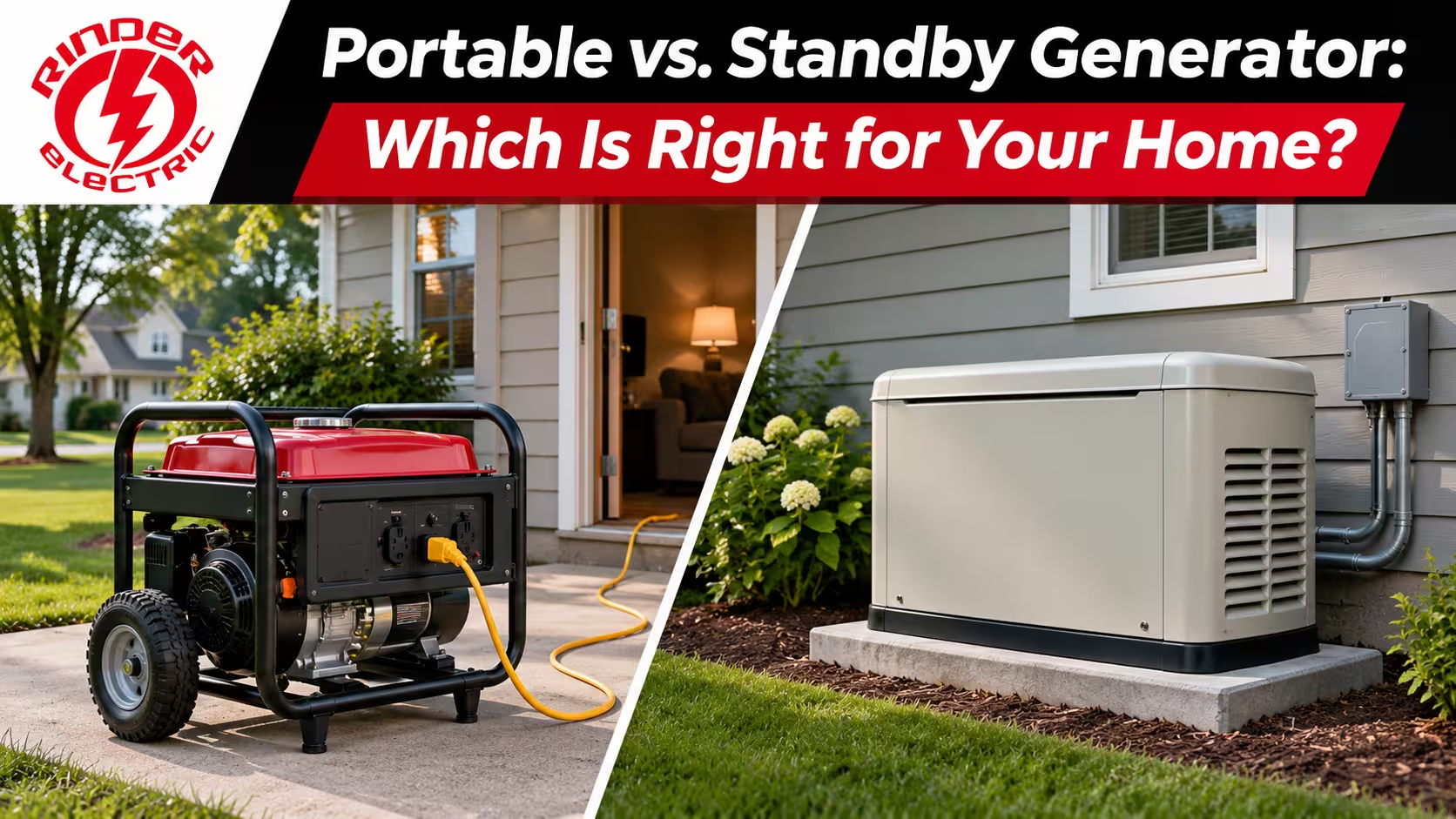
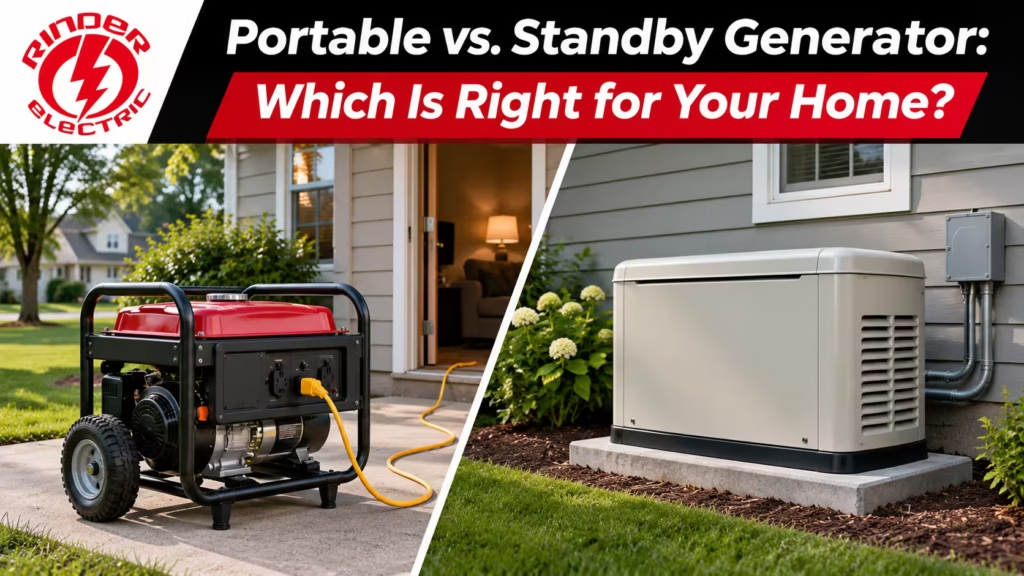
A portable generator is an engine-driven unit you roll outdoors and start by hand or with a button. Smaller units run a few appliances through outdoor-rated extension cords. Larger models can feed selected household circuits through a properly installed connection system. Setup, fuel, and operation are all on you.
How a Standby Generator Works
A standby generator is permanently installed outside and tied into your wiring and fuel supply. When its Automatic Transfer Switch senses that utility power is gone, it starts the generator and shifts the connected loads over. Once service returns, the switch moves the house back, and the generator shuts down. Depending on size and design, it can cover a few key circuits or most of the home.
Here’s how the two stack up:
| Comparison point | Portable generator | Standby generator |
| Placement | Rolled outdoors when needed | Permanently installed |
| Startup | Usually manual | Automatic |
| Electrical connection | Outlets or an approved home connection | Integrated home backup system |
| Fuel | Often gasoline; some use propane or dual fuel | Commonly natural gas or propane |
| Power coverage | Selected appliances or circuits | Selected circuits or larger household loads |
| Upfront investment | Generally lower | Generally higher |
| Owner involvement | More hands-on | Less hands-on |
How Much Backup Power Does Your Home Actually Need?
Start with what has to run, not square footage or the wattage printed on a box. Your backup power capacity should follow your real loads.
Identify the Essential Home Circuits
Walk through the house and list what must stay on. Most lists start with the refrigerator, freezer, and sump pump. Add a few lighting circuits, internet equipment, and maybe the furnace blower or some cooling. Medical equipment like an oxygen concentrator needs special planning with your provider. Leaving out comfort items keeps you from paying for capacity you’ll rarely use.
Understand Starting Watts and Running Watts
Running watts are the steady power an appliance draws while it operates. Starting watts are the brief extra surge some equipment needs to kick on. Motor-driven gear like air conditioners, pumps, and refrigerators spikes at startup. Counting running watts alone, the generator may bog down when two motors start together.
Consider Essential Loads Versus Whole-Home Coverage
Covering only key circuits keeps the system smaller and the cost lower. Running central air and an electric range at once takes far more capacity. That’s where the portable generator vs. whole-house generator question gets real. A whole-house label doesn’t mean unlimited power, and a large home with heavy loads can exceed it.
What Fuel Options and Runtime Differences Should You Consider?
Any generator for home power outages runs only as long as its fuel lasts. In a three-day ice storm, fuel becomes the whole story.
Portable Generator Fuel Supply
Most portable generators run on gasoline, though some burn propane or offer dual fuel. Store gasoline only in approved containers kept away from living spaces. It also goes stale, so follow the manufacturer’s storage guidance. During a long outage, you’ll refuel by hand, and nearby gas stations may lose power too.
Standby Generator Fuel Supply
Standby units usually run on natural gas or propane. Natural gas means no hauling cans, but it depends on the utility keeping gas flowing. Propane runtime depends on your tank size and how fast the generator burns through it. For either fuel, real runtime comes down to generator size and electrical load.
What Electrical Connections and Installation Requirements Should You Know About?
Any generator feeding house wiring needs a way to keep utility power and generator power apart. Generator installation requirements differ sharply between the two types.
Portable Generators Need an Approved Home Connection
Appliances can plug into a portable unit through properly rated outdoor extension cords. Powering household circuits requires an approved connection, usually a manual transfer switch or a panel interlock. An interlock is a mechanical device that keeps the main breaker and generator breaker from being on together. Not every panel accepts one. Have a qualified electrician check compatibility and code requirements.
| Never Backfeed Through a Wall OutletPlugging a portable generator into a household outlet to energize home wiring can send dangerous electricity onto utility lines and endanger line workers. |
Standby Generators Use an Automatic Transfer Switch
The Automatic Transfer Switch monitors utility power, detects an outage, and starts the backup sequence on its own. That convenience requires panel integration, a properly sized fuel connection, and suitable outdoor placement.
Consider the Property Before Choosing
A standby unit needs permanent outdoor space with proper clearance from windows, doors, and vents. It also needs a practical route to gas service or a propane tank. An older or crowded panel may need work before either option fits. Local requirements vary, so confirm them for your address.
Which Generator Requires More Maintenance and User Involvement?
Neither type takes care of itself. Automatic operation changes who starts the machine, not whether it needs attention.
Portable Generator Maintenance
Check the oil before each use and inspect the unit for loose parts, damaged cords, or leaks. Watch fuel condition, since stale gasoline often keeps a generator from starting. Follow the owner’s manual schedule. During an outage, you handle every startup and refill yourself. Plan your fuel supply and safe storage before storm season.
Standby Generator Maintenance
Many standby models run an automatic exercise cycle on a set schedule to confirm the engine starts. That doesn’t replace maintenance. Oil changes, filters, and battery checks still follow the manufacturer’s schedule. Periodic professional inspections catch wear early.
What Generator Safety Risks Should Homeowners Consider?
Safety deserves the same weight as price and convenience. Real power outage preparedness means safe operation, not just owning a machine.
Prevent Carbon Monoxide Exposure
Portable generators produce carbon monoxide (CO), a colorless and odorless gas that can build up fast. Run one outdoors only and keep it well away from doors, windows, and vents. The Consumer Product Safety Commission recommends at least 20 feet from the house, with the exhaust pointed away. Garages, basements, and sheds are never safe, even with the doors open. Install working CO alarms on every level and outside sleeping areas.
Prevent Electrical and Fuel Hazards
Backfeeding without an approved transfer switch or compatible interlock can energize lines that crews believe are dead. Shut a portable generator off and let it cool before refueling, since spilled gas can ignite on a hot engine. Follow the manufacturer’s operating instructions every time. Standby systems still need safe placement, correct connections, and regular maintenance.
Which Generator Is the Better Choice for Your Home?
No ranking settles this for every house. The right pick depends on what you need powered, how often outages hit, and how much effort you’ll put in. Choosing a home generator gets easier once you answer those honestly.
A Portable Generator May Suit Your Needs If:
A portable unit fits when:
- Outages are occasional, and you need only a few appliances or circuits.
- Your upfront budget is limited.
- You’re comfortable with manual setup, refueling, and operation.
- You want a generator you can move or take elsewhere.
A Standby Generator May Be Better If:
Standby generator benefits matter most when:
- Outages are frequent or long.
- Automatic operation is a priority, especially if you travel.
- You want key systems or most of the house to keep running.
- Your property and budget can handle a permanent installation.
Compare your actual power requirements, fuel access, and operating preferences. Then weigh total ownership cost, not just the price tag.
Frequently Asked Questions
Is a portable generator powerful enough to run an entire house?
Usually not. Some larger portable models can supply several household circuits through a transfer switch or interlock. Rated output and connection method limit what runs at once, so portable setups typically target selected essentials.
Does a standby generator turn on automatically during a power outage?
Yes. Its Automatic Transfer Switch detects the utility failure, signals the generator to start, and moves connected circuits to generator power. That only works as designed when the system is correctly installed and maintained.
Can you connect a portable generator directly to your home’s electrical panel?
Not directly. It needs an approved connection, such as a properly installed transfer switch or compatible panel interlock. Direct backfeeding can energize utility lines, endangering line workers and creating shock and fire hazards.
Final Thoughts
Portable generators offer flexibility and a lower upfront cost, but setup and refueling fall on you. Standby generators cost more and need permanent installation, but they run automatically as part of your home. Capacity, fuel access, and safety should guide the choice.
Rinder Electric is a locally owned electrical contractor serving Indianapolis and Central Indiana, offering residential electrical services and professional standby generator installation. Reach out to talk through your backup power needs with an electrician before you choose.