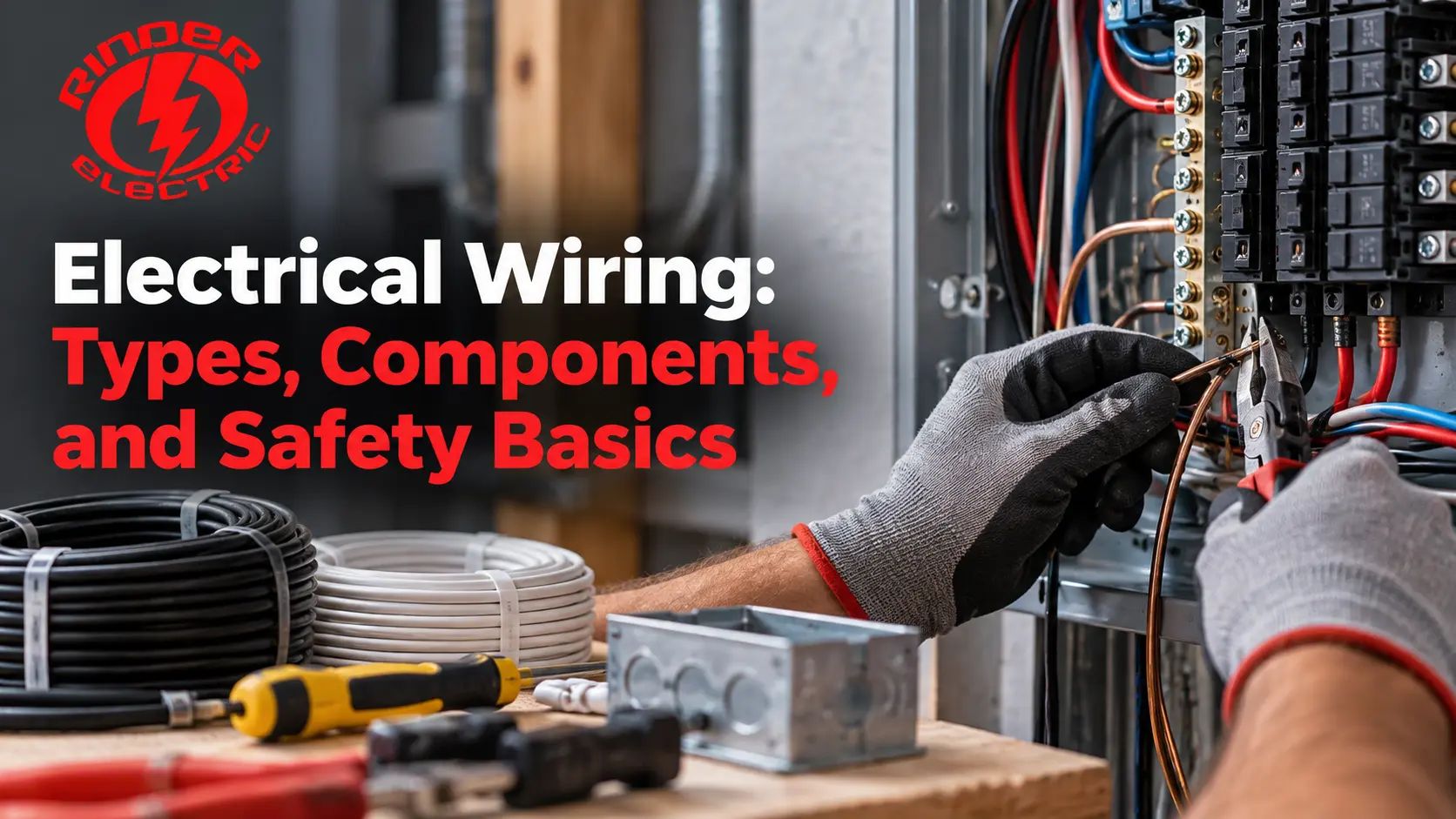
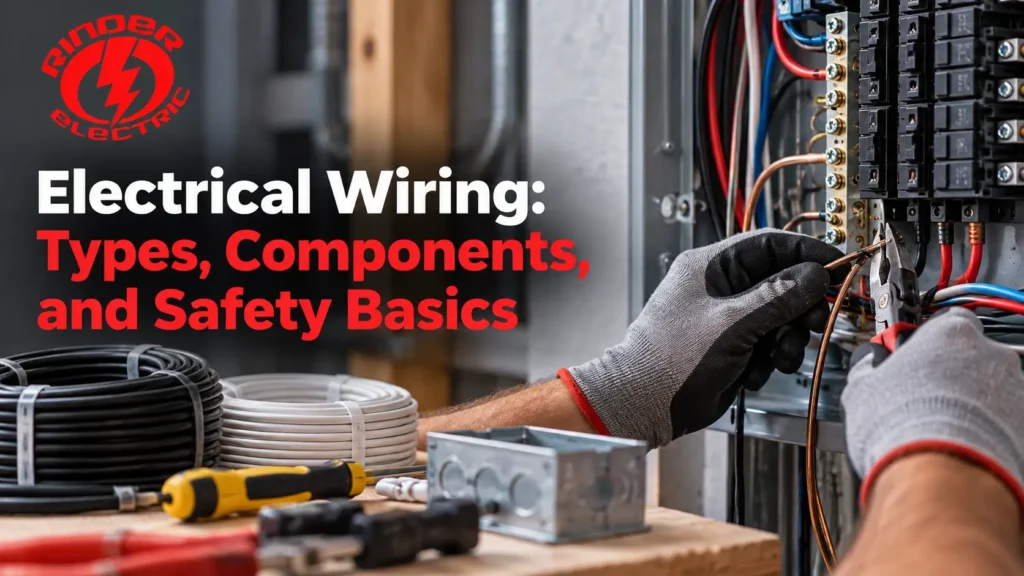
Electrical wiring in a house comes down to a few basic parts. Copper or aluminum conductors carry the current, and plastic insulation keeps them apart. A cable jacket or a length of conduit then holds them together on the way through the walls. Panels and connectors tie each run into a working house wiring system. This guide covers the common wire types in residential electrical wiring, what the markings and colors on a cable tell you, and how the main components work together.
Which Electrical Wire Types Are Common in Homes?
Homes rely on a few wiring methods, and what sets them apart is how the conductors are wrapped and protected. Here are the ones you’ll most likely find.
Nonmetallic-Sheathed Cable
Nonmetallic-sheathed cable, usually shortened to NM cable, is common in houses built in recent decades. Inside a plastic jacket, two or more insulated conductors share space with a bare or covered grounding conductor. Builders run it through framed walls, floors, and ceilings in dry interior areas. It doesn’t belong everywhere, and the electrical code and local rules decide where it’s allowed.
Armored Cable and Metal-Clad Cable
Armored cable, called type AC and often nicknamed BX, and metal-clad cable, called type MC, both put a flexible metal covering around insulated conductors. The two look alike, but the construction inside differs. AC cable has a thin bonding strip under the armor that lets the armor act as the grounding path. Standard MC cable carries its own green or bare grounding conductor instead. Each type also has its own approved uses, so one can’t simply stand in for the other.
Conduit and Older Wiring Methods
Conduit is a hollow metal or plastic tube that holds individual insulated conductors and protects them from damage. It’s a raceway and doesn’t carry working current itself. Older homes also have methods that are no longer used, such as knob-and-tube, where single conductors ran along ceramic knobs and through ceramic tubes before the mid-1900s. In Irvington, a historic district on Indianapolis’s east side, about 78 percent of homes were built before 1960, so a house there can contain wiring from more than one era.
What Are the Main Parts of an Electrical Cable?
People use wire and cable as if they meant the same thing, but they describe different objects. A wire is a single conductor, either one strand or one solid piece of metal. A cable bundles several conductors together with their insulation and usually an outer covering.
Inside the cable, the conductor does the real work. Copper is the usual choice in houses because it carries current well and stays stable at connections. Insulation, the plastic coating on each conductor, keeps neighboring conductors from touching. The outer sheath or metal armor binds the group together and shields it from wear. The grounding conductor behaves differently from the rest. It carries no current in everyday operation and only comes into play during a fault, giving stray current a low-resistance route back toward the panel so the breaker can trip.
How Do Wire Gauge and Conductor Materials Differ?
Gauge shows you how thick a conductor is. The American Wire Gauge (AWG) system runs backward from what most people expect, so a 10 AWG conductor is thicker than a 14 AWG one. A thicker conductor has less resistance and can handle more current before it heats up. Houses commonly use 14, 12, and 10 gauge. Size alone doesn’t decide what’s safe, since the circuit’s purpose, the insulation’s temperature rating, the installation conditions, and the electrical code all come into play.
Copper and aluminum are the two metals you’ll run into. Copper conducts better, so aluminum has to be thicker to do a similar job, though it’s lighter and costs less. Aluminum also needs connectors designed for it. Single-strand aluminum branch-circuit wiring installed from the mid-1960s into the early 1970s led to a federal safety investigation, with the problems showing up mainly at the connections. Because of that history, the two metals can’t be swapped freely.
What Can Wire Colors and Cable Markings Tell You?
The printing along a cable sheath is the most dependable clue you have. A legend such as 12/2 with ground, type NM-B, 600 volts means 12 AWG, two insulated conductors plus a ground, NM-B cable type, and a 600-volt rating. A testing laboratory’s listing mark may appear as well. NM-B insulation is rated for 90°C, but the allowable current is calculated using the lower 60°C values.
Sheath color gives you one more hint to work with. Since manufacturers began color-coding around 2001, NM-B jackets have generally been white for 14 AWG, yellow for 12, and orange for 10. Neither the National Electrical Code nor the UL cable standard requires this, so the printed legend should settle any question about size.
The insulation on individual conductors follows conventions of its own. Black and red usually mark hot conductors, white or gray marks the neutral, and bare copper or green marks the grounding conductor. Plenty of exceptions exist, especially in older homes. A white conductor is sometimes reused as a hot conductor in switch wiring, and repairs made over the years may not follow any pattern at all. Color tells you what a wire was probably meant to do. It can’t confirm what the wire is doing now.
How Do Wiring Components Work Together in a House?
Power enters the house, reaches the electrical panel, and leaves through branch circuits. Each branch circuit is a run of conductors that starts at a circuit breaker and ends at the lights, receptacles, or equipment it serves. The breaker is a protective switch designed to open the circuit when current goes beyond what the circuit can handle or when a fault occurs.
Connections need a safe place to live. A junction box holds splices and connections so they stay protected and reachable. Wire connectors, whether twist-on, push-in, or lever-style, join the conductors inside them when they’re made for that purpose. Where cable needs extra protection, conduit carries the conductors from box to box. Electrical tape has a small role, such as marking conductors in suitable situations, and it can’t replace a proper connector, insulation system, or enclosure.
What Basic Wiring Safety Principles Should Homeowners Know?
Wiring safety starts with a few firm habits. Don’t trust a wire based on its color or appearance, and stay away from exposed conductors or any wiring that could be energized. Use products only where their ratings allow, and leave enclosures and protective coverings in place. If you run into unfamiliar wiring, a questionable connection, or an alteration you don’t understand, hand it to a qualified professional.
When Should You Ask an Electrician About Your Wiring?
Call an electrician when you find wiring you can’t identify, insulation that’s cracked or damaged, bare conductors, a past alteration that looks wrong, or wiring that needs to change. A qualified electrician can identify the wiring system, check whether it suits its intended use, and decide what work is appropriate, including any wiring installation or replacement.
FAQs
What is the difference between an electrical wire and a cable?
Think of a wire as one conductor, usually with its own insulation, and a cable as the finished product that holds several of them together. A 14/3 cable, for example, contains three insulated conductors plus a grounding conductor, all inside one outer jacket, so a single cable carries four separate conductors.
What does wire gauge tell you?
Gauge is a size label for the conductor, based on the AWG system. The scale seems backward at first, because a smaller number means a thicker conductor. Gauge is only part of the picture, since insulation rating and how the circuit is used also affect what’s appropriate.
Can wire color alone tell you whether a wire is safe?
No, color alone can’t tell you that. Color points to the job a conductor was probably meant to do, but it says nothing about how the wire is connected today or whether power is present. Old repairs and reused conductors can break the usual pattern, so anything unfamiliar needs a professional’s eye.
Understanding Your Home’s Wiring Before Making Changes
Knowing the difference between a cable and a conductor, what a gauge number means, and what each component does gives you solid footing when you talk about your home’s wiring. It also helps you spot the moment a question belongs with a professional.
Rinder Electric is a licensed, bonded, and insured electrical contractor serving Indianapolis and Central Indiana, from east-side neighborhoods like Irvington to the northern suburbs. Its services include wiring and rewiring, and electrical repairs.
If you’ve found wiring you can’t place, or you’re planning changes, one of its electricians can look at what’s in your walls and explain what work makes sense. Call (317) 701-1713 or request a free estimate and describe what you’re seeing.