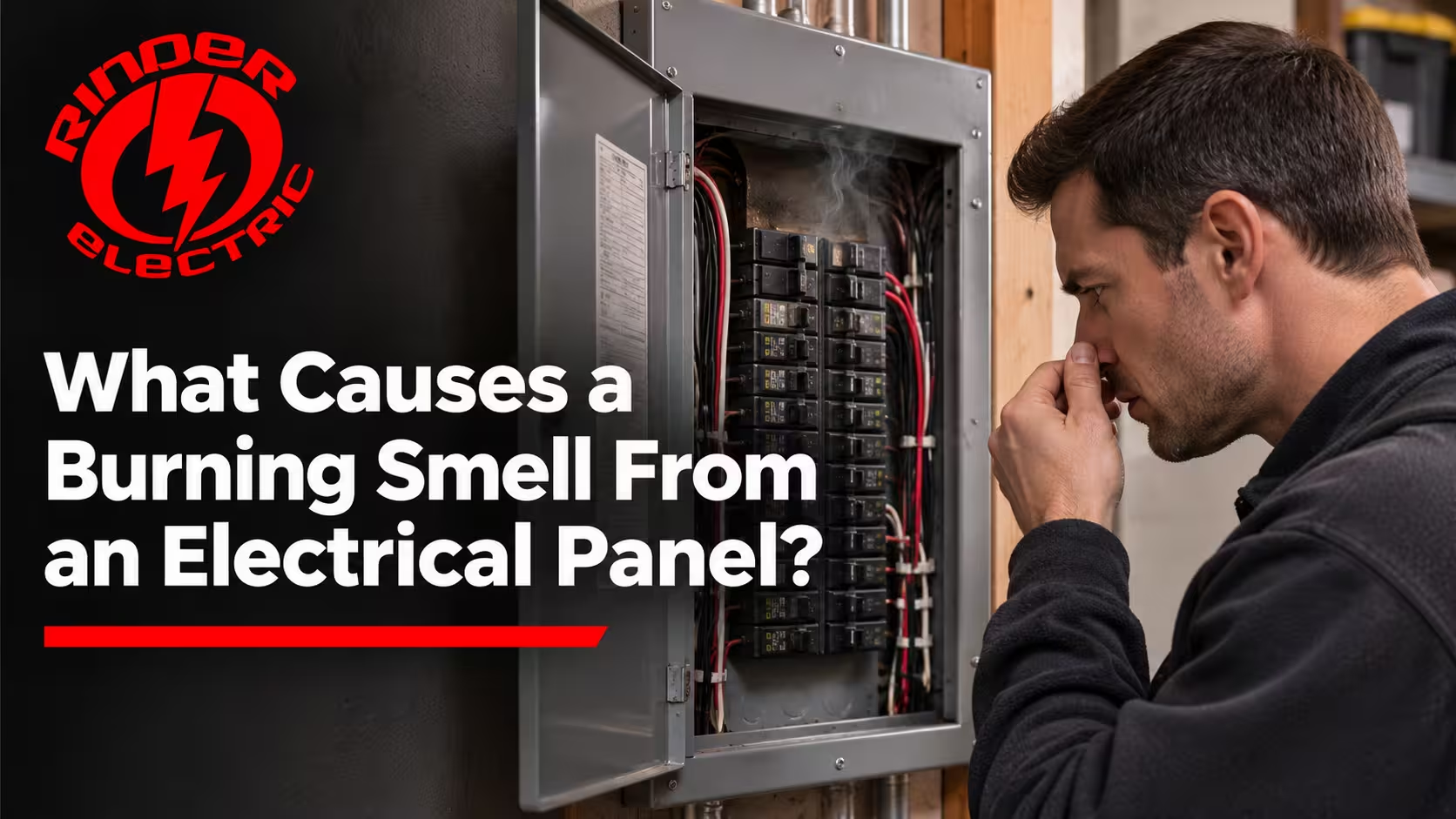
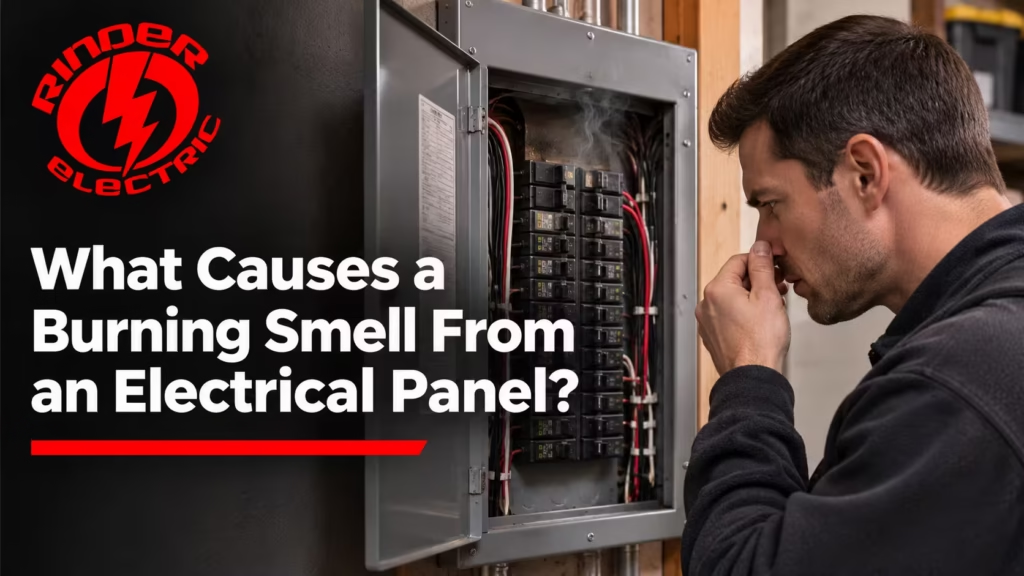
You walk down to the basement and catch a sharp smell of hot plastic near the breaker box. Don’t blame it on an old house. A healthy panel has no smell at all. When one does, a part inside is usually running too hot. Here’s what tends to cause it and how to respond safely.
Why a Burning Odor Around the Panel Deserves Attention
Your circuit breaker panel takes power from the utility. It splits that power into the circuits that feed each room. Every circuit runs through a breaker and a set of screw terminals. Healthy parts stay cool. Heat changes that. Insulation and plastic breaker cases break down when they run hot. That gives off the sharp smell most people notice first.
The smell often shows up before anything looks burned. The damage sits behind the cover. A smell that comes and goes is still a warning. The fault may only heat up while the dryer runs. But the damaged part stays damaged, and each round of heat makes it a little worse.
The National Fire Protection Association estimates that electrical distribution and lighting equipment was involved in about 32,620 home fires a year from 2015 through 2019. Your electrical panel is at the heart of that system. An odor there calls for a phone call. Not a shrug.
What Inside the Panel Could Be Producing the Smell
Several faults can heat up a panel. Most smell alike from the outside. Your nose can tell you something is wrong. The smell alone won’t tell you which part is damaged. That takes testing with the cover off, done by someone trained to work around live parts. These are the usual suspects.
Loose or Deteriorating Electrical Connections
Wires attach to breakers and metal bars inside the panel with screw terminals. Years of heating and cooling can work those connections loose. Some were never tightened right. A loose terminal connection gives less metal to pass through. That raises resistance at one spot. Higher resistance turns into heat. It cooks nearby insulation and can scorch the breaker.
A Circuit Breaker That Is Wearing Out or Failing
Breakers hide metal contacts inside a plastic case. Years of tripping under heavy load pits and burns them. Pitted contacts run hot. Tripping is how a breaker does its job, so one trip doesn’t mean it’s bad. Repeated trips on one circuit point to a problem. Don’t keep flipping it back on. Each reset pushes current through a part that may already be damaged.
Electrical Arcing Around Damaged Contact Points
Arcing happens when electricity jumps across a small gap instead of flowing through solid metal. Inside a panel, arcs tend to form where a connection has worked loose. Worn insulation invites them too. An arc throws intense heat into a tiny spot. It can scorch metal and melt the plastic around it. It’s one of the main ways a panel problem becomes an electrical fire.
Excessive Electrical Demand on Panel Components
Each breaker and the wire it protects are sized for a set amount of current. A healthy breaker trips before the wire gets too hot. Trouble starts when someone adds big loads without checking what the panel can carry. Think EV chargers or hot tubs. It also starts when an old repair put a bigger breaker on a wire that is too small for it.
Damaged Insulation or Heat-Affected Internal Parts
Wire insulation is the plastic jacket that keeps current inside the conductor. Heat bakes that jacket until it turns brittle and chars. The charred insulation can produce the burning plastic odor you notice near the breaker box. Cracked insulation lets bare metal sit closer to other wires. That sets up arcing and short circuits. Heat can also damage the busbar, the metal strip the breakers clip onto.
Clues That May Point to an Electrical Panel Problem
Other warning signs often show up along with the odor. Each one gives an electrician another piece of the puzzle to work with. Jot down what you notice and when it happens. Keep your notes short and simple. Watch for these signs from a safe distance:
- Crackling, popping, or a steady buzz
- Breakers that trip again and again on the same circuit
- Lights that flicker when a big appliance starts
- Scorch marks on the panel door or cover
- Smoke or any sign of active burning
- A smell that grows when more appliances run
None of these signs pinpoints the failed part. Flickering lights can even trace back to a problem outside the panel. Still, any one of them tells you the system needs a professional look soon. When two or more show up together, make that call today.
What to Do When You Notice the Smell
Stay calm and move away. Get yourself and everyone else away from the panel first. Troubleshooting is a job for a pro. Your only job right now is keeping people safe. These steps are simple, and they keep you from making a hidden problem worse:
- Keep everyone away from the panel. That includes kids and pets.
- Leave the cover closed. Keep your hands off the breakers and any exposed wiring.
- Don’t reset a tripped breaker or flip switches to test the problem.
- If there’s no smoke or fire, stay clear and call a licensed electrician right away.
Shut off the main breaker if you can safely reach it. Walking up to a panel that smells like it’s burning puts you at risk. Turning off the main also doesn’t make everything inside safe. The wires coming in from the utility stay live. Only a trained pro should deal with those.
If You See Smoke or Fire
Get everyone out of the house right away. Once you’re safely outside, call 911. Don’t open the panel. Don’t try to look inside or fix it. Let firefighters handle it from there. Call an electrician only after the fire crew says the home is safe to enter.
What an Electrician May Need to Examine
Finding the source takes a licensed electrician. The job means opening the panel and testing parts that may still carry power. That’s not safe work for a homeowner, even with the main switched off. Depending on what they find early on, the inspection may cover any of these areas:
- The condition of each circuit breaker
- Loose or worn terminal connections
- Signs of arcing, such as pitting or burn marks
- Heat damage around contact points
- The busbar and other internal parts
- Heat-damaged insulation and conductors
- Whether the panel can handle your home’s electrical demand
What the electrician finds decides the fix. Sometimes the job comes down to one loose connection. Sometimes it’s a single worn breaker. If heat damage has spread, larger panel repairs or a replacement may be the safer call. A burning smell doesn’t automatically mean you need a new panel.
How to Reduce the Risk of Future Panel Problems
Most panel trouble builds slowly. That’s good news, because it gives you time to catch it. You don’t need any tools or special training. You just need to pay attention and act early. These simple habits keep small problems from turning into ones you can smell:
- Book an inspection when warning signs appear or the panel ages.
- Have repeat breaker trips checked instead of resetting them.
- Skip DIY panel work and shortcuts like a bigger breaker.
- Fix leaks near the panel and report rust or dents.
- Hire a licensed electrician for every panel repair, upgrade, or new circuit.
FAQs
Is a burning smell from an electrical panel dangerous?
It can be. The odor usually means some part of the panel is running hotter than it should. That doesn’t mean a fire has started. It does mean a fault may be building toward one. Heat damage tends to get worse over time. Get it checked promptly, even if the smell fades.
Why does my breaker box smell like burning plastic?
Hot or damaged wire insulation is a likely source. Breaker cases and other plastic parts give off the same smell when they overheat. The odor alone can’t tell you which part is failing. A loose terminal and a worn breaker can smell alike. A qualified electrician needs to find it.
Should I turn off my breaker if I smell something burning near the panel?
Yes, safely turn off the main breaker if no fire exists. Getting close puts you at risk. If you see smoke or flames, leave the house and call 911 from outside. If you don’t, stay clear of the panel. Then get a licensed electrician out promptly.
Final Thoughts
Don’t brush off a burning smell near your electrical panel. It’s often the first clue that something inside is overheating. Catching it early can keep the repair small. Keep the cover closed. Keep your hands off the breakers. Let a qualified electrician track down the cause before a small fault grows.
Rinder Electric handles electrical panel repairs and upgrades for homes and businesses across Indianapolis and Central Indiana. The company is licensed, bonded, and insured. It offers 24/7 emergency electrical service. Its electricians explain the work and pricing before a job starts. If your panel smells like it’s burning, call (317) 701-1713 to set up an assessment.