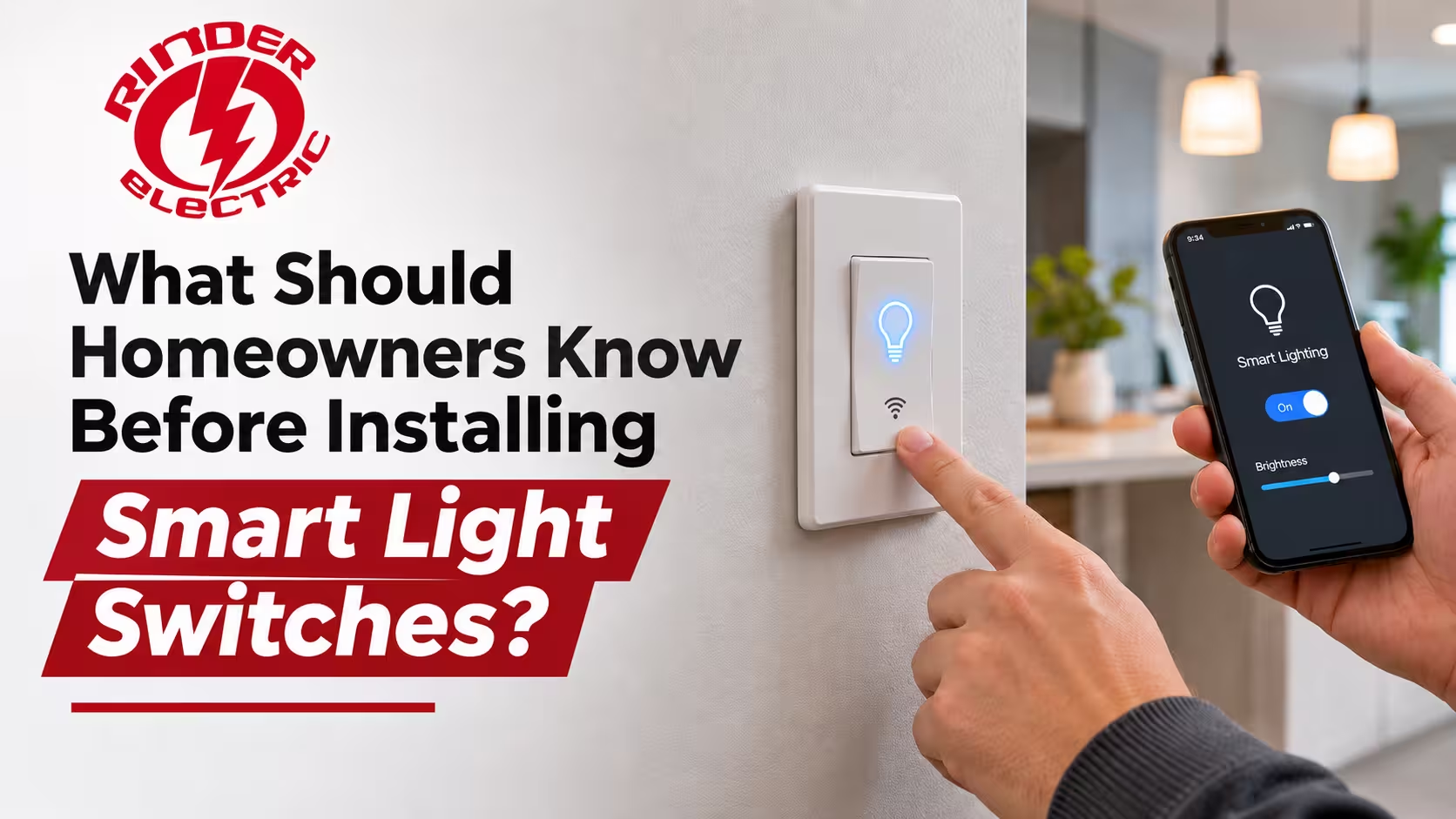
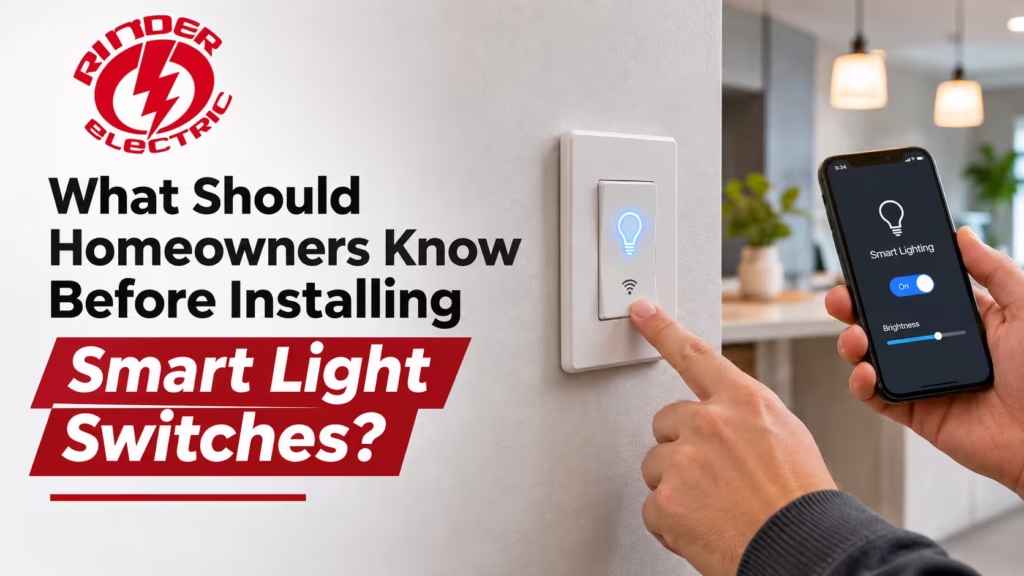
Most people want smart switches for practical reasons, like a porch light that turns on at sunset or a bedroom light you can shut off from bed. Smart Light Switch Installation looks like a simple swap, but not every smart switch works with every home’s wiring. Before buying, check for a neutral wire and identify how each switch is configured. Box space, the connected lights, and your smart home platform matter just as much. Sorting these out first helps you avoid returns and stalled projects.
What Should Homeowners Check Before Choosing a Smart Light Switch?
A smart switch asks more of the wiring behind the wall plate than the plain toggle it replaces. Two checks come before anything else.
Check the Existing Switch and Electrical Box
Figure out what you have now, whether that is one switch running one light or a light controlled from two spots. Space matters just as much. Smart switches hold a radio and control electronics, so most sit deeper in the wall than a basic switch. Older homes often have shallow boxes already packed with wires, and forcing a bulky device into one can loosen connections. Have an electrician evaluate any crowded or undersized box before you buy.
Understand the Neutral Wire Requirement
The neutral conductor carries current back to the panel to complete the circuit. A standard switch never needs it, but a smart switch keeps its electronics powered even when the light is off. Most models get that steady power through a neutral connection, which is why the smart light switch neutral wire question comes up so often. Some models skip the neutral wire requirement entirely, though they may flicker with low-wattage LEDs or list a minimum load. Check the exact smart switch installation requirements before buying, and remember that a white wire is not proof of a neutral.
Does Your Existing Switch Wiring Support Smart Switch Installation?
The circuit behind your wall plate decides which smart switches can replace the old one. A mismatch can leave a new switch dead or working from only one location.
Understand Single-Pole and Three-Way Switch Configurations
A single-pole switch controls a light from one spot. A three-way circuit lets two switches control the same light from places like the top and bottom of a staircase, and two wires called travelers run between them. Three-way switch wiring is where many smart switch plans run into trouble. Some smart switches handle this layout on their own, while others need a matching companion switch or wireless remote at the second location. A few models support only single-pole use, so read the packaging before you buy.
Check the Manufacturer’s Wiring Compatibility Requirements
Smart switch compatibility means matching the device to the circuit you already have. The line wire brings power from the panel, and the load wire carries it on to the light. The neutral returns current, the ground provides a safety path, and travelers link three-way switches. Requirements vary by model, and color or position can mislead you after past renovations. If the wiring looks unfamiliar, have a qualified electrician identify each conductor with proper testing.
Are Smart Switches Compatible With Your Existing Lights and Fixtures?
The lights on a circuit matter as much as the wires feeding it. Every smart switch lists a load rating for maximum wattage plus the lighting types it supports, which often include LEDs but may exclude certain fixtures. Exceeding that rating can cause poor performance or overheating. A standard on/off smart switch simply turns lights on and off. A smart dimmer also adjusts brightness, which makes load compatibility far more important.
Check LED and Dimmer Compatibility
A “dimmable” label on an LED bulb does not guarantee LED dimmer compatibility with every smart dimmer. Mismatched pairs can flicker or buzz, cut off early, or glow faintly when switched off. The cause usually sits in the LED driver, the small circuit inside each bulb or fixture that converts household power for the LEDs. Drivers respond differently to dimming signals. Many dimmer makers publish compatibility lists, so evaluate LED fixture compatibility against the exact switch and fixture specifications before purchasing.
Which Smart Switch Technology Should Homeowners Choose?
Connectivity decides how a smart switch talks to your phone, your voice assistant, and your other devices. Some switches connect straight to your router, while others rely on a hub or bridge.
| Technology | What homeowners should understand | Important consideration |
| Wi-Fi | Connects smart switches through the home’s wireless network | Check network coverage and device requirements |
| Zigbee | Uses a smart home communication network, often with a compatible hub | Confirm hub and device compatibility |
| Matter | A smart home interoperability standard that helps compatible devices work across supported ecosystems | Check which Matter transport and controller the device requires |
Wi-Fi switches usually skip the hub, but they need a strong signal at each wall box. Zigbee switches form a low-power mesh that typically reports back to a hub. Matter is different because it is a shared standard rather than its own radio. Matter switches typically run over Wi-Fi or Thread and need a compatible controller, and Thread devices also need a border router. Feature support still varies by product, so no single option suits every household.
Check Compatibility With Your Existing Smart Home
Start with the platform you already use. Smart home lighting controls work best when they support your preferred app and voice assistant, either directly or through a bridge. Scheduling, remote access, and scenes are common, but smart lighting automation depends on both the switch and the platform running it. If you plan to add sensors or more wireless lighting controls later, pick a protocol that fits that long-term setup.
What Safety Considerations Matter Before Replacing a Regular Switch With a Smart Switch?
Smart switches still connect to household circuits that carry dangerous voltage. App control does not remove the need for safe electrical work behind the wall plate.
Understand the Risks of Incorrect Wiring
A wrong connection can damage the switch or the light and create a shock hazard. Loose or improper connections can also build heat inside the wall and start a fire. Never rely on wire color alone to identify a conductor. Anyone opening a switch box needs to shut off power at the panel and confirm the circuit is dead with a proper tester. One box can hold wires from more than one circuit. If you lack electrical training, stay out of energized switch boxes entirely.
Know When an Electrician Should Inspect the Setup
Call a qualified electrician for damaged or unfamiliar wiring, a crowded box, or a missing neutral your chosen model needs. Unusual multi-way circuits like a light controlled from three locations also deserve a professional look. So does any doubt about electrical or lighting compatibility when you replace a regular switch with a smart switch. An electrician can evaluate the existing setup and tell you whether your chosen switch suits it. Learning to determine when an electrician is needed protects your home and your devices.
How Can Homeowners Prepare for a Successful Smart Light Switch Installation?
A little preparation helps you choose a compatible device the first time. Run through this checklist before ordering switches or scheduling any work.
- Decide which lights and switch locations need smart controls.
- Read the manufacturer’s wiring and neutral requirements for each model.
- Confirm whether each location is a single-pole or three-way circuit.
- Make sure the electrical box has room for a deeper device.
- Match the switch’s load rating and supported lighting types to the connected fixtures.
- Check LED dimming and fixture compatibility for any smart dimmer.
- Confirm Wi-Fi coverage, hub requirements, and smart home ecosystem support.
- Review the installation instructions and product ratings.
- Book a qualified electrician when the wiring needs inspection or professional installation.
FAQs
Do All Smart Light Switches Require a Neutral Wire?
No. Many smart switches need a neutral to keep their electronics powered, but some models are designed to work without one. Those can carry trade-offs such as minimum load limits, so check the exact product requirements before you buy.
Can You Replace a Regular Light Switch With a Smart Switch?
Yes, in many homes. The swap works when your existing wiring and circuit configuration suit the device you choose. The box also needs enough room, and the connected lights must match the switch’s ratings.
Do Smart Light Switches Work With LED Bulbs?
Many do. Compatibility depends on the switch’s load rating and the bulb or fixture specifications. Dimmers need one more check, because the dimmer and the LEDs must be designed to work together.
Final Thoughts
The right smart switch starts with the right checks. Confirm the wiring and neutral requirements, your switch configuration, and the space in each box before you buy. Then make sure the switch suits your lights and your smart home platform, because a compatible device and safe connections are what keep everything running reliably.
Rinder Electric helps homeowners with smart home automation and electrical work, including the neutral wiring that many smart devices depend on. If you live in Indianapolis or Central Indiana and want help with smart lighting controls, contact Rinder Electric to request a free estimate.