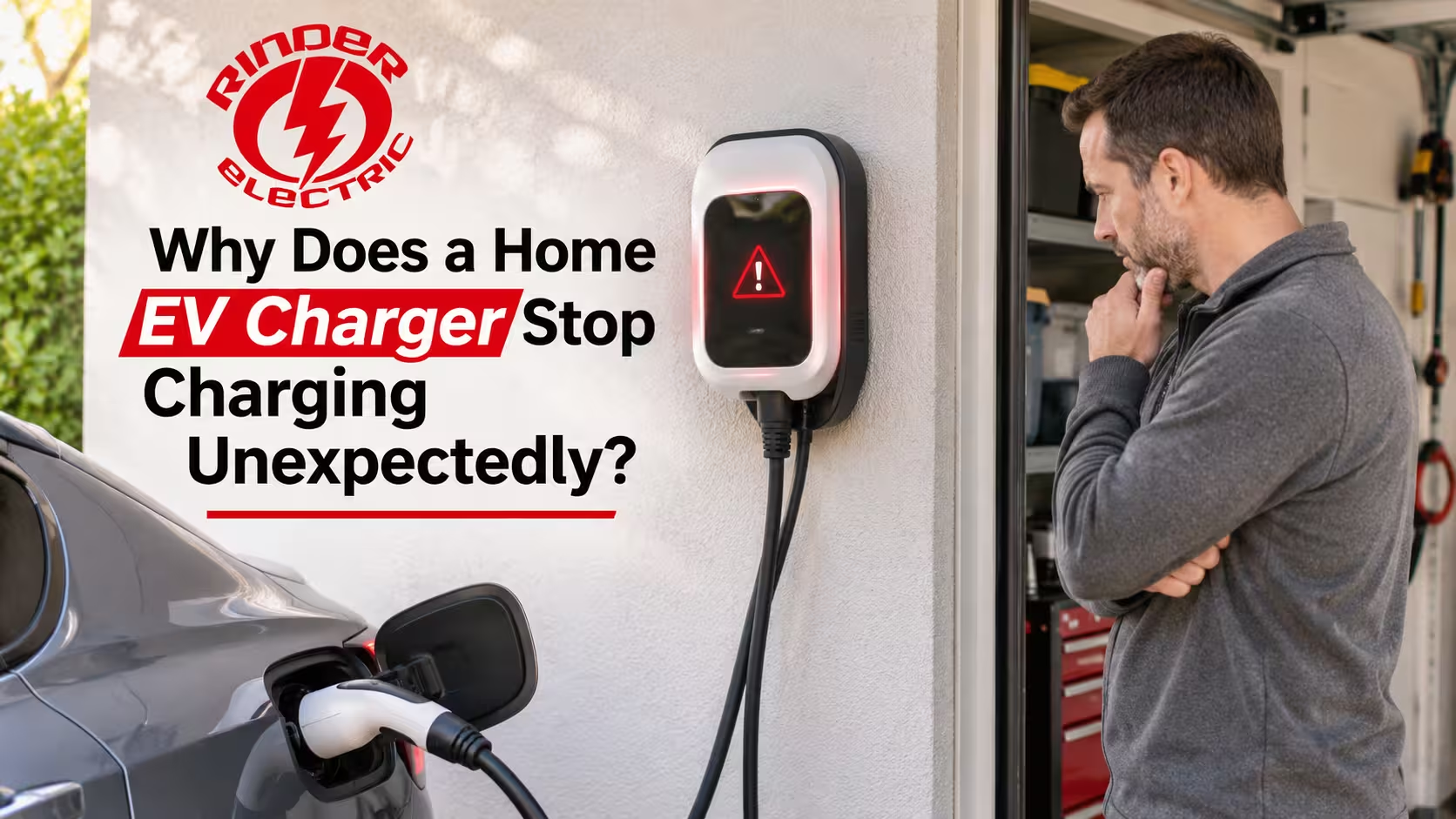
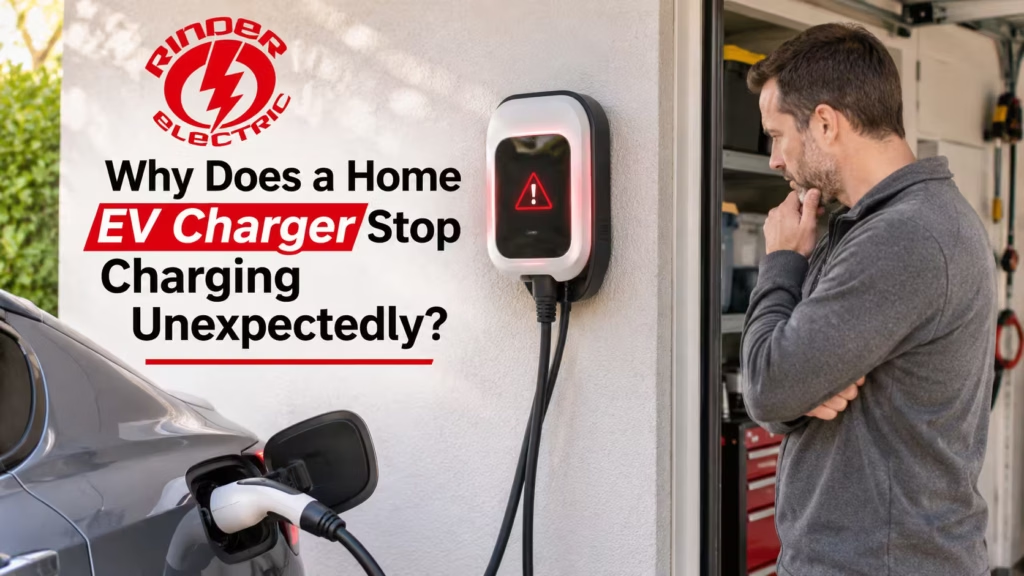
You plug in after work and watch the charge light come on. The next morning, the car shows 52 percent because the session quit hours ago. A home EV charger not charging through the night looks like a dead unit, but the real cause often sits somewhere else.
The vehicle, the charger, the connector, or your home’s wiring can each cut a session short. Most cases trace back to charging schedules, equipment faults, supply problems, protection trips, or overheating. Finding which part stopped the power comes first, and the car is the easiest place to start.
Can Your Electric Vehicle’s Charging Settings Cause Charging to Stop?
Your charger offers power, but the car decides when to take it. Plenty of home EV charging problems turn out to be settings doing exactly what someone told them to do.
Check the Vehicle’s Charging Schedule and Battery Limit
If the car waits for an off-peak window, it can look like charging started at plug-in and then quietly stopped. Departure-time settings work the same way because the car times the session to finish right before you leave. Some charger apps also run a separate schedule that can clash with the car’s.
A battery limit ends sessions on purpose, so a car set to 80 percent stops at 80. Open the charging screen or app and review vehicle charging settings before you blame any hardware.
Look for Vehicle Notifications or Charging Restrictions
Check the dashboard and the app for a charging interruption notice or a system warning. Software updates and vehicle-side faults can change charging behavior, but software is only one suspect. If another compatible charging station is safely available, try it. Electric car charging interrupted at that station too points toward the vehicle, while a clean session points back to your home setup.
What Do EV Charger Status Lights and Error Codes Tell You?
When a session stops, the charger usually records something, and those lights and alerts are often your best clue.
Check the Charger Status Indicators
Most Level 2 chargers use status lights and a small display or app alerts to show whether the unit is ready, charging, or reporting a fault. Check charger status indicators against the manual for your exact model, because colors and blink patterns are not universal. A flashing light that means “waiting” on one brand can signal a fault on another.
Read Manufacturer Error Messages
EV charger error codes go a step further than lights. A code may point to a communication failure between charger and car, a ground fault, an overcurrent condition, or an internal problem. Write down the exact message or photograph the light pattern so support or an electrician can work from facts.
Read manufacturer error messages for the response they call for. A charging station fault that keeps returning isn’t something to clear and forget. If the code involves safety, follow the manufacturer’s instructions instead of restarting the charger over and over to force a session through.
Can a Loose or Damaged Charging Connector Interrupt an EV Charging Session?
The charger and car communicate through signal pins inside the connector. If that link drops for even a moment, the car usually ends the session.
Check the Charging Connector and Cable for Visible Problems
A plug that isn’t fully seated is one of the simplest charging connector problems, and a worn latch can leave just enough gap to break the signal. Look for cuts, crushed spots, or cracked jacket material along the cable. Dirt, ice, or debris in the handle or the car’s inlet can interfere too. Inspect by eye only, without opening the handle or attempting any repair.
Understand Connector and Vehicle Compatibility
J1772 has long been the standard Level 2 connector for most non-Tesla vehicles in North America. NACS started as Tesla’s design and now carries the SAE J3400 standard, with more automakers adopting it. The Tesla Wall Connector is one example of home hardware and comes in more than one connector version.
Compatibility and approved adapters depend on your exact vehicle and equipment, so check both manufacturers’ guidance. If a Level 2 charger is not working and only acts up with one adapter, start your search with that adapter.
Can Household Electrical Problems Cause a Home EV Charger to Stop?
Level 2 charging pulls a heavy load for hours, and that steady demand exposes weak spots in a home’s wiring. The protective devices on the circuit cut power whenever something looks wrong.
Understand Breaker Trips and Charging Circuit Protection
Your Level 2 EV charger (formerly called electric vehicle supply equipment, or EVSE) usually runs on its own circuit with a breaker in the panel. If that breaker trips, the session ends. Charging circuit protection works in layers because the breaker guards against overcurrent while the charger’s ground fault protection watches for current leaking where it shouldn’t.
An occasional single trip isn’t always cause for alarm. Repeated trips usually signal an overload, a wiring problem, or an equipment fault. Reset the breaker once at most and leave it off if it trips again.
Recognize Electrical Supply and Ground Fault Problems
Electrical supply issues don’t always trip a breaker. Loose connections, damaged wiring, or a weak ground can make the charger shut itself down, and many units refuse to keep charging without a proper ground. That shutdown is the protection system doing its job. A qualified electrician should test the circuit whenever the charger reports grounding or supply problems.
Why Can an EV Charger Stop Working Because of Overheating?
Chargers watch their own temperature through internal sensors, and some also monitor the plug. When heat builds, a charger may lower its output first and then stop completely if temperatures keep climbing.
Hot weather and poor airflow around the unit can trigger charger overheating, and so can an internal fault or a worn outlet behind a plug-in charger. Recognize overheating warning signs early: temperature error messages, sessions that stop on hot days, or heat you can feel coming off the unit. Discoloration, melting, or warped plastic on the connector or cable is another red flag.
Don’t touch unusually hot equipment. Stop charging and follow the manufacturer’s safety instructions, then get a professional inspection if the problem keeps coming back.
What Safe Checks Can Homeowners Perform When EV Charging Stops?
Good EV charger troubleshooting starts with hands-off checks. They help you identify interrupted charging sessions and narrow the cause to car settings, charger communication, or a visible connection problem.
- Check whether the car stopped at its selected battery charge limit.
- Review the vehicle’s scheduled charging and departure-time settings.
- Open the charger app and look for paused sessions or notifications.
- Write down the charger’s status light pattern or error message.
- Confirm the connector looks fully seated without forcing it.
- Look for visible damage, unusual heat, or discoloration on the cable and connector.
- Note whether lights flickered or other outlets lost power around the same time.
- Look up the reported warning in the manufacturer’s manual.
Stop there, and don’t open the charger or remove electrical covers. Testing wiring, bypassing safety devices, and internal repairs belong to qualified professionals. These checks can point you toward a likely cause, but they can’t replace an electrical inspection.
When Should You Call an Electrician or EV Charger Manufacturer?
The right call depends on where the trouble starts. Your notes from the checks above help you determine when charger inspection is necessary and who should handle it.
Contact an Electrician for Electrical or Circuit Problems
Call an electrician when breakers trip repeatedly, or the charger keeps reporting grounding or circuit faults. Damaged wiring, loose connections, and charging circuit problems need hands-on evaluation by someone qualified. Burning smells, sparks, or unusual heat call for faster action, as does visible electrical damage. Stop using the charger and get professional help right away.
Contact the Charger Manufacturer or Vehicle Support
Charger-specific error codes, firmware problems, and repeated equipment faults usually belong with the manufacturer. If the same problem shows up on several compatible chargers, contact vehicle support instead. A fault that follows the car points to the vehicle, while one that stays with your home unit points to the charger or its circuit.
FAQs
Why Does My EV Charger Start Charging but Then Stop?
The car’s schedule or battery limit is the most frequent reason. If those settings look right, check for a loose connector, a breaker trip, overheating, or a fault inside the charger.
Can a Tripped Breaker Cause a Home EV Charger to Stop Charging?
Yes. A tripped breaker cuts power to the charger, so the session ends immediately. If it trips again after one reset, stop resetting it and have an electrician find out why.
Should I Keep Using an EV Charger That Displays an Error Code?
That depends on the specific warning, since some messages clear once you fix a setting. Safety-related faults, overheating warnings, damaged equipment, or recurring errors mean you should stop using the charger and follow the manufacturer’s guidance.
Final Thoughts
Most interrupted sessions trace back to car settings, charger signals, connectors, the electrical supply, or heat. Checking them in that order usually shows where the problem lives, and interruptions that keep returning deserve a real look instead of another reset.
Rinder Electric is a licensed electrical contractor serving Indianapolis and Central Indiana, and its work includes Level 2 home charger installation and electrical repairs. If your charger keeps dropping sessions or a breaker won’t stay on, call (317) 701-1713 to have the circuit and connection checked.