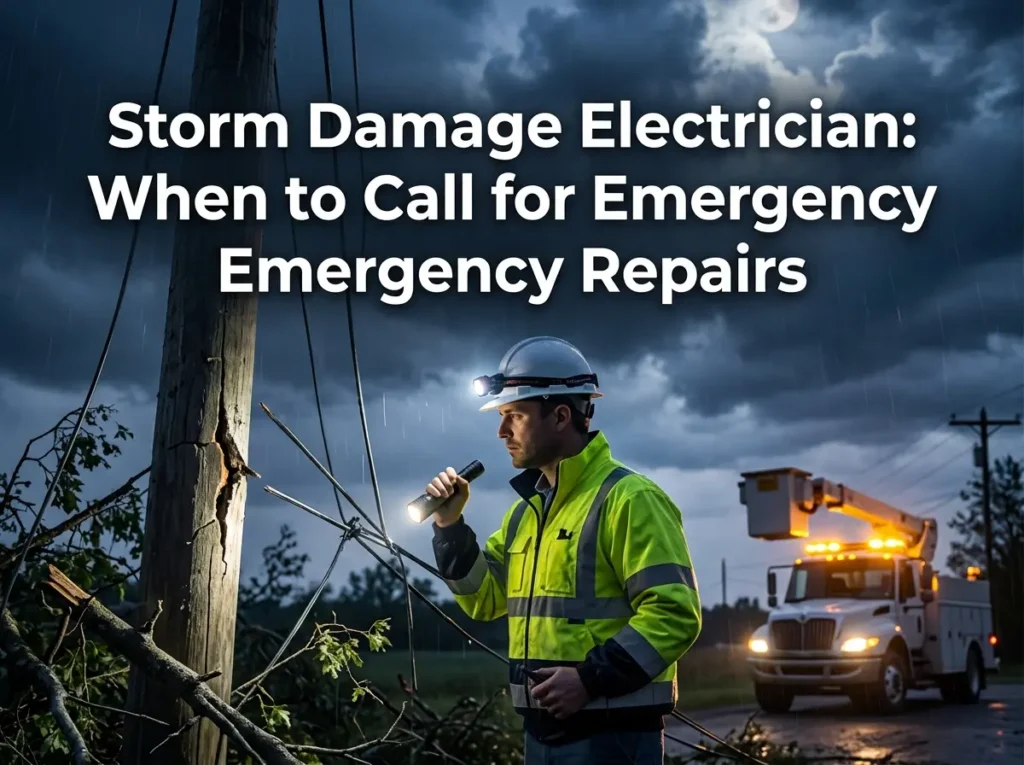
A storm damage electrician checks electrical systems after wind, hail, lightning, snow, or flooding. You may need urgent help if you see sparks, smell burning, lose partial power, or find water near wiring. Hidden damage can remain dangerous after the weather clears. A quick inspection can reduce shock, fire, and property risks.
When Should You Call a Storm Damage Electrician?
Call a storm damage electrician when your system seems unsafe after severe weather. Some problems are clear, such as a broken service line. Others hide behind walls, panels, and outdoor equipment. Don’t keep resetting breakers because that won’t fix the fault.
Call Immediately for Sparks Smoke or Burning Smells
Sparks, smoke, and burning smells are emergency warning signs. They may point to damaged wires, loose connections, or overheated parts. Leave the affected area and call emergency services if you see fire. Contact a licensed electrician once the area is safe.
Don’t touch the outlet, panel, or appliance causing the problem. Never pour water on an electrical fire. Fast action matters because storm damage can weaken insulation and connections.
Call When Part of the Home Loses Power
Partial power loss can mean more than a utility outage. One area may work while another stays dark. Lights may also dim, brighten, or flicker without warning. These signs may point to service damage or a loose connection.
Turn off sensitive electronics when it is safe. Avoid large appliances until the system is checked. An electrician can test the voltage, panel, service, and affected circuits.
Call When Water Reaches Electrical Equipment
Water near outlets, panels, wiring, or appliances creates a serious risk. Wet equipment may still carry electricity. It can also corrode inside after the surface looks dry. Never enter standing water when electrical equipment may be live.
Keep the power off until a qualified electrician checks the system. ESFI warns people not to touch submerged electrical equipment. FEMA also advises against handling wet electrical items.
What Can a Storm Damage Electrician Repair?
A storm damage electrician can inspect and repair many parts of your system. The required work depends on the storm and damaged area. Wind can pull on service parts and outdoor wiring. Water and lightning can affect panels, circuits, outlets, and appliances.
How Is a Storm-Damaged Electrical Panel Handled?
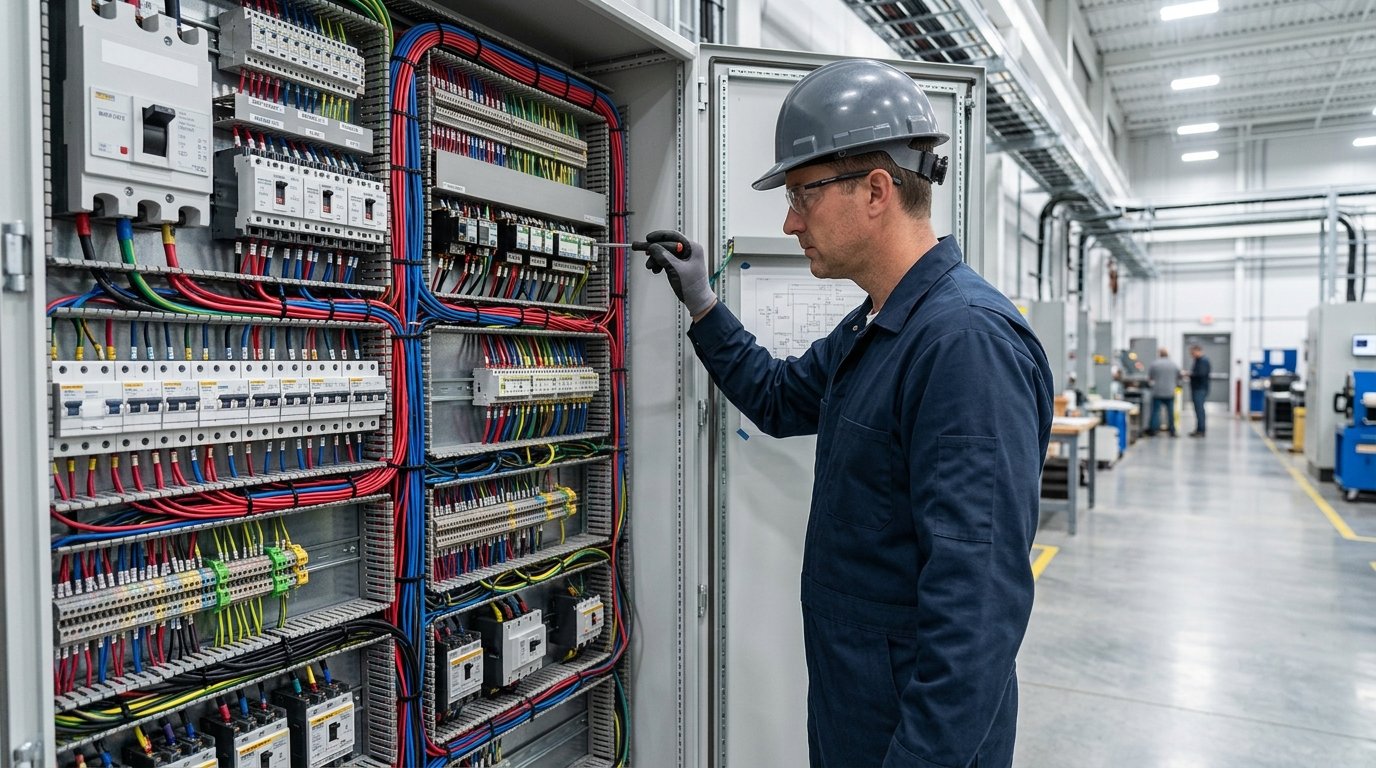
A storm-damaged electrical panel needs prompt inspection. Warning signs include rust, buzzing, heat, water marks, or a burnt smell. Breakers may also trip or fail to reset. Don’t open the panel because live parts may remain inside.
The electrician checks breakers, bus bars, grounding, and service connections. Minor damage may allow repair. A wet, burned, or corroded panel may need replacement.
What Happens During a Storm Damage Wiring Inspection?
A storm damage wiring inspection checks visible and hidden system parts. The electrician may test circuits, outlets, grounding, breakers, and damaged areas. Attics, crawl spaces, garages, and exterior walls may also need review. The goal is to find faults before full power returns.
Testing may reveal short circuits, weak insulation, moisture, or loose connections. Ask for photos and a written repair scope. These records may help with an insurance claim.
When Is Outdoor Electrical Damage Repair Needed?
Outdoor electrical damage repair is needed when storms harm exposed equipment. This includes outlets, lights, conduit, meter parts, pumps, and landscape wiring. Wind, branches, hail, and water can crack covers or loosen fittings. Small openings may allow more water inside later.
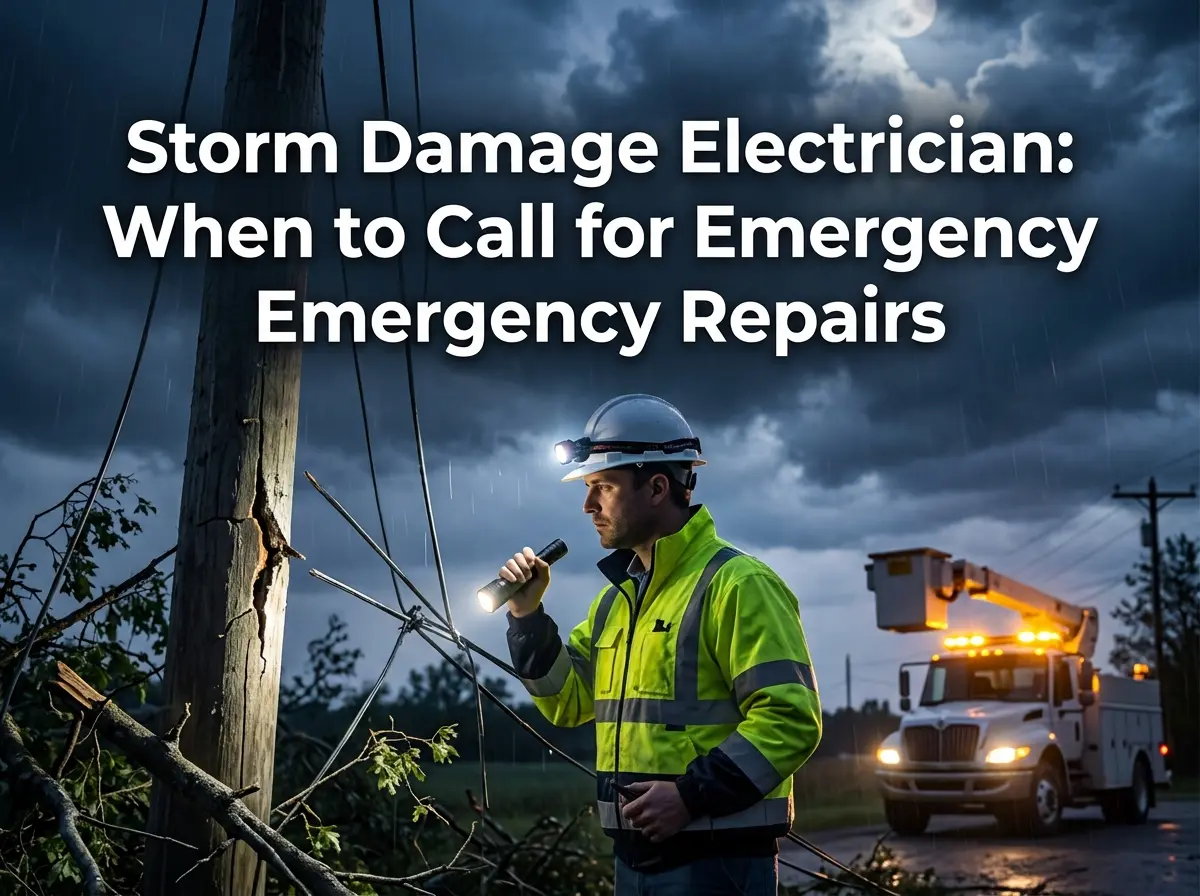
Don’t touch fallen wires or nearby objects. Treat every downed line as live. Keep people and pets away, then call the utility or emergency services.
When Do You Need a Lightning Damage Electrician?
Call a lightning damage electrician after a nearby strike causes electrical problems. Lightning can harm breakers, wiring, surge protectors, appliances, and smart devices. Some items fail at once. Others may work poorly and fail later.
Watch for dead outlets, buzzing, scorch marks, or repeated breaker trips. An electrician can inspect the panel, grounding, surge devices, and circuits. Damaged appliances may need separate repair or replacement.
Can Water Damaged Electrical Wiring Be Repaired?
Water-damaged electrical wiring repair depends on the wire type and exposure. Light, clean moisture differs from full flooding. Floodwater can carry dirt, chemicals, and waste into electrical parts. A dry surface doesn’t prove the inside is safe.
Some wet parts must be replaced instead of cleaned. These may include outlets, switches, breakers, and submerged equipment. FEMA notes that submerged dry-location wiring may need replacement because contaminants can remain inside.
A licensed electrician should make the final decision. They can test insulation and inspect wire ends for corrosion. Don’t restore power simply to see whether the system works.
What Should You Do Before Emergency Repairs Begin?
Your first job is avoiding damaged electrical parts. Stay out of wet rooms containing outlets, cords, or appliances. Don’t move fallen wires or objects touching power lines. Keep children and pets away.
Leave utility-disconnected power off. Don’t restart the main breaker without professional advice. Take photos from a safe distance and note when problems began. This information may support repairs and insurance records.
Never unplug equipment while standing in water. FEMA and ESFI advise keeping wet systems off until inspected.
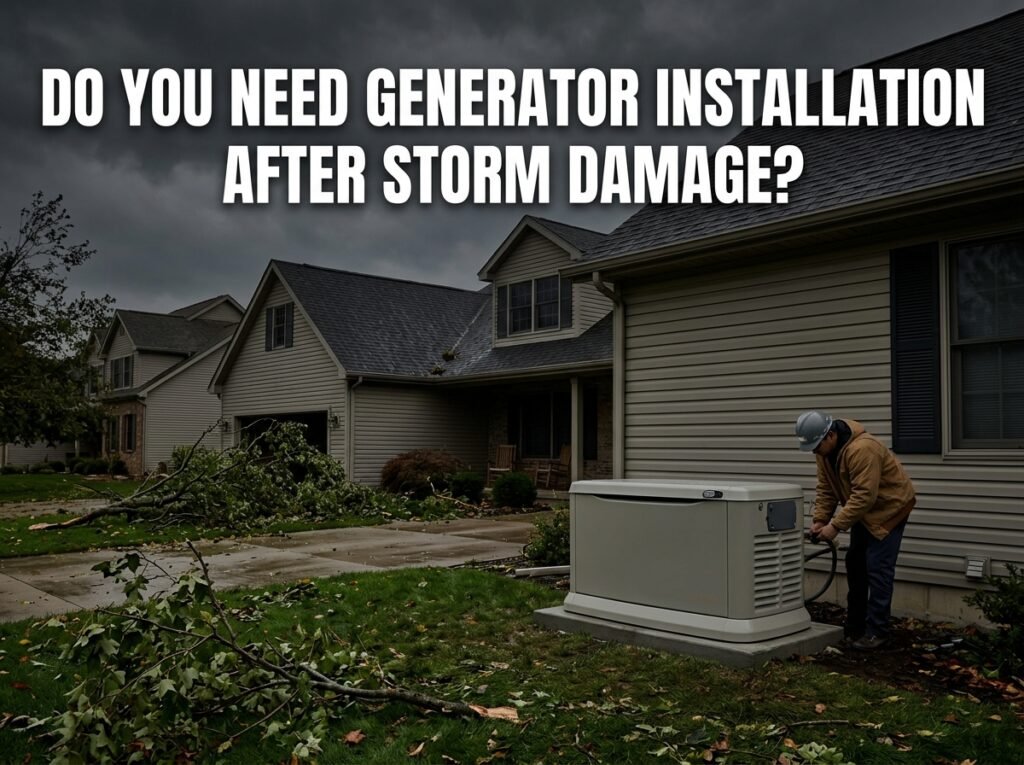
Do You Need Generator Installation After Storm Damage?
Generator installation after storm damage can support a long outage. It may run refrigeration, lighting, sump pumps, or medical equipment. The generator must match your electrical needs. It also needs a safe connection method.
Never connect a portable generator through a wall outlet. This can send power back into utility lines and endanger workers. A transfer switch or approved interlock should be installed by a qualified electrician.
Run portable generators outdoors and away from doors, windows, and vents. Never run one inside a garage. Carbon monoxide can build up quickly. Working carbon monoxide alarms are also essential during outages.
What Happens During an Emergency Electrical Visit?
An emergency visit begins with a safety check. The electrician looks for fire, shock, water, and service hazards. Damaged circuits may be isolated before testing starts. Safe parts of the home may then regain power.
The electrician checks the panel, grounding, service, and affected circuits. Some situations allow a safe temporary repair. Larger repairs may need a permit and inspection.
Ask whether the home is safe to occupy. Also ask which circuits must remain off. Emergency work should restore safety first, not only power.
Does Boulder Require a Licensed Electrician?
Electrical work in Boulder should be completed by properly licensed professionals. The city requires electrical contractors to register and hold Colorado credentials. Electrical work must also receive proper supervision. These rules support safe work and code compliance.
Permits may be needed for panel replacement, rewiring, service changes, and generator connections. Boulder uses the 2023 National Electrical Code within its inspection program. Work started without an approved permit may face higher fees.
Ask who will pull the permit and schedule inspections. Keep the permit, invoice, photos, and final inspection record. These documents can help with insurance and future property sales.
How Can You Reduce Future Storm Damage?
You can’t stop storms, but you can reduce electrical risk. A whole home surge protector can help protect the main system. Quality plug in protection can support sensitive electronics. Surge protection is useful during nearby lightning and utility changes.
Check outdoor outlets, covers, lighting, and conduit each season. Replace cracked covers and loose fittings. Never trim branches close to live utility lines yourself.
Plan backup power before the next outage. A planned generator installation is safer than a rushed setup. Test smoke alarms, carbon monoxide alarms, GFCI outlets, and sump pumps regularly.
When Should You Book a Non-Emergency Inspection?
Book an inspection when the storm has passed but something feels different. You may notice flickering lights, breaker trips, or dead outdoor outlets. These problems may not require emergency services. They still need prompt attention.
A storm damage wiring inspection also makes sense after water entry, roof damage, or a close lightning strike. Hidden faults can worsen over time. Early testing may prevent repeat outages and equipment damage.
For a Boulder home, choose an electrician familiar with local permits. Describe the storm, affected areas, and water exposure. Clear details help the electrician prepare for the visit.
FAQS
Can I Reset a Breaker After a Storm?
You may reset a breaker once when the area is dry and damage isn’t visible. Stop if it trips again. Repeat trips can mean a fault or overload. Don’t hold the breaker on or reset it many times. Call an electrician if you notice water, heat, buzzing, sparks, or burning smells.
How Soon Should Wiring Be Inspected After Water Damage?
Arrange an inspection as soon as the property is safe to enter. Keep power off in wet areas until the check is complete. Water can remain inside outlets, boxes, cables, and equipment. Corrosion may begin before damage is visible. An electrician can decide what can be tested and what needs replacement.
Does Homeowners Insurance Cover Storm Electrical Damage?
Many policies cover sudden storm damage, but terms vary. Lightning, wind, falling trees, surges, and floods may receive different treatment. Flooding often needs separate coverage. Take safe photos and contact the insurer early. Ask your electrician for a written report, repair scope, and itemized invoice.
Can an Electrician Repair a Storm-Damaged Electrical Panel?
Sometimes, but the answer depends on the damage. Minor external damage may allow a focused repair. Water entry, burned parts, heavy corrosion, or damaged bus bars may require replacement. The electrician must inspect and test the panel first. Don’t open or dry the panel yourself.
Is a Generator Safe After Storm Damage?
A generator is safe only when used and connected correctly. Portable units must stay outdoors and away from openings. They should never connect through a wall outlet. A transfer switch or approved interlock helps prevent backfeed. Have an electrician inspect damaged home wiring before powering connected circuits.