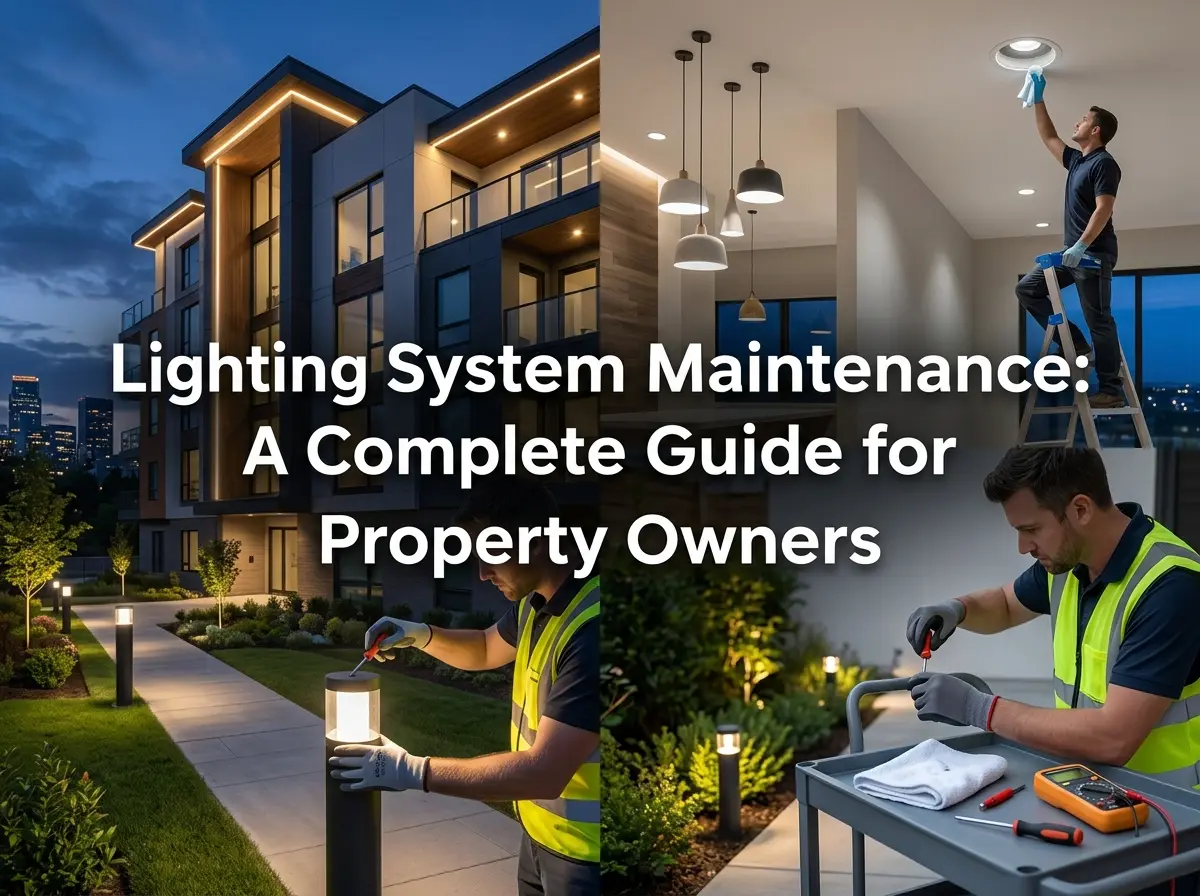
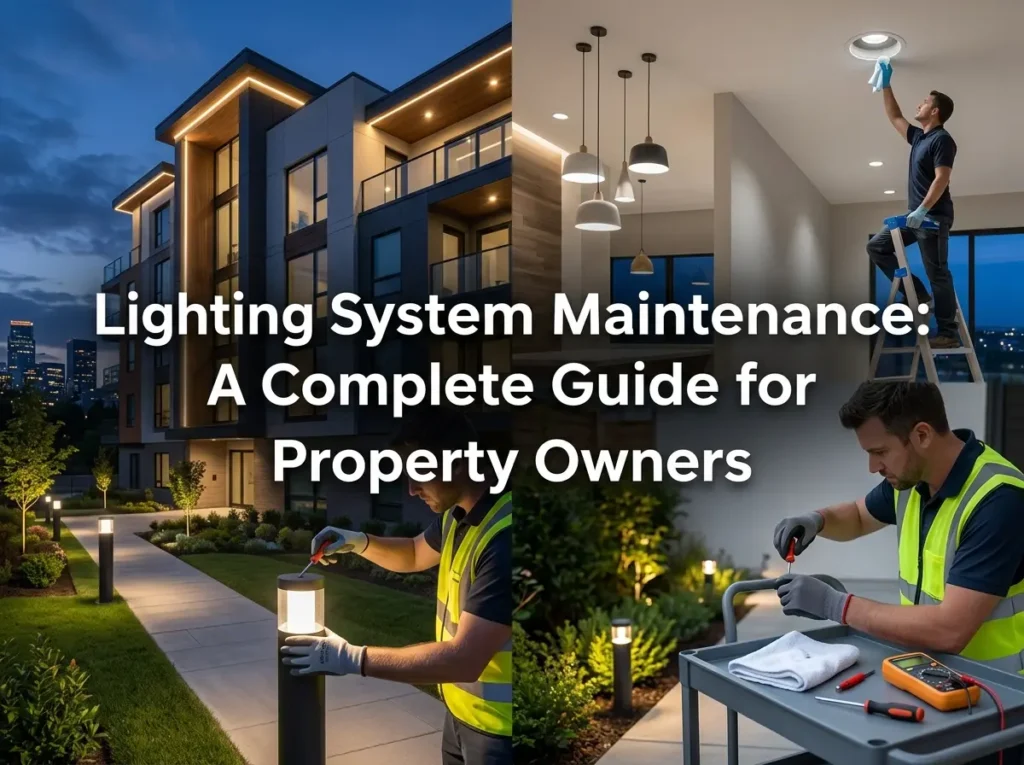
Lighting system maintenance helps keep a property safe, bright, and energy efficient. It includes checking fixtures, wiring, controls, bulbs, and outdoor lights. Regular care can prevent sudden failures and lower repair costs. It also helps property owners spot electrical problems before they become serious.
A lighting system may appear simple. You switch it on, and the area becomes bright. Yet many parts work together behind the scenes. Dust, heat, moisture, loose wiring, and old equipment can reduce performance over time.
A clear maintenance plan makes these problems easier to control. It also gives tenants, workers, customers, and visitors a safer environment.
Why Does Lighting System Maintenance Matter?
Lighting system maintenance protects people and property from avoidable risks. A damaged fixture can cause flickering, overheating, or electrical failure. Poor lighting can also increase the chance of falls, accidents, and security problems.
Regular maintenance keeps light levels steady. This is important in hallways, stairs, parking areas, workspaces, and building entrances. People need clear visibility to move safely.
Well-maintained lights also use energy more effectively. Dirty covers and aging lamps may produce less light while using the same amount of power. Property owners may then install brighter bulbs instead of fixing the real problem.
Routine care can provide several benefits:
- Fewer unexpected lighting failures
- Lower electricity use
- Better indoor visibility
- Improved outdoor security
- Longer fixture and bulb life
- Reduced repair expenses
- A cleaner property appearance
Lighting also affects how people feel inside a building. A bright, even space often feels safer and more welcoming. Dark corners and flickering lights can make a property look neglected.
What Does Lighting System Maintenance Include?
Lighting system maintenance includes cleaning, testing, inspecting, and replacing key parts. It covers more than changing burned-out bulbs. A complete service checks how the entire system works.
The exact tasks depend on the property type. A small home may have a simple system. A commercial building may include emergency lights, motion sensors, timers, security lighting, and large control panels.
Common maintenance tasks include:
- Cleaning bulbs, lenses, and fixture covers
- Replacing burned-out or weak lamps
- Checking for flickering lights
- Tightening loose fixture parts
- Testing switches and dimmers
- Inspecting visible wiring
- Checking timers and photocells
- Testing motion sensors
- Reviewing outdoor fixtures
- Checking emergency lighting
- Looking for heat damage or corrosion
- Confirming that light levels remain even
Property owners should also watch for signs of water entry. Moisture can damage outdoor fixtures and lights near kitchens, bathrooms, or basements.
Some checks are simple and safe for property owners. Electrical repairs should be completed by a qualified electrician. Don’t open panels or handle exposed wiring without proper training.
How Often Should You Inspect Lighting Systems?
How often to inspect lighting systems depends on their location and daily use. Most properties need a basic visual check every month. A more detailed lighting system inspection should happen at least once or twice each year.
Busy commercial spaces may need more frequent checks. Lights in offices, shops, warehouses, and apartment buildings often run for long periods. That extra use can shorten lamp and fixture life.
A practical inspection frequency may include:
Monthly Visual Checks
Monthly checks help identify clear problems early. Walk through the property and look for burned-out, dim, or flickering lights. Check entrances, stairs, hallways, bathrooms, and outdoor areas.
You should also look for broken covers or loose fixtures. Note any area that seems darker than normal. A quick monthly check can prevent a small problem from being ignored for months.
Quarterly Functional Checks
A quarterly check should test controls and special lighting features. Test timers, motion sensors, dimmers, and automatic controls. Confirm that outdoor lights turn on at the correct time.
Emergency lights should also be tested based on local rules and manufacturer guidance. Record any failure and arrange repairs without delay.
Annual Professional Inspections
A professional lighting system inspection should take place at least once a year for many properties. Larger buildings may need inspections every six months.
An electrician can check wiring, connections, panels, and signs of overheating. They can also identify outdated equipment or fixtures that waste energy.
Properties in Boulder may face changing weather, snow, moisture, and strong sunlight. These conditions can affect exterior lights. Outdoor systems may need extra checks after harsh weather.
What Happens During a Lighting System Inspection?
A lighting system inspection checks the condition, safety, and performance of each lighting area. The person completing the inspection should follow a clear route. This helps prevent missed fixtures.
The inspection normally begins with a visual review. Each fixture is checked for damage, dirt, discoloration, and loose parts. The inspector also looks for buzzing, blinking, or uneven light.
Fixtures and Lamp Condition
Fixtures should sit firmly in place. Covers should not have cracks or missing pieces. Bulbs should match the recommended type and wattage.
Dark marks around a fixture may point to excess heat. Melted plastic or a burning smell needs urgent attention. Turn off the affected light and contact an electrician.
LED lights may not burn out in the same way as older bulbs. They often become dimmer or begin to flicker. A failing LED driver can also cause repeated problems.
Wiring and Electrical Connections
Visible wires should not have cuts, damage, or loose insulation. Connections should remain covered and secure. Only a qualified person should open fixtures or electrical boxes.
Frequent bulb failure may suggest a wiring or voltage problem. Replacing the bulb again won’t solve the main issue. A professional should test the circuit.
Switches, Sensors, and Controls
Every switch should work without delay. Dimmers should adjust light smoothly. Motion sensors should detect movement within the correct area.
Timers and photocells also need checking. A failed photocell may leave outdoor lights on during the day. A wrong timer setting may leave the property dark at night.
Light Output and Coverage
The inspection should confirm that each area receives enough light. Furniture, signs, plants, or new building features may block existing fixtures.
Uneven lighting creates bright and dark patches. This can be uncomfortable and unsafe. Fixtures may need cleaning, repositioning, or replacement.
How Should You Handle Outdoor Lighting Maintenance?
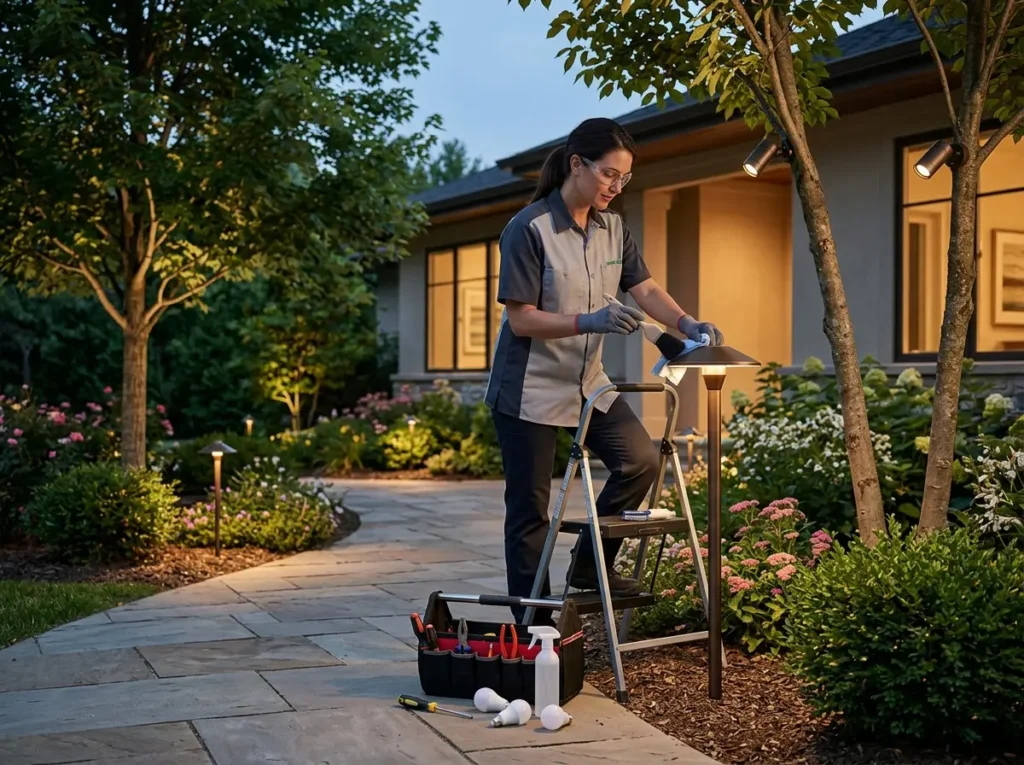
Outdoor lighting maintenance protects fixtures from weather, dirt, insects, and physical damage. Exterior lights often face harder conditions than indoor lights. They need regular cleaning and closer inspection.
Outdoor lighting supports security and safe movement. It helps people see paths, steps, parking spaces, doors, and property boundaries. Failed exterior lights should not be left for long periods.
Check Fixtures for Water and Corrosion
Outdoor fixtures should be properly sealed. Look for water inside lenses or covers. Rust, green corrosion, and peeling finishes can show that moisture has entered the fixture.
Water and electricity are a dangerous mix. Don’t keep using a fixture that has visible water inside. Switch off the power and arrange a proper inspection.
Clean Lenses and Remove Debris
Dust, mud, pollen, insects, and leaves can block outdoor light. Clean lenses with a soft cloth and a suitable cleaner. Avoid harsh chemicals that may damage plastic covers.
Trim nearby plants when they block the light. Overgrown branches can also press against fixtures or wiring.
Test Security Lighting
Security lights should cover entrances and other important areas. Test motion sensors by walking through their detection zones. Adjust the sensor when it activates too early or too late.
Make sure the light doesn’t point directly into a neighbor’s home. Good security lighting should improve visibility without creating glare.
Inspect Lights After Severe Weather
Strong winds, snow, ice, and heavy rain can loosen outdoor fixtures. Inspect exterior lights after severe weather. Check for tilted fixtures, broken covers, and exposed wires.
Boulder property owners should pay close attention after winter storms. Snow and ice can cover low path lights. Moisture can also enter damaged seals.
How Can You Create a Lighting Maintenance Schedule?
A lighting maintenance schedule lists each task, its frequency, and the person responsible. It helps property owners stay organized. It also reduces the chance of missing important safety checks.
Start by dividing the property into zones. These may include offices, living areas, stairs, halls, parking spaces, landscaping, and entrances. List the main fixture types in each area.
A simple schedule can follow this pattern:
Every Month
Complete a basic walk-through. Replace failed bulbs and note flickering lights. Check stairs, exits, pathways, and other safety areas first.
Clean heavily used fixtures when dust is visible. Record any damaged cover, loose part, or unusual noise.
Every Three Months
Test motion sensors, timers, photocells, and dimmers. Clean outdoor lenses and remove insects or debris. Check fixtures for early signs of corrosion.
Review areas where lights remain on for long hours. These fixtures may wear faster than others.
Every Six Months
Complete a deeper cleaning of indoor and outdoor fixtures. Check mounting hardware and fixture seals. Review light levels in work areas and shared spaces.
Commercial properties may schedule professional checks at this point. This is useful when the system has many fixtures or complex controls.
Every Year
Arrange a full lighting system inspection. Review wiring, connections, emergency lighting, controls, and fixture condition. Replace outdated or unsafe equipment.
The annual review is also a good time to study energy use. Compare current electricity bills with previous periods. A sudden increase may signal a control or equipment problem.
What Are Common Signs of Lighting Problems?
Common lighting problems include flickering, buzzing, dim output, repeated bulb failure, and unusual heat. These signs should not be ignored. They may point to a bad bulb, loose connection, failed driver, or wiring issue.
Flickering across one fixture may come from the lamp or switch. Flickering across several rooms may involve a larger electrical problem. Contact an electrician when the issue affects multiple areas.
Other warning signs include:
- Burn marks near fixtures
- A hot switch plate
- Burning or melted smells
- Lights that turn off by themselves
- Delayed startup
- Cracked fixture covers
- Water inside outdoor lights
- Constant circuit breaker trips
- Motion sensors that fail often
- Lights that remain dim after cleaning
A breaker that trips repeatedly needs professional attention. Don’t keep resetting it without finding the cause. The circuit may be overloaded or damaged.
Can Lighting Maintenance Lower Energy Costs?
Lighting maintenance can reduce energy costs by helping the system work correctly. Clean fixtures produce more useful light. Working timers and sensors also stop lights from running when they aren’t needed.
Property owners should replace failed lamps with suitable energy-efficient options. LED lighting often uses less power and lasts longer than older lamp types. However, the fixture and control must support the selected LED.
Avoid replacing every bulb with the brightest option. Too much light wastes energy and creates glare. Choose the right brightness for each space.
Automatic controls can also help. Motion sensors work well in storage rooms, bathrooms, and low-use areas. Timers and photocells can control exterior lights based on time or daylight.
Maintenance supports these savings. A damaged sensor may leave lights running all day. A wrong timer setting can waste power every night.
When Should You Call a Professional?
Call a professional when the problem involves wiring, electrical panels, repeated failures, or signs of heat damage. Property owners can change accessible bulbs and clean safe fixtures. More complex work needs proper tools and training.
You should contact an electrician when:
- A breaker keeps tripping
- Several lights flicker together
- A fixture smells burned
- Wiring looks damaged
- A switch becomes hot
- Outdoor fixtures contain water
- New fixtures need installation
- Emergency lights fail testing
- Bulbs burn out very quickly
- A fixture produces sparks
Don’t attempt repairs on live electrical parts. Turn off the affected circuit when it is safe to do so. Keep people away from damaged fixtures until repairs are complete.
A professional can also help with system upgrades. They can recommend better fixture placement, safer controls, and more efficient lighting options.
FAQS
How often should a lighting system inspection be completed?
Most property owners should complete a visual lighting check every month. A detailed inspection should happen once or twice each year. Commercial buildings and busy rental properties may need more frequent reviews. Outdoor lights should also be checked after severe weather. The correct timing depends on fixture age, daily use, and local safety rules.
What should be included in a lighting maintenance schedule?
A lighting maintenance schedule should include cleaning, bulb replacement, control testing, outdoor checks, and professional inspections. It should show how often each task must happen. The schedule should also name the person responsible. Keep records of failures and repairs. These notes can reveal repeated problems in one fixture or circuit.
Can I complete lighting system maintenance myself?
You can handle simple tasks like cleaning covers and replacing accessible bulbs. You can also test switches, timers, and motion sensors. Don’t repair exposed wires or open electrical panels without training. Burning smells, sparks, hot switches, and repeated breaker trips require a qualified electrician. Safety should always come before saving repair costs.
Why do my lights keep flickering?
Lights may flicker because of a loose bulb, failing switch, poor connection, or damaged LED driver. A single flickering fixture may have a local problem. Several flickering lights may point to a circuit or power issue. Tighten the bulb only when the power is off. Contact an electrician when flickering continues or affects several rooms.
How do I maintain outdoor lighting during winter?
Remove snow and ice from path lights without striking the fixtures. Check covers for cracks and water entry. Clean lenses when dirt or road salt blocks the light. Inspect fixtures after strong winds or heavy snowfall. Boulder winters can be hard on outdoor equipment, so damaged seals and loose fittings should be repaired quickly.