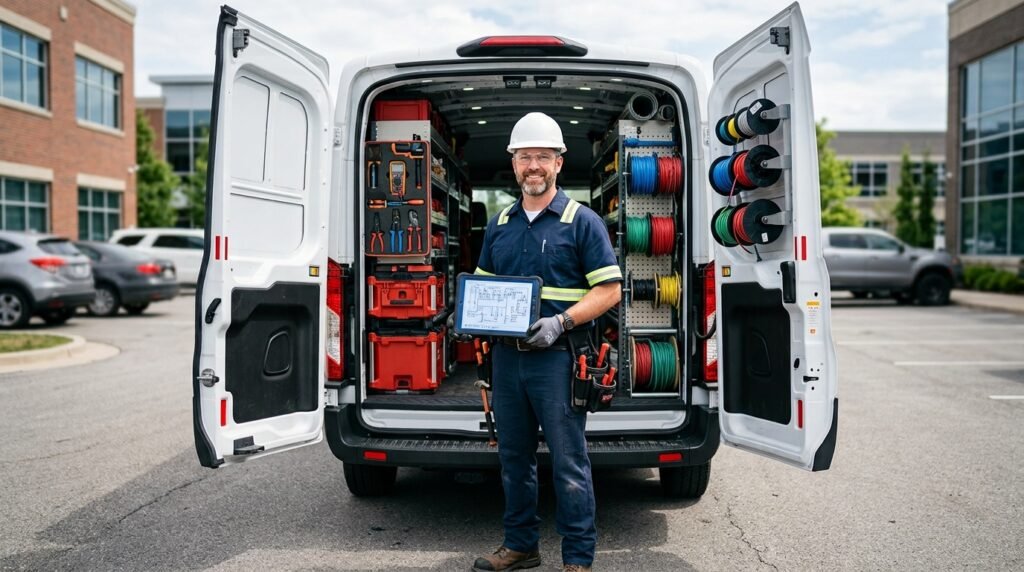
Indianapolis electrical contractor qualifications matter because electrical work affects safety, comfort, and daily life. A good contractor should be licensed, insured, trained, and able to explain the work in plain words. This is true for homes, offices, stores, restaurants, warehouses, and other business spaces. Electrical work is not just about making lights turn on. It also deals with wiring, panels, breakers, circuits, code rules, and fire risks. So, hiring the right person is a big deal.
If you are looking for a licensed electrician Indianapolis property owners can trust, start with the basics. Ask about licensing, insurance, experience, safety, and the type of work they do most often. A great residential electrician may not be the right fit for a large commercial job. A commercial contractor may not be the best fit for a small home repair. The right choice depends on your building and the work needed. This guide explains what to look for, what BNS means, and how to spot red flags before you hire anyone.
What Indianapolis Electrical Contractor Qualifications Matter Most?
The most important Indianapolis electrical contractor qualifications include a valid local license, proper insurance, real experience, safety knowledge, code understanding, and clear communication. These things help protect you from unsafe work and surprise problems. Price matters too, but it should never be the only thing you compare. Cheap electrical work can become very expensive later.
Why Should Licensing Come First?
Licensing should come first because it shows the contractor has met local rules for electrical work. In Indianapolis and Marion County, electrical contractor licensing is tied to local requirements, not just a nice badge on a website. A contractor should be able to explain their license status clearly. They should not get annoyed when you ask.
A license does not promise a perfect job. Nothing does. But it is a basic safety filter. It shows the contractor is working through the proper local process. If someone avoids this question, that is a problem. Nope. Not worth the risk.
Why Should Insurance Come Right After Licensing?
Insurance should come right after licensing because accidents can happen. Electrical work involves ladders, panels, tools, wiring, walls, ceilings, and sometimes active business spaces. If something goes wrong, insurance helps protect the property owner and the contractor. An insured electrician Indianapolis customers hire should be willing to show proof.
Ask for general liability insurance. If the contractor has employees, ask about worker’s compensation too. You do not need to read every line like a lawyer. But you should confirm coverage exists and matches the company doing the work. That simple step can prevent a real mess.
What Is a BNS Electrical License in Indianapolis?
A BNS electrical license refers to electrical contractor licensing handled through Indianapolis’ Department of Business and Neighborhood Services. BNS manages many local building, permit, inspection, and contractor licensing matters. For customers, the key point is simple. An electrical contractor should be properly licensed to do electrical work in Indianapolis and Marion County.
What Does BNS Stand For?
BNS stands for Business and Neighborhood Services. In Indianapolis, this department deals with local contractor licensing and related building services. People may say “BNS electrical license” when they mean the local electrical contractor license process connected to this department. The wording can sound confusing at first.
Here’s the thing nobody tells you. Most customers do not need to know every form name. You just need to know what to ask. Ask, “Are you licensed for electrical work in Indianapolis?” Then ask, “Can you show proof?” A real contractor should answer without making it weird.
What Should a Licensed Electrical Contractor Indianapolis Customer Show?
A licensed electrical contractor Indianapolis customer hires should be able to show proof of license, business name, insurance, and permit ability when needed. The business name on documents should match the company you are hiring. That matters because mismatched names can create confusion if there is a claim, inspection, or warranty issue.
If the contractor says they work under another company’s license, ask for details. That may or may not be proper, depending on the setup. Do not guess. Ask who is responsible for the work and who will pull permits if needed. Clear answers matter.
What Electrical Contractor Requirements Should You Check?
Electrical contractor requirements you should check include license status, insurance, bond coverage, worker’s compensation where needed, permit knowledge, and trade experience. You do not need to become an expert. You just need enough information to avoid hiring someone careless. Good contractors make this easy.
Should You Ask About Permits?
Yes, you should ask about permits when the job involves more than a very small repair. Some electrical jobs may need permits or inspections. Others may not. The contractor should be able to explain what applies to your project. If they say permits never matter, be careful. That is a red flag.
Permit rules help protect safety. They also create a record of the work. This can matter when selling a property, filing insurance claims, or passing inspections. For business spaces, permits can be even more important because code issues may delay opening or occupancy.
Should You Ask About Code Knowledge?
Yes, you should ask about code knowledge because electrical code rules help prevent fire and shock risks. A contractor does not need to recite code sections to impress you. That would be odd. But they should understand safe wiring, grounding, panel loads, breaker sizing, GFCI protection, and lighting rules for your type of space.
For commercial work, code knowledge is even more important. Offices, shops, restaurants, and warehouses can have different needs. Emergency lighting, exit signs, equipment circuits, and panel access all matter. A skilled contractor will think about these items before they become problems.
How Much Experience Should an Electrical Contractor Have?
An electrical contractor should have experience that matches your job. Years in business can help, but job type matters more. A contractor with ten years of small home repair work may not be right for a warehouse lighting upgrade. A commercial electrician may not be the best choice for a very small residential task. Fit matters.
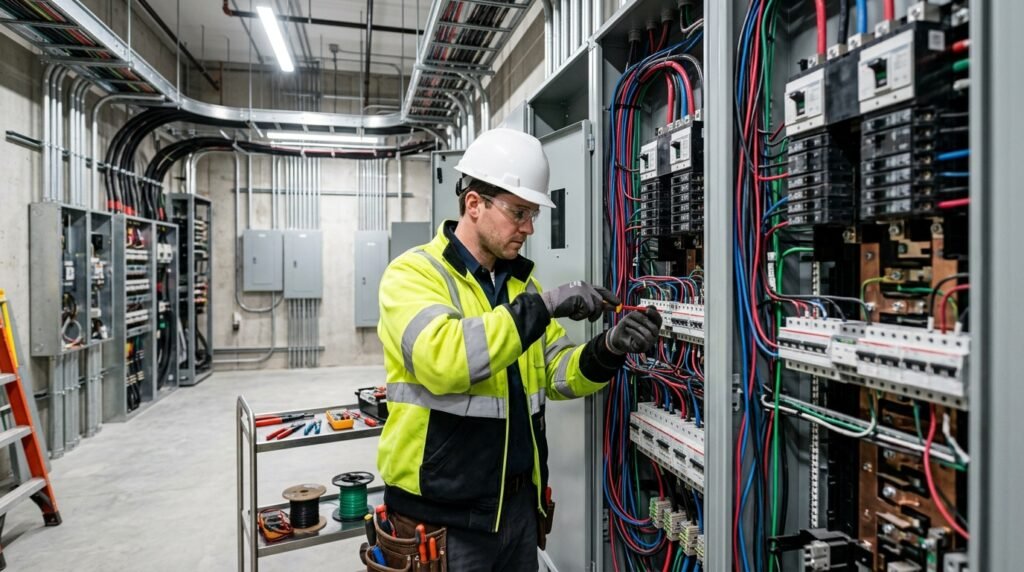
Why Does Residential Experience Matter?
Residential experience matters when the work is in a home, condo, rental, or small property. Homes often need outlet repairs, panel checks, lighting installs, ceiling fans, dedicated circuits, and troubleshooting. A good residential electrician knows how to work cleanly inside lived-in spaces. That is a skill.
They should also explain the work clearly. Homeowners often feel nervous about electrical issues. That is fair. A good contractor should not use fear to sell extra work. They should show the issue, explain the risk, and give clear options.
Why Does Commercial Experience Matter?
Commercial experience matters when the work is in a business building. Commercial spaces may need larger panels, more circuits, special lighting, sign power, equipment wiring, emergency lights, and work done around business hours. That takes planning. It also takes good communication.
If you need a commercial job, ask about similar projects. Has the contractor worked in offices, restaurants, retail stores, warehouses, or clinics? Do they understand scheduling around customers and staff? Can they work with a general contractor? These questions help you find the right fit.
What Safety Habits Should a Good Contractor Have?
A good contractor should have safety habits that show up before, during, and after the job. They should inspect the issue, explain risks, use the right tools, protect work areas, and test the repair. Safety is not a slogan. It is how the job gets done every day.
What Safety Questions Should You Ask?
Ask how the contractor will protect your property, workers, customers, or family during the job. Ask whether power needs to be shut off. Ask how they will test the repair when finished. These are normal questions. You are not being difficult.
For a business, ask about safe work around employees and customers. Can the work happen after hours? Will areas be marked off? Will power loss affect registers, coolers, computers, or alarms? A good business electrician thinks through these details.
What Safety Red Flags Should You Notice?
Safety red flags include rushed work, no testing, loose wires, open panels, messy job areas, and poor answers to basic questions. Also watch for anyone who says, “It’ll probably be fine,” when talking about serious electrical issues. Probably is not good enough when safety is involved.
Another red flag is constant breaker resetting without finding the cause. A breaker trips for a reason. The fix is not always a bigger breaker. In fact, that can be dangerous if the wire cannot handle the load. A qualified electrician knows this.
How Should Reviews and Reputation Affect Your Choice?
Reviews and reputation should help guide your choice, but they should not replace checking license and insurance. Good reviews can show that a contractor communicates well, shows up on time, and cleans up after the job. Bad reviews can show patterns too. Look for patterns, not one random comment.
What Should You Look for in Reviews?
Look for reviews that mention clear pricing, clean work, good communication, and problems being fixed the right way. Reviews from business owners can help if you need commercial work. Reviews from homeowners can help if you need home repairs. Match the review type to your project.
Do not only look at star ratings. Read the words. A five-star review that says “great job” is nice, but not very detailed. A review that says the electrician explained the panel issue, showed up on time, and fixed a recurring problem tells you more.
How Should You Handle Mixed Reviews?
Handle mixed reviews by looking for patterns. Every contractor may get a bad review now and then. People disagree. Schedules change. Parts get delayed. That happens. But repeated complaints about missed appointments, surprise bills, poor cleanup, or unfinished work should make you pause.
You can also ask the contractor about your concern. A professional answer says a lot. If they get defensive right away, that may tell you something too. Calm answers matter.
What Questions Should You Ask Before Hiring?
Before hiring, ask direct questions about license, insurance, experience, pricing, permits, schedule, and warranty. You do not need a long interview. You need simple answers that make sense. If the contractor cannot explain the basics, they may not be the right choice.
What Should You Ask About Pricing?
Ask whether the work is priced hourly, flat rate, or by project. Ask what is included and what could cost extra. For larger jobs, ask for a written scope. This should list labor, materials, permits if needed, and any limits. Clear pricing helps prevent conflict.
Do not choose only by the lowest number. A cheaper quote may leave out important work. It may also use poor parts or skip testing. Ask why quotes are different. A good contractor can explain the details without pressure.
What Should You Ask About the Work Plan?
Ask when the work can start, how long it may take, and whether power will need to be shut off. Ask who will do the work and who your main contact will be. If the job is commercial, ask how they will avoid business disruption.
Also ask what happens if hidden problems appear. Older buildings can hide wiring issues, overloaded panels, or old parts. A good contractor should explain how changes are handled before work begins. That keeps the project fair.
Why Do Indianapolis Businesses Need Extra Care?
Indianapolis businesses need extra care because business electrical work affects staff, customers, equipment, and daily revenue. A small power issue can shut down a register, cooler, sign, office area, or production space. A skilled commercial electrician Indianapolis business owners hire should understand uptime and safety.
What Commercial Qualifications Matter Most?
Commercial qualifications that matter most include experience with panels, circuits, lighting, equipment power, emergency lighting, and code needs. The contractor should also understand scheduling. Some work may need to happen after hours. Some work may need to happen in phases.
Ask if they have worked in your type of building. A restaurant has different needs than an office. A warehouse has different needs than a retail store. The right experience helps avoid delays and repeat problems.
Why Should Businesses Avoid Unqualified Electrical Work?
Businesses should avoid unqualified electrical work because mistakes can create safety issues and downtime. Bad wiring can damage equipment, fail inspections, or create fire risks. It can also make insurance claims harder. That is not the kind of surprise any owner wants.
For commercial spaces, unsafe work can also affect employees and customers. A bad lighting circuit, poor panel repair, or overloaded outlet can become a real risk. Hiring a qualified contractor is part of protecting the business.
FAQs
These questions cover common concerns about hiring an electrical contractor in Indianapolis. Use them before you book service or approve a larger project.
What qualifications should an Indianapolis electrical contractor have?
An Indianapolis electrical contractor should have a valid local electrical license, proper insurance, job experience, code knowledge, and safe work habits. They should also explain the work clearly and provide written details for larger jobs. For business work, they should have commercial experience. For home work, they should understand residential systems and clean jobsite habits.
What is a BNS electrical license?
A BNS electrical license usually refers to electrical contractor licensing handled through Indianapolis Business and Neighborhood Services. BNS is tied to local contractor licensing, permits, and related building rules in Indianapolis and Marion County. Customers do not need to know every form. They should ask whether the contractor is licensed for electrical work locally and can show proof.
How do I know if I hired an insured electrician Indianapolis can trust?
Ask the contractor for proof of insurance before work starts. The insurance name should match the business you are hiring. You can also ask whether they carry general liability coverage and worker’s compensation if they have employees. A trustworthy insured electrician Indianapolis property owners hire should not make this feel like a strange request.
Is a licensed electrician Indianapolis contractor always required?
Many electrical jobs should be handled by a licensed electrician, especially panel work, new circuits, wiring changes, commercial repairs, and permit-related projects. Small tasks may seem simple, but electrical mistakes can be dangerous. When in doubt, ask a licensed electrical contractor Indianapolis customers use for guidance. It is safer than guessing.
What are electrical contractor red flags?
Electrical contractor red flags include no license proof, no insurance proof, vague pricing, poor communication, pressure to start fast, and no written scope for larger work. Also watch for unsafe advice, like replacing a breaker without checking the circuit. A qualified contractor should explain the issue, test the work, and answer basic questions clearly.