You unplug the vacuum, rest your hand near the wall, and the outlet feels warmer than it should. Or you notice the same warmth hours after anything was plugged in. A hot electrical outlet is easy to write off, because a little warmth after heavy use is common. But heat can also mean current is struggling through a weak connection or a worn receptacle, and that is a different situation entirely. It comes up often in Indianapolis, where plenty of older homes still have original wiring and decades-old outlets in daily use. This guide covers why outlets heat up, which warning signs, and what to do before a small fault develops.
Outlet Feels Hot: When Is Warmth a Warning Sign?
Warmth alone does not mean something is broken. A receptacle feeding a space heater can feel mildly warm after hours of use. Heat you notice immediately, heat that climbs day to day, heat that lingers after unplugging, or heat with nothing connected is another story.
Normal Warmth and Abnormal Heat
Some warmth is fine. Run a space heater or a window air conditioner for a few hours, and the outlet behind it may feel slightly warm, simply because those devices draw a lot of current. The concern is heat that feels wrong: a wall plate you’d rather not rest your hand on, or an outlet that gets a little hotter every time you run the same device. One touch tells you very little. What happens over several days tells you much more.
Why the Location and Pattern of Heat Matter
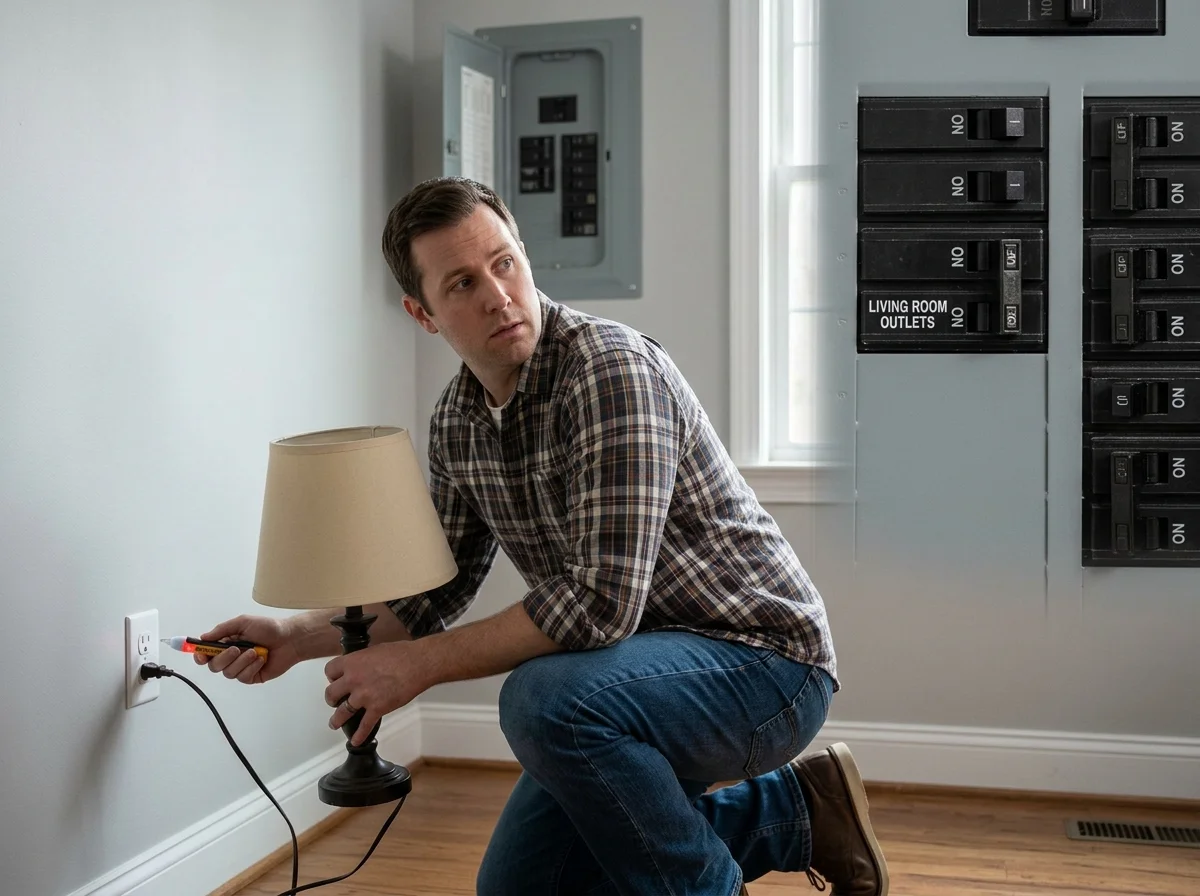
A hot plug on a cool wall plate points toward the cord or appliance. Heat across the whole receptacle, or around one slot, suggests the trouble is inside the outlet or at its connections. Warmth with nothing plugged in deserves the quickest attention. Observe it, but don’t test it yourself.
Loose Electrical Connections and Other Causes of Outlet Overheating
Every case comes back to one relationship. Current flows, resistance turns some of that energy into heat, and the heat collects wherever resistance is highest. Receptacles are built to keep resistance very low, so an outlet that runs hot means something has raised it.
Loose Connections May Create Heat at the Receptacle
A screw or spring clamp holds each wire against its electrical terminal. When that grip weakens, current squeezes through a smaller patch of metal, making the condition of the home’s electrical wiring an important part of the inspection. Heat builds at that spot and can soften the plastic around it, letting the connection slacken further. So yes, loose outlet wiring can make an outlet hot, even one with nothing plugged in, since power may pass through it to outlets farther down the circuit.
A Damaged Electrical Outlet May Need Replacement
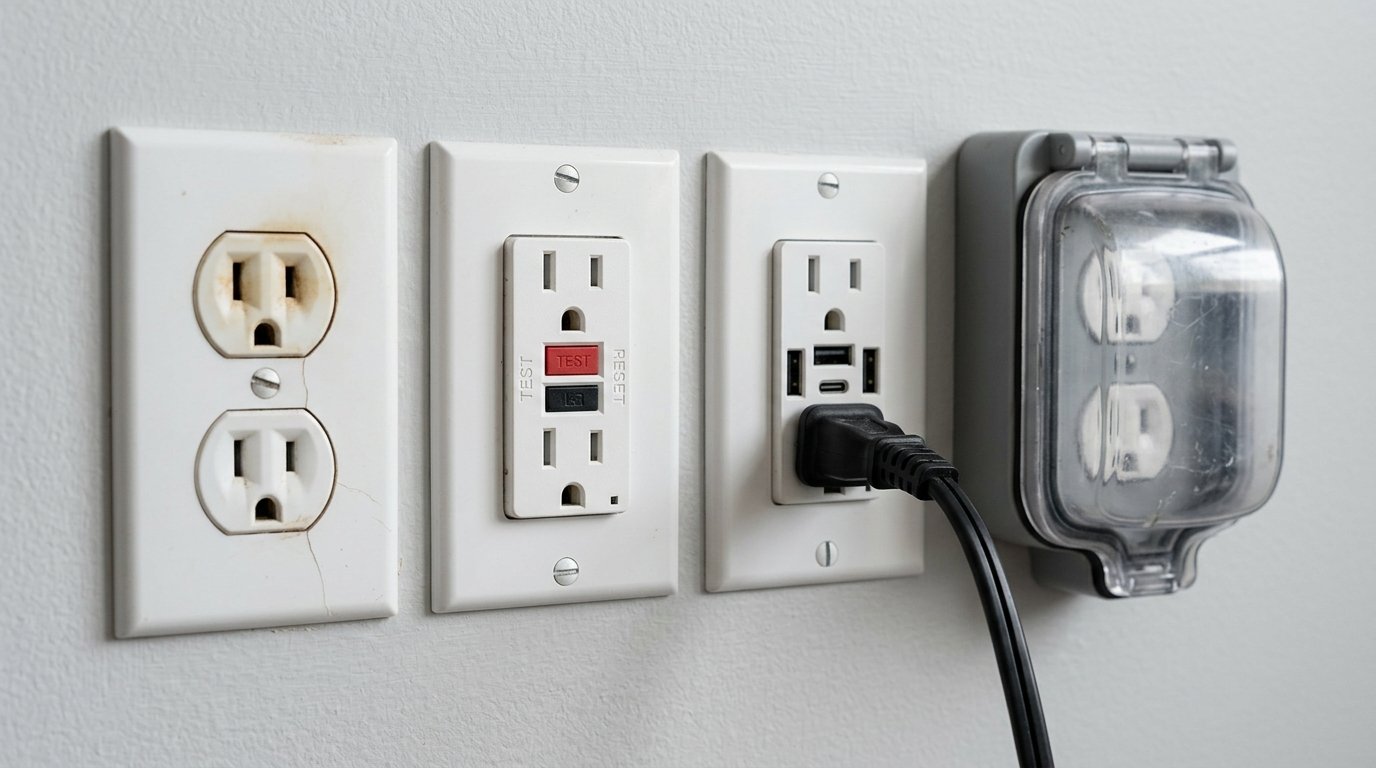
Receptacles wear out. Their internal contacts lose tension after years of use, so plugs sit loosely or slip out, and a loose fit means weak contact that runs warm. Cracks, discoloration, or melted plastic show the device has already taken heat damage. A faulty electrical outlet in that condition may need electrical outlet replacement, especially when the receptacle itself has been damaged by heat.
Excessive Electrical Load Can Add Heat
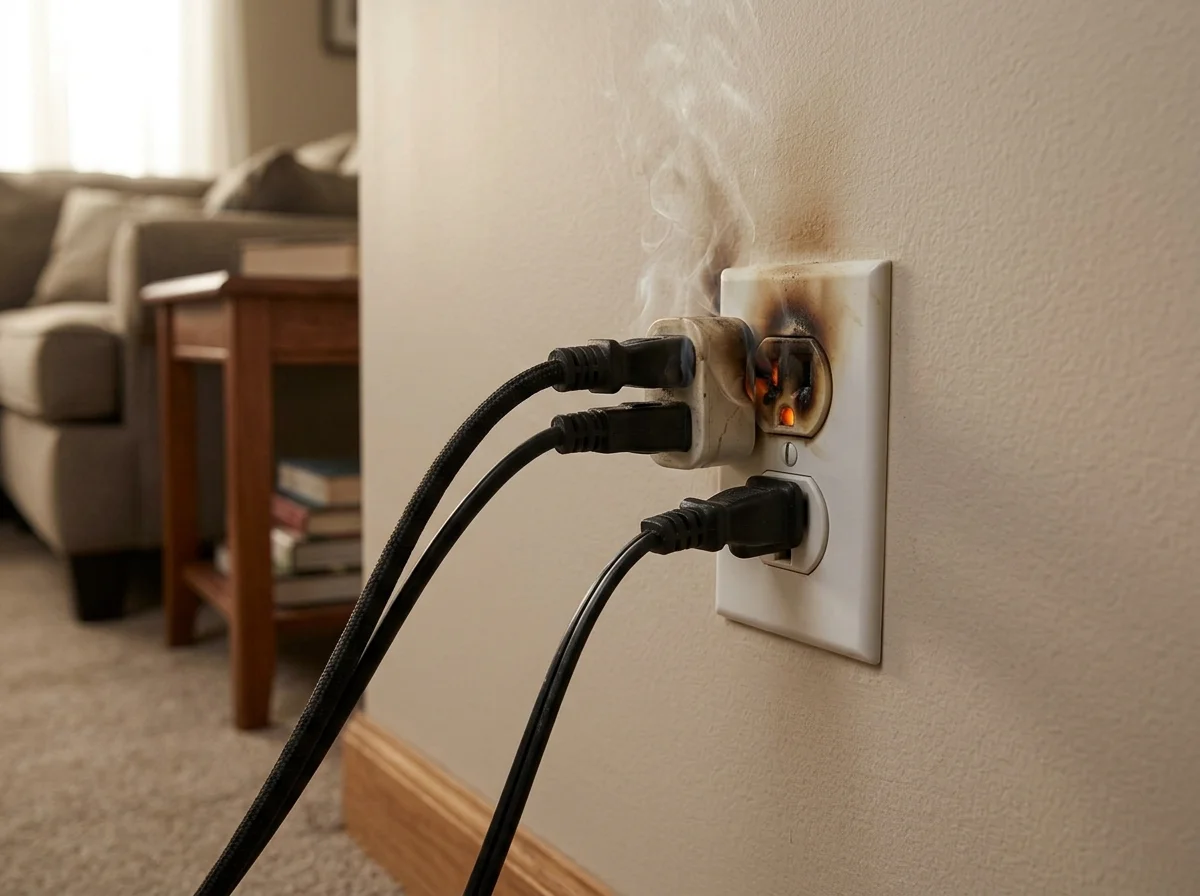
The more current a receptacle carries, the more heat it gives off, which is why the condition and capacity of the home’s electrical panel can also matter. Loading a power strip with several high-draw devices and a single outlet may be supplying far more than it should for hours at a stretch. It can run hot even when every wire behind it is tight. Don’t count on the breaker to warn you, either. Heat from a worn contact is concentrated in a tiny spot, and that rarely adds enough current to trip it.
| Pro Tip: A hot outlet shows where a problem became visible, not always where it started. Swapping in a new receptacle can feel like a fix, but a loose wire or strained circuit behind it will heat the replacement the same way. Finding the reason for the heat matters more than changing the part that showed it. |
Electrical Outlet Warning Signs That Should Not Be Ignored
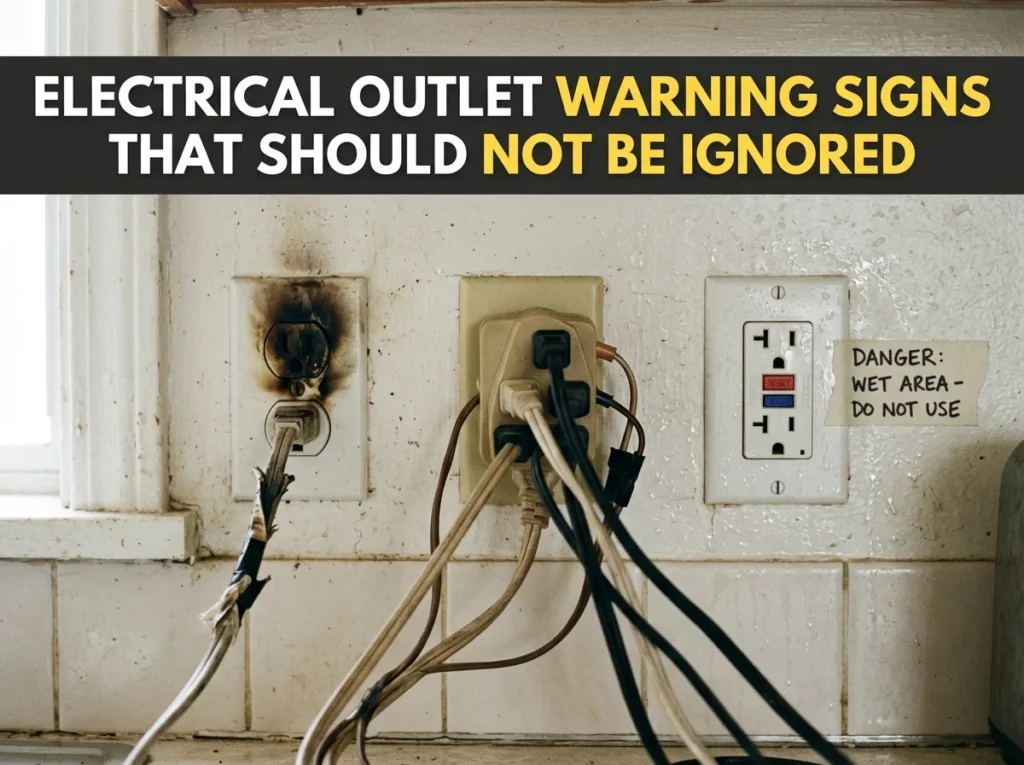
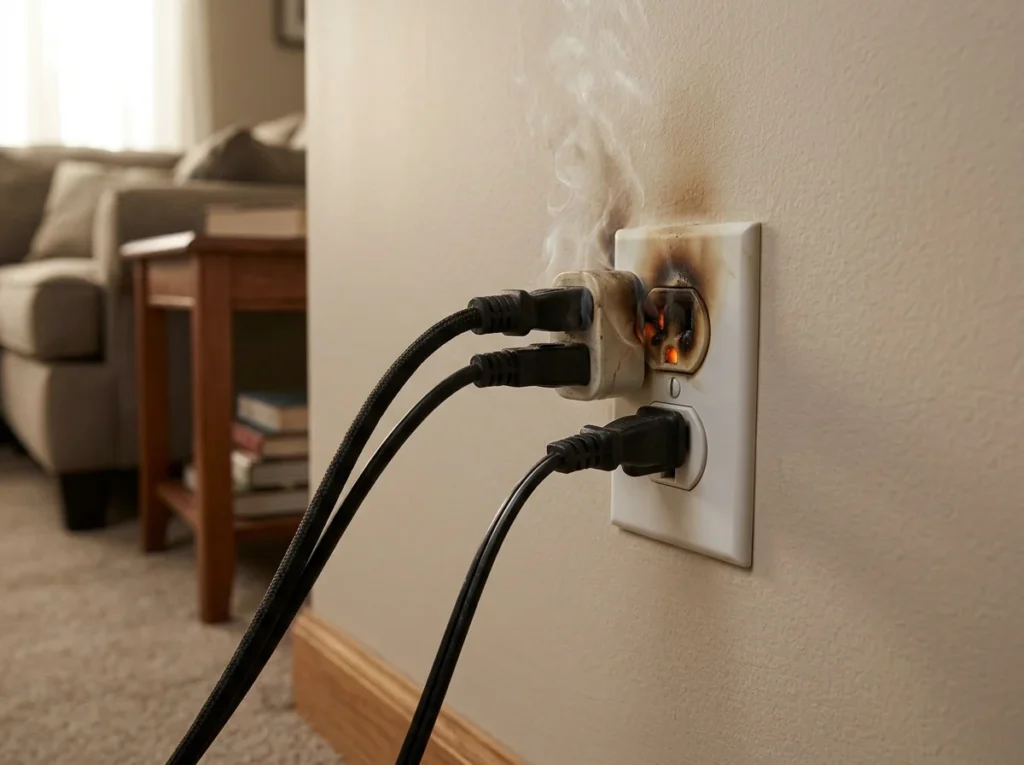
Heat rarely shows up alone. A brief spark may occur with some electrical loads, but repeated or unusually large sparks point to a possible problem with the outlet, plug, or wiring. A buzzing electrical outlet or crackling outlet often signals a connection that is failing or arcing inside the box. Burning smells, brown or black marks, and melted plastic mean heat has already done harm. Flickering lights and frequent breaker trips on one circuit suggest the problem reaches past one receptacle into the wiring itself.
Reasons to Stop Using the Outlet Today
- A burning or hot-plastic smell
- Scorching or brown and black discoloration
- Melted or warped plastic
- Repeated sparking
- Buzzing or crackling from the wall
- Exposed or visibly damaged wiring
Common observations, sorted by likely cause and response:
| What You Notice | What It May Point To | Appropriate Next Step |
| Mild warmth after long use | Ordinary load, or a connection starting to wear | Watch the pattern; book a check if it grows |
| Hot with nothing plugged in | Loose connection or wiring fault | Stop using it and call an electrician |
| Burning smell | Overheated or arcing parts | Stop use and call right away |
| Buzzing or crackling | Failing connection or arcing | Stop use and schedule inspection |
| Plug slips or wobbles | Worn receptacle contacts | Have an electrician replace it |
| Melted or scorched plastic | Serious heat damage | Stop use and arrange urgent repair |
How an Overheated Outlet Relates to the Rest of the Electrical Circuit
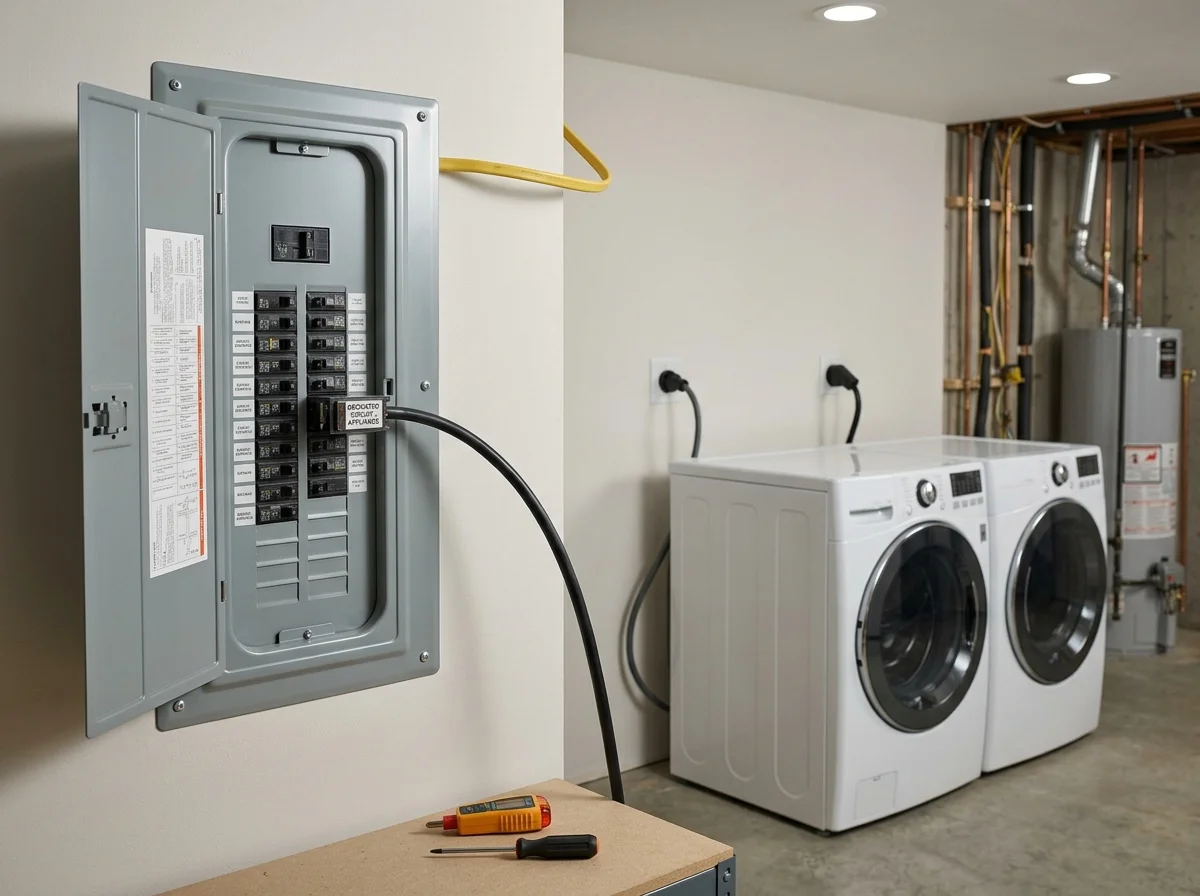
A wall outlet is one stop on a longer route. Power leaves the electrical panel through a circuit breaker, travels the electrical wiring, and reaches every receptacle on that circuit, so the hot one may simply be where trouble became noticeable. A loose splice upstream, wiring damage, a short circuit, or a circuit overload can all surface at a single outlet. A circuit breaker does not necessarily trip when an outlet overheats from a loose connection or worn contact, because those conditions do not always create enough overcurrent to activate the breaker. When the cause isn’t obvious, a wiring inspection covers the outlet and everything feeding it.
What to Do When an Electrical Outlet Gets Hot
Stop using the outlet. Don’t plug something back in to see whether it heats up again, because that means running a fault to prove it exists. Unplug the appliance only if that is safe. If the plug or wall plate looks damaged, leave it alone and switch off that circuit at the panel.
Keep the cover plate on. Live wiring sits behind it, and that is no place for a DIY repair. From a distance, look for scorch marks, melting, or an odd smell. If the heat keeps returning or comes with any warning sign above, arrange an electrical inspection.
Do This Right Now
- ☐ Stop using the outlet immediately.
- ☐ Switch off the circuit breaker at the panel first.
- ☐ Once power is safely off, unplug connected devices.
- ☐ Call a licensed electrician.
- ☐ Seeing smoke or active flames? Evacuate immediately and call 911.
When an Electrical Outlet Needs Repair or Replacement
Start with an electrical outlet inspection. Until someone finds out why the outlet got hot, there’s no telling whether it needs a new part or something bigger.
Sometimes the receptacle itself is the whole problem. If it’s worn out, cracked, or grips plugs loosely, replacing it is often enough, and electrical outlet replacement in Indianapolis can be a simple swap when the wiring behind it is sound. But if the electrician finds a loose connection, scorched conductors, or damage farther down the circuit, the job becomes circuit repair or wiring repair.
Older Indianapolis homes add another possibility, particularly those built between the 1960s and 1970s across Central Indiana that may feature single-strand aluminum wiring. Aluminum expands and contracts more than copper, making terminal screws loosen over time and creating high-resistance hot spots. If several outlets are acting up or you live in a mid-century home, a comprehensive electrical safety inspection makes sense. And whoever does the electrical outlet repair, ask what caused the heat, not just which part got replaced.
Can a Hot Outlet Cause an Electrical Fire?
It can, though a hot outlet does not automatically lead to one. A damaged connection concentrates heat in a very small area, and over time that heat can break down insulation, the outlet body, and nearby materials. Arcing or a short circuit adds an ignition source. Burning odor, scorching, melting, sparks, and persistent overheating call for prompt attention rather than waiting to see what happens. If you see smoke or flames, leave the area and call 911.
Frequently Asked Questions
Why do electrical outlets get hot?
Usually because resistance is too high at a connection or worn contact, or because more current is flowing through the receptacle than it can handle. Resistance turns electrical energy into heat.
Can a loose wire make an outlet hot?
Yes. A wire sitting loosely against its terminal touches poorly, so resistance and heat gather in that small contact area.
Can a damaged outlet cause overheating?
Yes. Worn contacts, cracks, and a loose plug fit all weaken contact between plug and receptacle, and weak contact generates heat. An electrician should replace it.
What should I do if an electrical outlet is hot?
Stop using it, unplug devices if that’s safe, leave the cover on, and have an electrician inspect it. For smoke or fire, leave and call 911.
Can a hot outlet cause an electrical fire?
It can when the heat stems from damaged connections or an electrical fault, but warmth alone doesn’t prove danger. Burning odor, scorching, melting, or sparks call for quick action.
How often should electrical outlets be inspected?
No single interval fits every home. Timing depends on the property’s age, wiring condition, past electrical work, and any warning signs. Older homes and outlets that run hot or spark deserve sooner attention.
Final Thoughts on Hot Electrical Outlets
A hot outlet is usually a sign of something else, like a loose connection, a worn receptacle, or a strained circuit, and it rarely fixes itself. Rinder Electric is a locally owned, licensed, bonded, and insured contractor serving Indianapolis and Central Indiana, with upfront pricing and 24/7 emergency service. If an outlet runs hot, Rinder Electric provides 24/7 emergency service for electrical problems that require prompt attention. Call (317) 701-1713 to schedule an inspection.