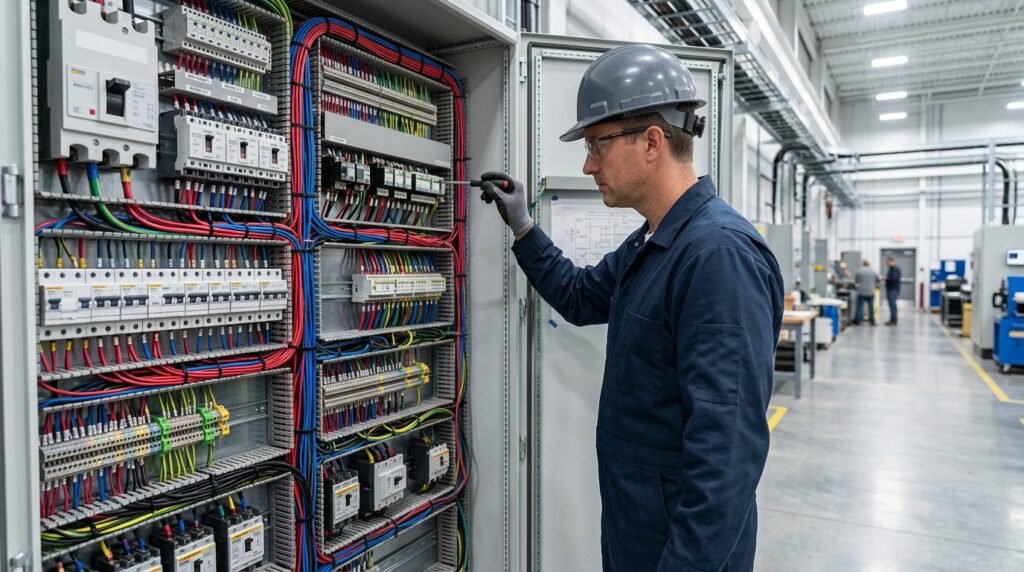
Knowing what to look for when hiring a commercial electrician can protect your building, equipment, employees, and budget. Commercial electrical work often affects lighting, panels, machinery, outlets, safety systems, signs, and daily operations. Hiring the wrong person can lead to delays, failed inspections, repeat repairs, or unsafe work.
The right contractor should bring more than tools. They should have relevant experience, proper insurance, clear pricing, safe work habits, and a plan for limiting disruption. This guide explains how to choose a commercial electrician, what questions to ask, and which warning signs should make you pause.
What Should You Look for When Hiring a Commercial Electrician?
Start with five basic areas: qualifications, experience, safety, communication, and pricing.
A good commercial electrical contractor should:
- Be properly licensed for the area where the work will happen
- Carry suitable business insurance
- Have experience with similar buildings and projects
- Explain permits, inspections, shutdowns, and safety steps
- Provide a clear written scope or estimate
- Communicate changes before doing extra work
- Test the completed system
- Stand behind the work
A contractor does not need to be the largest company in the area. They do need to be qualified for your specific project.
Does the Electrician Have the Right Commercial Experience?
Commercial electrical systems can be more complex than basic home systems. A business may have larger panels, several circuits, three-phase equipment, emergency lighting, exit signs, outdoor lighting, security systems, or dedicated power for machines.
Ask whether the electrician has worked in a building like yours. An office, restaurant, clinic, warehouse, retail shop, and production space can have very different needs.
Match the Contractor to Your Building
A restaurant may need dedicated circuits for coolers, ovens, exhaust systems, and other kitchen equipment. A warehouse may need high-bay lighting, dock power, chargers, or circuits for machinery. An office may need reliable workstation power, lighting controls, conference room wiring, and enough panel capacity for future growth.
Do not settle for a general answer such as, “We handle everything.” Ask for examples of similar work.
You can also review the company’s commercial electrical services to see whether its normal work matches your project.
Ask About Work in Active Businesses
Commercial electrical work often happens while employees, customers, tenants, or equipment are still in the building.
Ask how the contractor will manage:
- Power shutdowns
- Work around customers and employees
- Noise and access limits
- Equipment that must remain running
- After-hours or phased work
- Emergency exits and safe walkways
- Cleanup at the end of each work period
The electrician should understand that downtime costs money. A strong plan may allow the work to happen in sections instead of shutting down the whole building.
Is the Commercial Electrician Properly Licensed?
A license is one of the first commercial electrician qualifications to check. It shows that the contractor has completed the required local process to perform electrical contracting work.
Licensing rules are not the same everywhere. Indiana does not issue one statewide electrical contractor license for all local work. Electrical contractor licensing is handled at the municipal level, and Indianapolis provides local contractor licensing resources through the city.
For an Indianapolis project, ask:
- Are you licensed to perform electrical work in Indianapolis?
- What business name appears on the license?
- Can I verify the license?
- Who is responsible for the work?
- Who will pull any required permits?
The company name on the estimate, insurance certificate, license, and invoice should match. Mismatched names may cause confusion if a permit, warranty, inspection, or insurance claim becomes necessary.
Should a Commercial Electrician Carry Insurance?
Yes. A licensed and insured commercial electrician should be willing to provide proof of coverage.
Ask for general liability insurance. This may help protect against property damage or other problems connected to the work. If the contractor has employees, ask whether the business carries workers’ compensation coverage as required for its situation.
Do not rely only on a website statement that says “fully insured.” Request a current insurance certificate for larger or higher-risk projects.
Check that:
- The company name matches your contractor
- The coverage is current
- The document comes from a legitimate insurance source
- The type of work is covered
- Any required limits in your lease or contract are met
Property managers and general contractors may have specific insurance requirements. Share those requirements before requesting the final quote.
Who Handles Permits and Inspections?
The electrician should explain whether the project needs a permit or inspection. Not every small service task requires the same process, but larger electrical changes may involve permits, inspections, or coordination with other parties.
Indianapolis provides an online system for permit applications, payments, and permit-history research.
Ask the contractor:
- Does this project require a permit?
- Who will apply for it?
- Is the permit fee included in the quote?
- Will the work need an inspection?
- Who will schedule the inspection?
- What happens if corrections are required?
Be careful when a contractor says permits never matter. A qualified contractor should review the scope before answering. Avoiding a required permit can create problems during inspections, property sales, insurance claims, tenant occupancy, or later renovations.
How Does the Contractor Approach Safety?
Safety should appear in the work plan, not just in marketing language.
A contractor should inspect the work area, identify risks, protect exposed spaces, use suitable equipment, and test the system after the job. For an active business, the electrician should also consider workers, customers, inventory, machinery, and public access.
Ask About Shutdown Planning
Some projects require the power to be turned off. Ask how long each shutdown may last and which parts of the building will be affected.
A useful shutdown plan should explain:
- Which panels or circuits will be turned off
- Which equipment will lose power
- How staff will be informed
- Whether emergency systems will remain available
- When the power will be restored
- How the electrician will test the system afterward
For restaurants, clinics, warehouses, and other time-sensitive operations, even a short interruption may affect equipment or service. The contractor should understand those risks before starting.
Ask How the Work Will Be Tested
A project is not finished just because the lights turn on or the equipment starts.
The electrician should check the completed work, confirm that connections are secure, test relevant circuits, and explain any remaining concerns. For larger projects, ask whether you will receive inspection records, updated panel labels, equipment information, or closeout documents.
What Should a Commercial Electrical Estimate Include?
A written estimate should explain what you are buying. It does not need to be filled with technical language, but it should be clear enough for you to compare with another proposal.
A commercial electrical quote may include:
- Scope of work
- Labor
- Materials and fixtures
- Permit and inspection costs
- Equipment or lift rental
- Estimated schedule
- Payment terms
- Cleanup
- Testing
- Warranty details
- Items not included in the price
Ask whether the price is hourly, flat-rate, day-rate, or project-based. Also ask what could change the total.
Hidden wiring damage, panel limitations, unavailable parts, after-hours work, and changes to the original scope can affect pricing. A good contractor should explain possible changes before the work begins.
Should You Choose the Lowest Quote?
Not automatically.
A low price may be fair when a contractor has an efficient plan. It may also leave out permits, materials, testing, cleanup, or other important work. Compare the scope rather than looking only at the final number.
Ask these questions when one quote is much lower:
- Are the same materials included?
- Is permit work included?
- Is testing included?
- Does the contractor have the same experience?
- Is the project schedule realistic?
- Is any work being excluded?
- Does the price include cleanup and disposal?
- What warranty is provided?
The highest quote is not always the best either. The goal is clear, safe work at a fair price.
Why Do Reviews and References Matter?
Reviews can show how a contractor behaves before, during, and after a project.
Read for patterns rather than focusing only on the star rating. Helpful reviews may mention communication, scheduling, cleanliness, pricing, problem-solving, and whether the repair lasted.
For a commercial project, look for comments from business owners, facility managers, property managers, or general contractors. A review about a small home repair may not tell you much about the company’s ability to manage a warehouse upgrade or tenant build-out.
You can examine Rinder Electric’s customer reviews when comparing communication, professionalism, and past customer experiences.
For a larger project, ask for examples or references from similar work. You do not need private customer details. Photos, project descriptions, or general examples may be enough to show relevant experience.
What Questions Should You Ask a Commercial Electrician?
The best questions to ask a commercial electrician are direct and practical:
- Are you licensed for this location?
- Can you provide current proof of insurance?
- Have you completed projects in buildings like ours?
- Does this work require a permit or inspection?
- Who will perform the work?
- How will power shutdowns be handled?
- Can the work happen outside normal business hours?
- What is included in the quote?
- What could increase the cost?
- How will the completed work be tested?
- Is there a labor or workmanship warranty?
- What happens if a hidden problem is found?
Clear answers are a good sign. Confusing answers, pressure, or constant changes may point to future problems.
What Red Flags Should You Watch For?
Some warning signs appear before the contractor reaches the jobsite.
Be careful if an electrician:
- Refuses to provide license or insurance information
- Gives a firm price for a complex project without asking questions
- Pressures you to approve the work immediately
- Avoids written estimates
- Says permits are never necessary
- Cannot explain who will perform the work
- Suggests unsafe shortcuts
- Changes the price without explaining why
- Has no plan for testing or cleanup
- Cannot describe similar commercial experience
Another warning sign is replacing parts without diagnosing the cause. For example, repeated breaker trips may come from overloads, damaged equipment, wiring faults, or panel problems. Replacing the breaker without testing the circuit may not solve the real issue.
What Should Indianapolis Businesses Check?
A commercial electrician Indianapolis businesses hire should understand both the project and the type of local building involved.
Indianapolis includes older commercial buildings, remodeled offices, restaurants, warehouses, retail spaces, clinics, and mixed-use properties. Many spaces have been changed by several tenants over time. A new tenant may use much more power than the previous one.
An experienced Indianapolis electrical contractor should check whether the existing panel, circuits, lighting, and equipment connections support the planned use. This is especially useful before:
- Signing a commercial lease
- Starting a tenant build-out
- Adding kitchen or production equipment
- Expanding office workstations
- Installing new lighting
- Adding chargers or machinery
- Changing the use of a space
Local experience can also help with permit planning and coordination. However, local location alone is not enough. The contractor still needs the right qualifications and relevant project experience.
How Do You Make the Final Choice?
Once you have reviewed qualifications, compare the contractors based on the whole project.
Choose the company that:
- Understands your building
- Has relevant commercial experience
- Provides clear license and insurance information
- Explains permits and inspections
- Offers a practical schedule
- Plans for safety and downtime
- Gives a detailed written scope
- Communicates without pressure
- Answers questions in plain language
Trust matters, but it should be supported by proof. A professional contractor should make the project easier to understand before asking you to approve the work.
Talk to a Commercial Electrician About Your Project
Hiring the right commercial electrician starts with a clear conversation. Explain the building type, the electrical issue, your business hours, and any equipment that cannot lose power.
Rinder Electric helps Indianapolis-area businesses with commercial repairs, lighting, panels, circuits, upgrades, and electrical planning. Schedule your consultation to discuss the work and determine the next safe step.
Frequently Asked Questions
What should I look for when hiring a commercial electrician?
Look for licensing, insurance, relevant commercial experience, clear pricing, safe work habits, permit knowledge, and good communication. The electrician should understand your type of building and explain how the work may affect business operations.
How do I know if a commercial electrician is qualified?
Ask for proof of license and insurance. Then ask about projects similar to yours. A qualified electrician should explain the work, permitting process, safety plan, testing, and project schedule without avoiding basic questions.
Should a commercial electrician provide a written estimate?
Yes, especially for larger work. A written estimate or proposal should explain the scope, labor, materials, timing, fees, exclusions, and payment terms. It should also explain how unexpected changes will be handled.
Who should pull the electrical permit?
The contractor should explain who is responsible for the permit. In many projects, the licensed contractor handles permit applications and inspections connected to the electrical work. Confirm this before approving the proposal.
How many commercial electrician quotes should I compare?
Two or three detailed quotes may help for a planned or larger project. Compare the scope, qualifications, materials, schedule, and warranty—not only the total price. Emergency repairs may not allow time for several quotes.
What is the biggest red flag when hiring a commercial electrician?
Refusing to provide license or insurance details is a major warning sign. Other red flags include vague pricing, unsafe shortcuts, pressure to approve quickly, no written scope, and no experience with similar commercial buildings.
Should commercial electrical work happen after business hours?
It depends on the project. After-hours work may reduce disruption, but it can affect scheduling and cost. Ask the contractor whether the job can be phased, completed after closing, or planned around the busiest parts of your day.