The commercial vehicle landscape is changing very fast right now. Businesses across Indiana are trading old gas vans for clean electric alternatives. This shift helps lower your daily operating costs and cuts down on tailpipe emissions. Managing a whole group of electric vehicles takes a lot more than plugging into standard wall outlets. Your business needs a real strategy to keep your drivers moving without delays.
Setting up a commercial charging system requires clear planning and the right local electrical partner. You have to think about power draw, vehicle downtime, and your daily route distances. Navigating these technical details can feel overwhelming for many business owners. This guide will break down everything you need to know about setting up a reliable power network for your business vehicles.
Understanding Commercial Fleet Charging Solutions
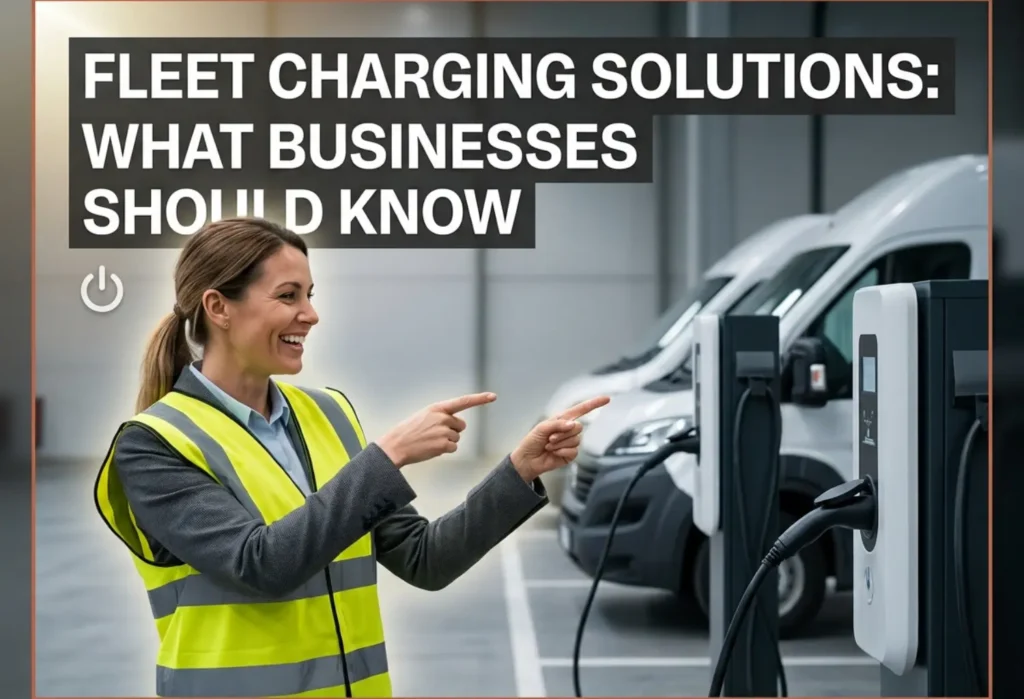
Switching your business vehicles to electric power means you must install dedicated fleet charging solutions at your facility. Commercial systems are much larger and more powerful than standard residential setups. They are built to handle constant use from heavy trucks, delivery vans, and company cars.
Managing multiple vehicles at once requires a deep look at your current utility service connection. Most commercial properties have three-phase power, which is perfect for running multiple stations simultaneously. However, you still need to calculate your total electrical load so you do not overload the building. The right setup ensures every vehicle gets a full charge before the next shift starts.
The Role of Load Management Software
Smart charging software is a total game-changer for modern business operations. It acts as a digital traffic cop for the electricity entering your property. Instead of all chargers pulling maximum power at once, the software balances the electrical load safely.
This smart distribution helps you avoid expensive peak-demand charges from your local utility company. You can program the system to prioritize vehicles that have the earliest morning routes. It also lets you track energy use per vehicle for accurate tax and expense reporting.
Selecting the Right Charger Levels for Your Business
Your choice of hardware depends entirely on how many miles your vehicles drive each day. It also depends on how many hours those vehicles sit parked at your warehouse. If your vans sit idle for eight hours every night, Level 2 alternating current chargers are usually your best option. They deliver a steady flow of power that safely tops off batteries without creating excessive heat.
When your business runs multiple shifts, you cannot wait hours for a battery to fill up. That is where fast EV charging solutions become completely necessary for your daily survival. These direct current stations push massive amounts of energy into a vehicle in under an hour. They are perfect for logistics hubs, taxi companies, and emergency service providers who need rapid turnarounds.
Level 2 vs. DC Fast Charging Infrastructure
Level 2 stations are highly affordable to purchase and install in large clusters. They run on 208-volt or 240-volt power lines, similar to heavy commercial appliances. They work wonderfully for businesses where vehicles return to a central yard every single evening.
DC fast stations bypass the vehicle’s onboard converter to feed power straight to the battery cells. They require 480-volt service and heavy-duty cooling components to handle the intense electrical currents. While the equipment costs more upfront, the ability to rapidly charge a vehicle keeps your team on the road.
Evaluating Your Property Electrical Capacity
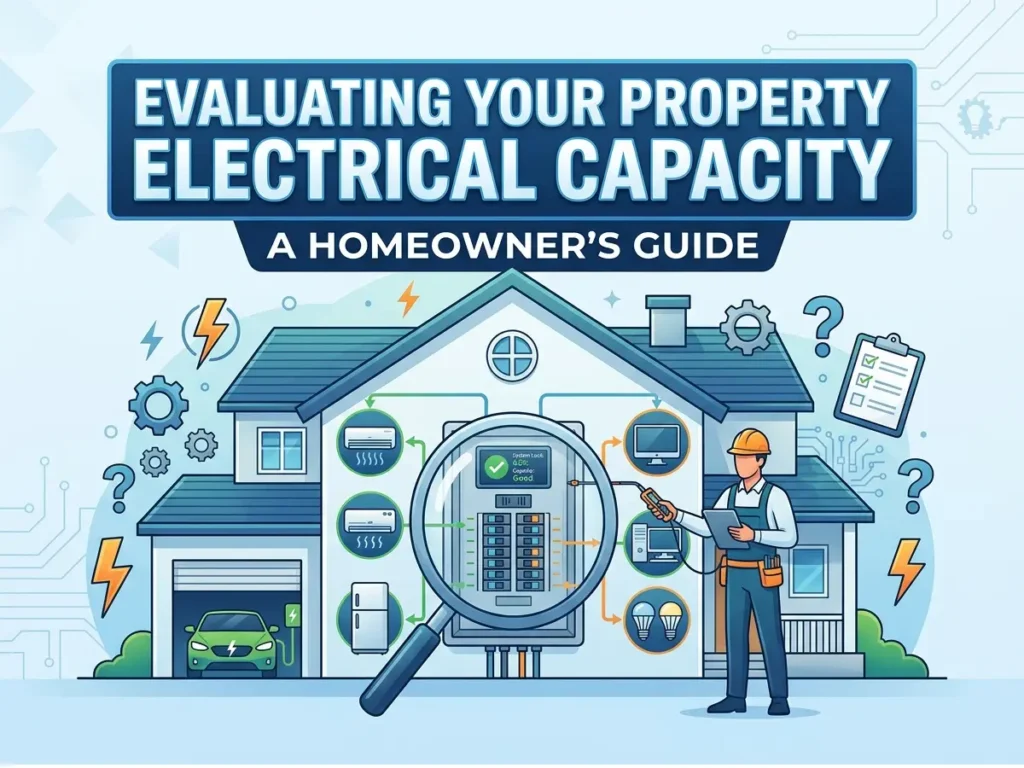
Your existing commercial building might not be ready for the massive power demand of multiple electric vehicles. A professional electrician must check your main switchboard and transformers before you buy any charging equipment. Adding ten or twenty chargers can easily demand more electricity than your entire building currently uses.
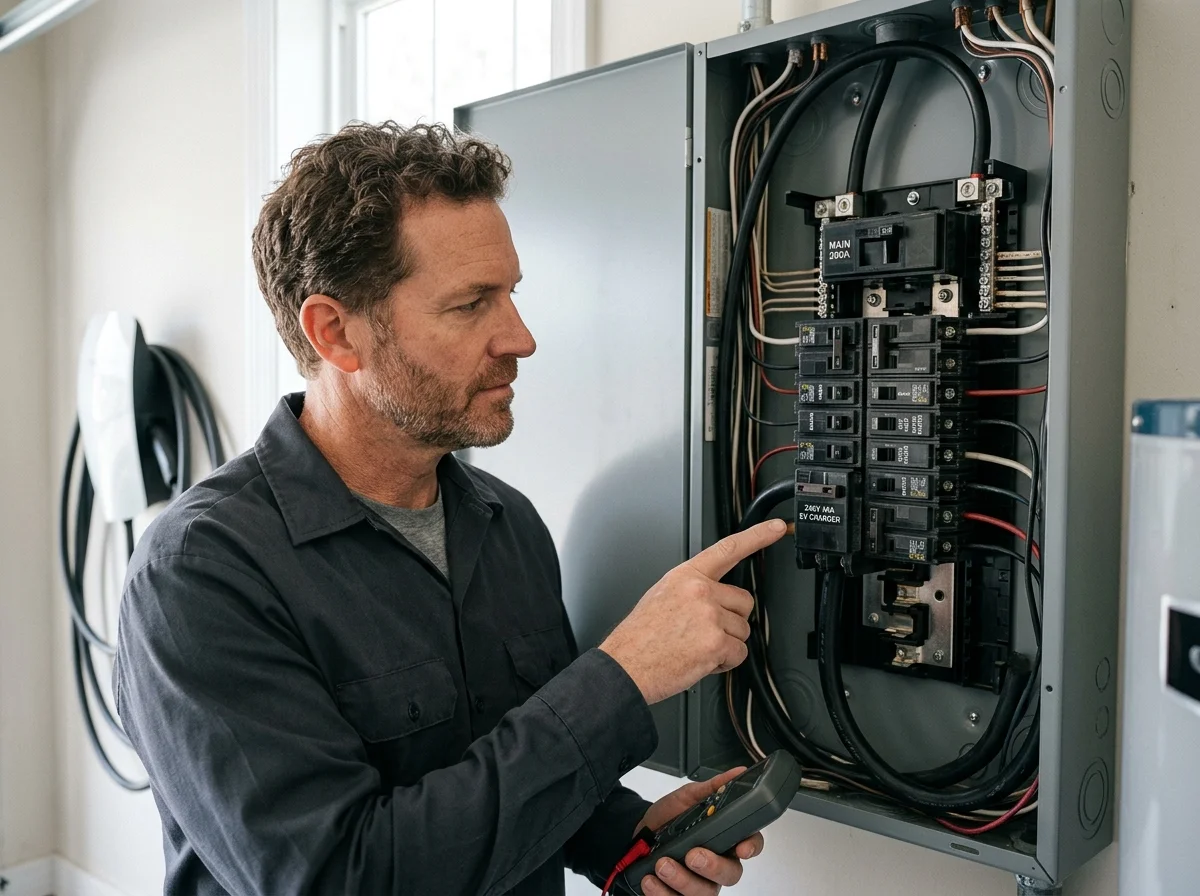
If your current system is running near its limit, an EV charger panel upgrade is required. This process involves installing a new heavy-duty distribution panel and upgrading the main service lines. It ensures your building can handle the heavy continuous draw of fleet charging without tripping main breakers. Taking care of this infrastructure first prevents costly electrical failures and down-time down the road.
Dealing with Local Utility Providers
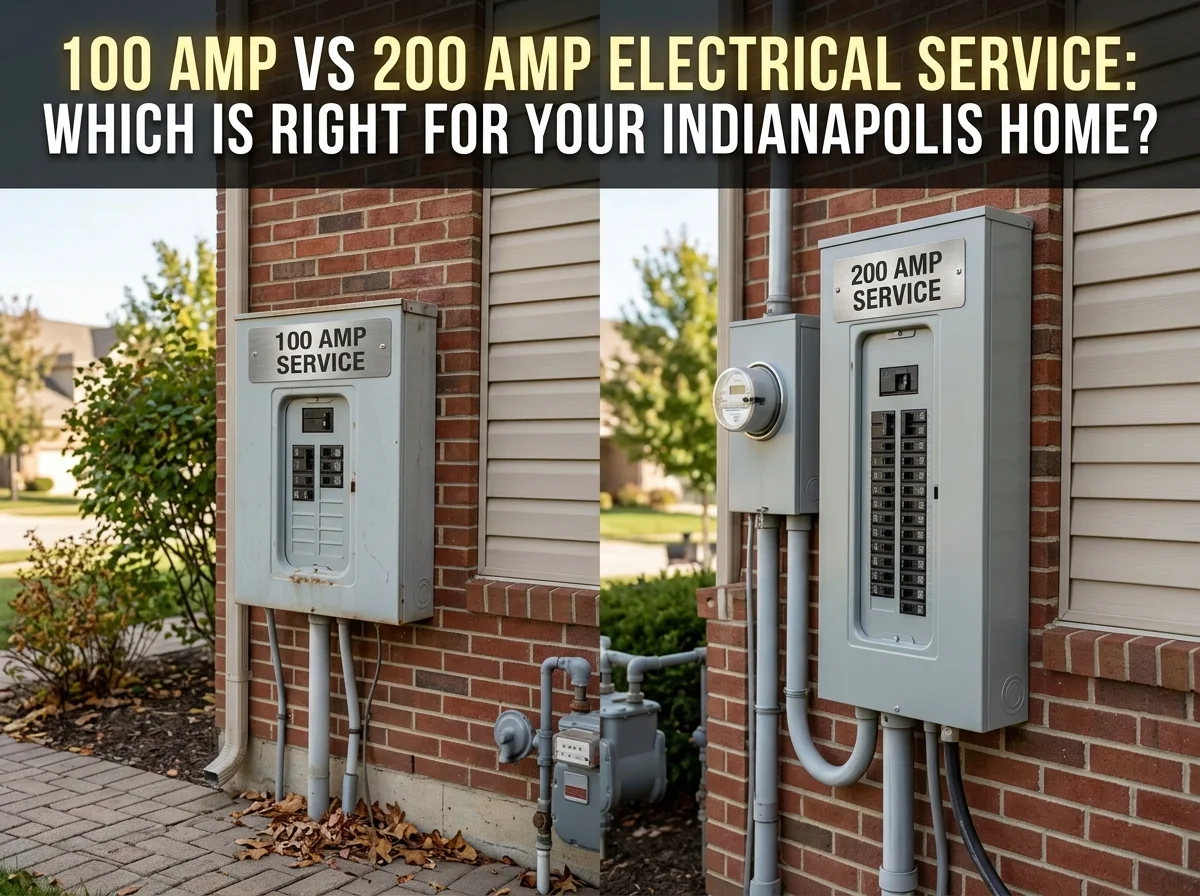
Upgrading your power capacity always requires close coordination with your local power company. In the Indianapolis area, this means working directly with companies like AES Indiana to secure more power. They might need to install a larger transformer on the utility pole outside your property. Getting these approvals can take several weeks, so starting the conversation early keeps your project on track.
Finding Fleet Tech in the Residential Space
Many business owners wonder if residential installation advice applies to a commercial workspace. Reading a basic Home EV Charger Installation Guide can teach you a lot about general safety rules. It covers important concepts like permits, continuous load calculations, and proper wire sizing.
While the core electrical theories remain the same, home guides do not cover commercial scale. A typical home project focuses on mounting a single unit to a garage wall. They do not teach you how to route heavy underground conduit across a massive asphalt parking lot. They also skip complex commercial issues like trenching, concrete bollards, and high-voltage safety switchgear.
Looking closely at residential pricing gives you a good baseline for simple material costs. If you search for the average Home EV charging station installation cost, you will see smaller numbers. Those residential figures usually reflect straightforward labor without major trenching or utility transformer upgrades. Commercial jobs require heavy industrial components that naturally command a higher financial investment.
The process of how to install an EV charger at home is much simpler than a commercial buildout. Homeowners usually have plenty of room in their panel for one extra 50-amp circuit breaker. Commercial fleet operations often require completely new electrical rooms to house the massive distribution gear safely.
Mapping Your Fleet Routing and Charging Schedules
Maximizing your return on investment requires a clear look at your daily vehicle patterns. You need to log exactly when your vans arrive and depart from the facility. This data lets you build an efficient charging schedule that utilizes cheap off-peak power hours.
If your business operates twenty delivery vans that drive one hundred miles a day, your energy needs are predictable. You can distribute the power delivery across a nine-hour overnight window without breaking the bank. This careful scheduling keeps your operating costs incredibly low compared to buying regular gasoline.
Future-Proofing Your Commercial Infrastructure
Always design your charging layout with future business growth in mind. It is much cheaper to lay extra underground conduit right now while the trenches are wide open. Even if you only buy five electric vans today, prepare your electrical system for twenty. This forward-thinking approach saves you from paying double for excavation and concrete work down the road.
Ready to Power Your Indianapolis Fleet?
Upgrading your business to electric vehicles requires a skilled commercial electrical contractor who knows local codes. Rinder Electric is proud to help Indianapolis business owners build safe, highly efficient commercial charging stations. Our expert team handles every step of the process, from initial load calculations to utility coordination and final hardware installation.
We ensure your infrastructure meets your specific route demands while protecting your facility from costly power overloads. Contact Rinder Electric today to get a detailed commercial installation quote for your fleet.
FAQS
What electrical panel upgrades are needed for commercial fleet charging stations?
Most fleet setups require a heavy-duty three-phase commercial panel upgrade to support multiple high-amperage continuous loads safely. We evaluate your current switchgear capacity and add dedicated distribution sections to handle the extra electrical demand without overloading your building.
How long does it take to charge a commercial electric vehicle?
Commercial stations fully replenish delivery vans overnight in about four to eight hours. If you utilize our fast EV charging solutions, you can fill a commercial battery up to eighty percent in twenty to sixty minutes.
Can my business track energy consumption for each specific fleet vehicle?
Modern commercial charging hardware utilizes smart cloud software to monitor exactly how many kilowatt-hours each driver draws. This automated system generates detailed energy reports that help your accounting team track exact fuel costs per vehicle.