The majority of homeowners would like just one number: replace the panel once every 20 years, 30 years, or 40 years. The real answer to how often you need electrical panel replacement in Indianapolis is a bit more complicated. The panel’s age, its condition, its capacity, and how much power is used by your household should also be considered. Indianapolis has residential architecture for almost every decade of the 20th century, and the answers for two houses built in the same year might be quite different. Here’s what actually determines when a panel needs to be replaced, what the work costs locally, and how long it takes.
What Your Electrical Panel Is Actually Doing
Every bit of electricity reaching your lights and devices passes through the panel first. Power comes in from the utility line, and the panel divides it into circuits supplying different parts of the house. Each circuit runs through its own breaker, a small switch that shuts off power automatically if it senses more current than the wire beneath it was built to carry.
That single job, splitting power safely and cutting it off the moment something goes wrong, is why the panel’s condition matters so much. A breaker that stops tripping reliably, or a panel that simply has no room left for new circuits, can’t perform that job the way it was designed to.
How Long a Panel Actually Lasts, and Why Age Isn’t the Whole Story
The average lifespan of a panel is between 25 and 40 years, depending on a variety of factors such as the level of usage, the amount of heat, moisture, and the usage of the circuits themselves. A panel sitting in a damp basement wears differently than one in a lightly loaded house.
Age alone doesn’t settle anything. Older panels that are many decades old continue to function safely and only require periodic testing. Others (such as older versions that have known design flaws) deserve replacement well before 25 years, regardless of their appearance of cleanliness. A panel can also be 40 years old and still run great, but if an electrician doesn’t actually check it and instead relies on the inside date stamped on the door.
The real answer usually comes down to three things together: the age of the panel, its state, and the power your household really requires.
The Warning Signs a Panel Is Reaching the End of Its Life
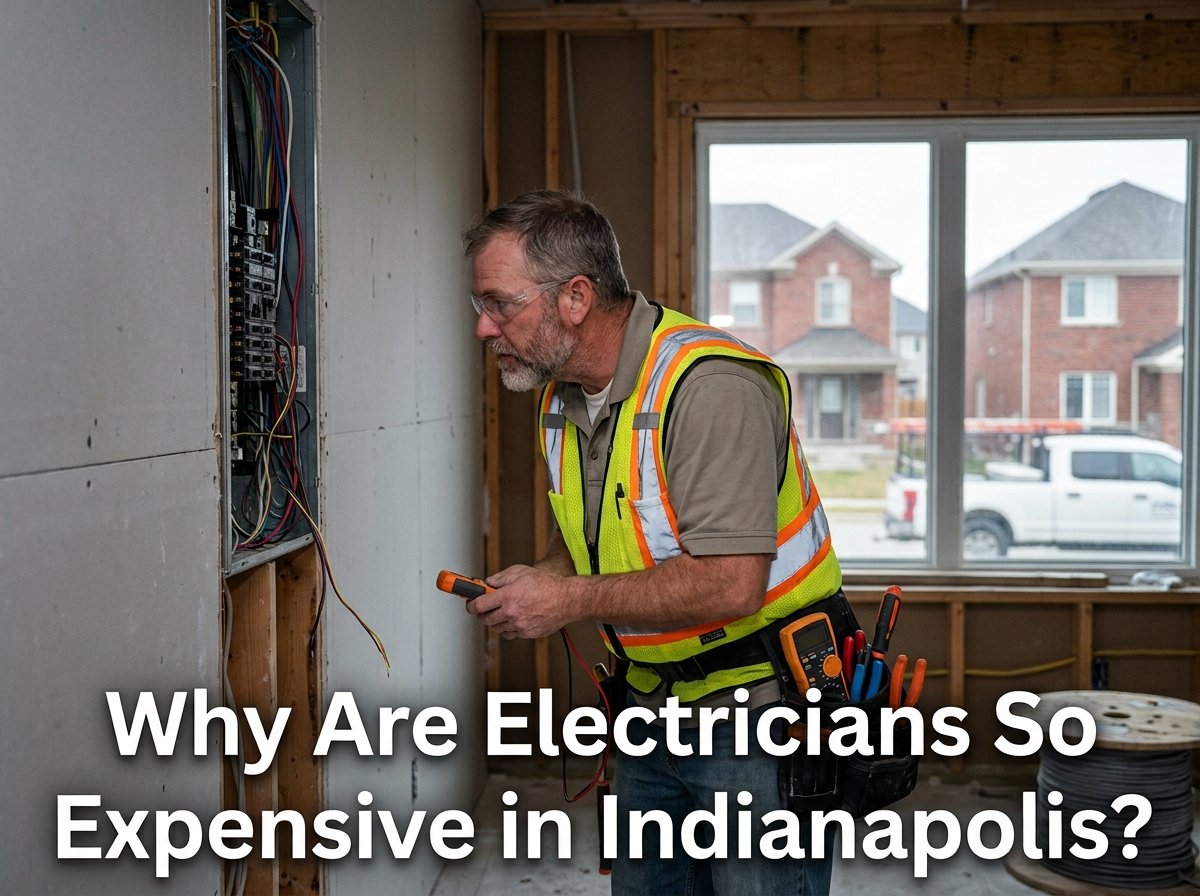
A panel rarely fails without some kind of notice first. The tricky part is that no single sign proves exactly what’s wrong. A licensed electrician who opens the panel and checks its wiring and connections is the only reliable way to know whether the fix is a repair, a breaker swap, or a full replacement. If the problem extends beyond the panel, electrical repairs may also be needed.
Signs You Can Notice Without Opening the Panel
- A burning smell near the panel or breaker box
- Scorch marks, discoloration, or melted plastic around switches or the panel itself
- Rust or corrosion on the panel enclosure
- Buzzing or humming sounds coming from inside
Signs That Show Up Around the House
- Breakers that trip multiple times, even under routine use
- Lights that flicker or dim whenever a larger appliance kicks on
- Outlets or switch plates that feel warm to the touch
Signs Tied to the Panel Itself
- A fuse box instead of modern circuit breakers
- Certain older panel brands from the 1960s through 1980s with a well-documented history of breakers failing to trip when they should
- No room left for additional breakers when the household needs new circuits
None of these guarantees a full panel replacement by itself. But several appearing together, or anything involving heat or a burning smell, deserves a call to an electrician within the week rather than a wait-and-see approach.
Panel Replacement vs. Electrical Service Upgrade: Knowing the Difference
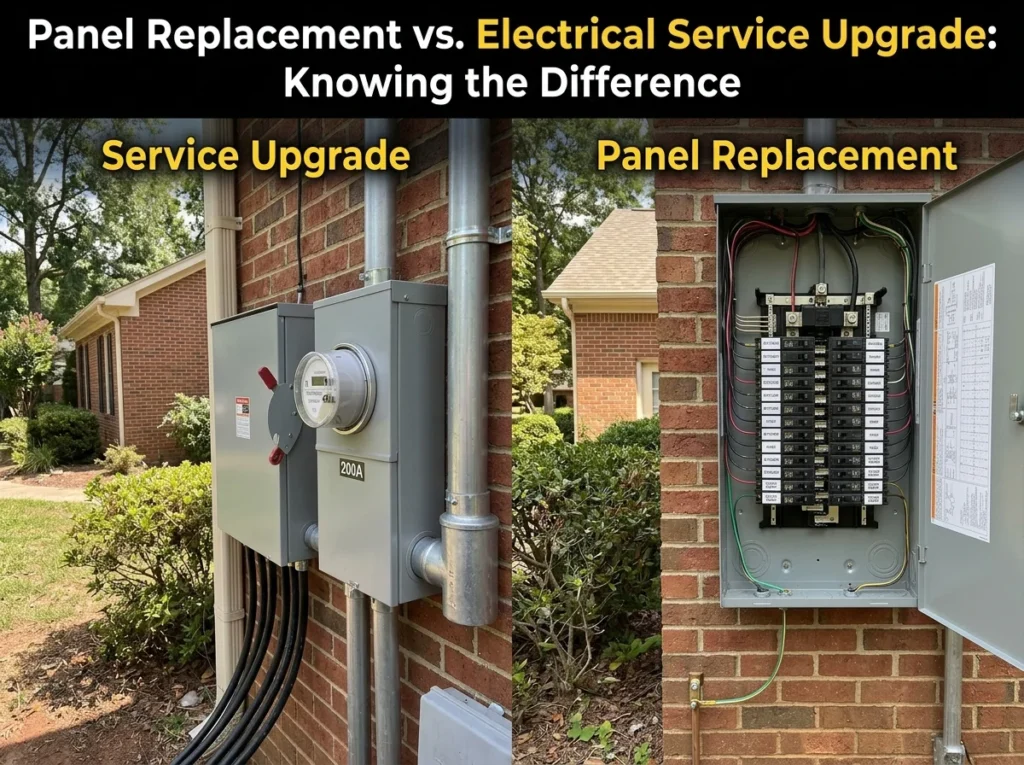
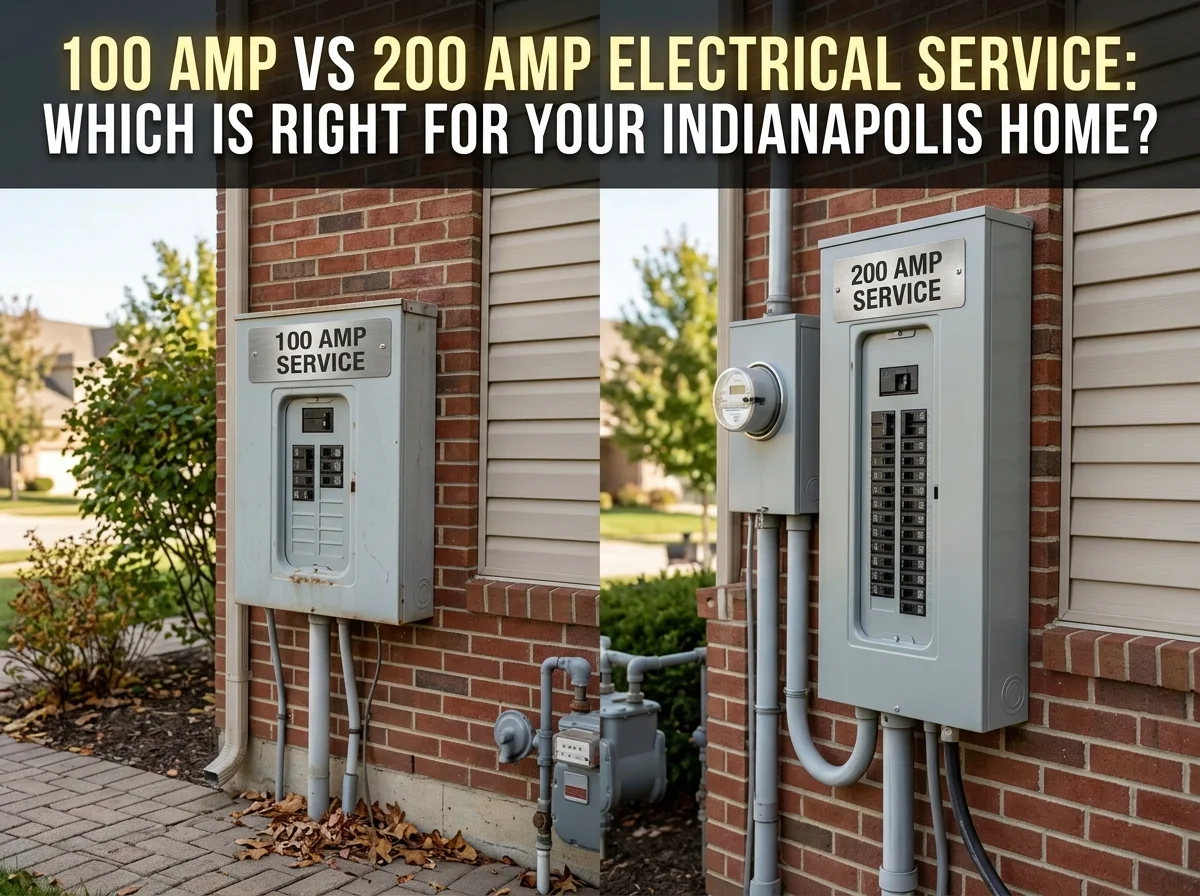
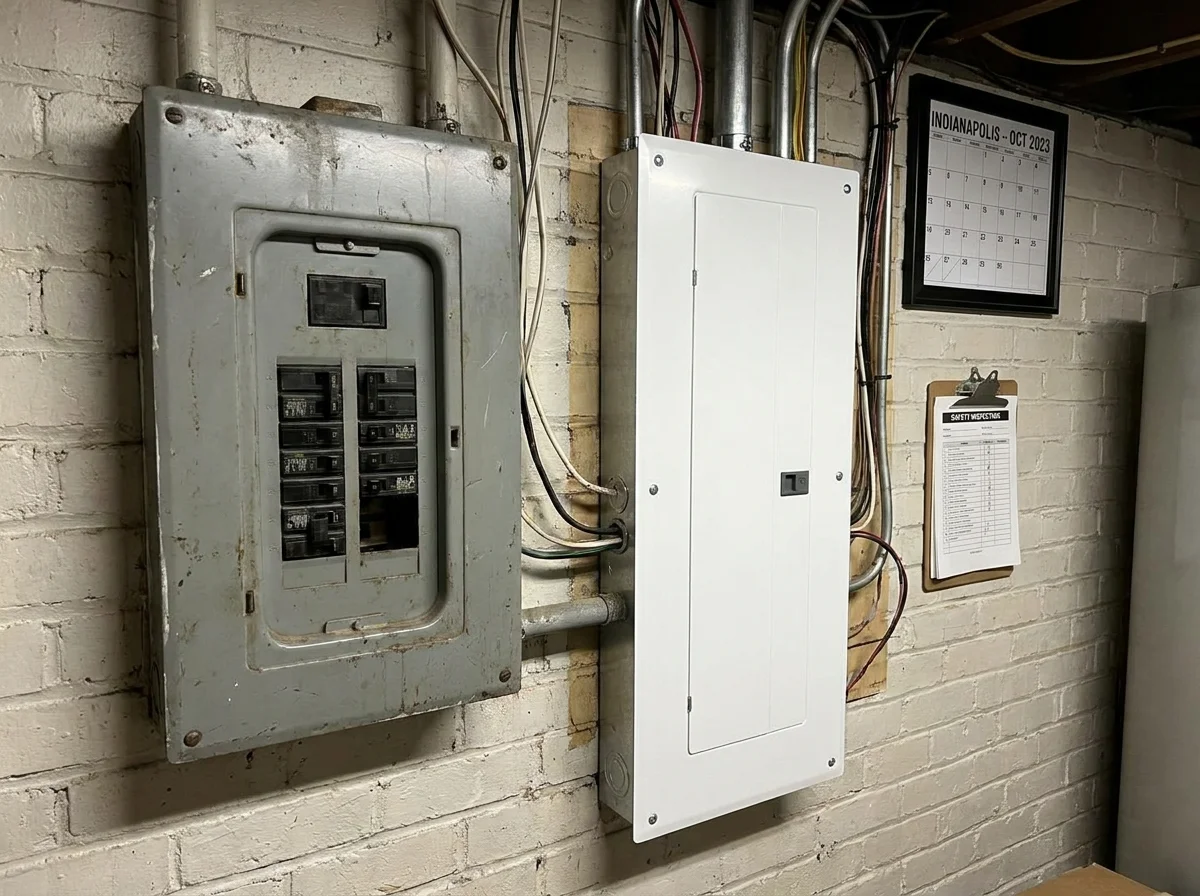
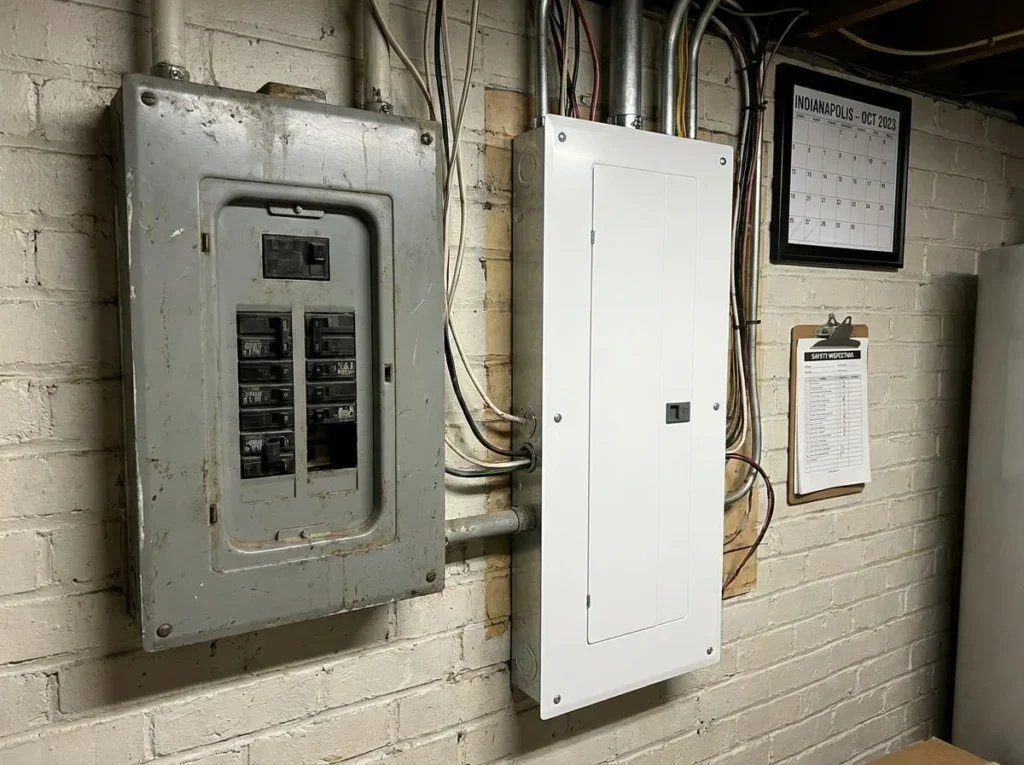
These two terms get used interchangeably, but they describe different jobs. A panel replacement swaps an aging or unsafe panel for a new one at the same amperage, with the incoming wiring left untouched. A service upgrade is bigger A service upgrade is bigger and may be part of a larger electrical panel upgrade when the home’s existing capacity cannot support its current or planned electrical demand. It increases how much total power can enter the home at all, usually through a new meter base, heavier service wiring, and a higher capacity panel. Homes that are installing an EV charger, a heat pump, or a significant addition typically require this rather than a simple replacement.
| Situation | What It’s Called | What Changes |
| The panel is old, damaged, or a known problem model, but the amperage still fits the home | Panel Replacement | New panel box, same amperage, existing service wiring stays |
| Home needs more total power for an EV charger, addition, or new HVAC equipment | Service Upgrade | New panel at higher amperage, usually a new meter base and heavier service wiring |
| The panel is both unsafe and undersized | Combined Job | Replacement and upgrade happen at the same time |
A short inspection and a basic load calculation, essentially adding up what the home draws at once, tells an electrician which category actually applies.
Why Older Indianapolis Homes Are Outgrowing Their Panels
A lot of houses were constructed in Indianapolis with a 60- or 100-amp panel. At the time, a house had a furnace, a refrigerator, and a few lights and outlets—nothing like what a modern household demands of its wiring.
It might be the same panel now tasked with handling central AC, home office equipment, an electric range, and maybe even an EV charger. This isn’t to say the original panel wasn’t well crafted. It indicates that the home’s electrical demands have exceeded the panel’s design capacity, and this is often the actual reason a panel needs to be serviced. Before adding a major appliance, it’s worth checking whether the existing panel can actually support it.
What Electrical Panel Replacement Costs in Indianapolis
Pricing depends heavily on the type of project. A straightforward swap costs less than a full service upgrade, and adding new circuits or an EV charger changes the number further. The ranges below reflect typical 2026 Indianapolis-area pricing, though an accurate number always comes from an in-person look at the panel and a load calculation, not a table.
| Project Type | Typical Indianapolis Range |
| Panel replacement, same amperage | $1,200 to $2,800 |
| Panel replacement with an amperage increase (for example, 100A to 200A) | $2,500 to $4,000 |
| Full service upgrade, including new meter base and service wiring | $3,500 to $5,500 or more |
| Panel replacement combined with a new EV charger circuit | $3,000 to $5,500 or more |
A few factors move a project up or down within these ranges:
- Existing capacity: A bigger amperage jump costs more than a like-for-like swap.
- Service entrance condition: Work on the meter base or main service wiring adds to the price.
- Wiring age: Older wiring sometimes needs correction to meet current code first.
- Panel location: An open utility room is quicker to access than a spot behind finished walls or in a tight crawlspace.
- Permits and added circuits: Required fees, inspections, and any new circuits installed at the same time add to the total.
How Long Panel Replacement Actually Takes
A standard replacement, swapping an old panel for a new one at the same amperage, is usually a same-day job. Power is off for part of the day, not the whole thing, while the old panel comes out and the new one goes in.
A full service upgrade takes longer, partly because it may need the utility company to schedule a disconnect and reconnect, which sits outside the electrician’s control. Older wiring needing correction, or a hard-to-reach panel, can also stretch the timeline past a single day.
When It’s Worth Scheduling a Panel Inspection
Not every reason to check a panel involves a visible problem. A few situations are worth a proactive look even when nothing seems wrong yet.
- Buying an older home where the panel’s history and past repairs aren’t documented
- Planning to add an EV charger, hot tub, or other large appliance
- Finishing a basement or adding a room that will need new circuits
- Noticing small, inconsistent electrical quirks that haven’t turned into a clear pattern yet
- Simply not knowing the panel’s current amperage or approximate age
Getting ahead of a problem is usually cheaper and far less disruptive than dealing with one after it shows up.
Frequently Asked Questions
Does replacing an electrical panel require a permit in Indianapolis?
Yes. Electrical work in Indianapolis-Marion County, including panel replacement, requires a permit, typically pulled by the licensed electrician doing the work.
Can a homeowner replace their own electrical panel?
Legally, an Indianapolis homeowner can pull a permit for their primary residence with a Statement of Intent. However, doing so is highly unsafe for a main panel: incoming wires from the utility remain energized even after flipping the main breaker off, and improper installation creates severe shock and fire risks.
Does an old panel always need to be replaced?
No. Age is one factor among several. A panel can be decades old and still pass inspection, while a newer one with a known design flaw might need replacing sooner.
Should a panel be upgraded before installing an EV charger?
Often yes, if the panel has no spare capacity for the added circuit. Checking this before scheduling the charger avoids finding out mid-installation that the panel can’t support it.
Getting a Straight Answer About Your Panel
A panel’s age is a starting point, not a verdict. The real answer depends on its condition, its capacity, and what your home actually needs.
Rinder Electric handles panel replacements and service upgrades across the Indianapolis area, working directly with homeowners to determine which option actually fits their situation.
If your panel is showing warning signs or simply feels due for a second opinion, call Rinder Electric in Indianapolis at (317) 701-1713 or book an appointment to have your electrical panel inspected and determine the right solution for your home.