Buying an electric vehicle is exciting, but charging it safely at home is just as important. When you install EV charger equipment, the quality of the installation affects safety, performance, and long-term reliability. A Professional EV charger installation service completed by a licensed expert protects your home, keeps your warranty valid, and ensures your charger works as expected every day.
Why Should You Hire a Professional EV Charger Installation Service?
A home EV charger uses much more power than most household outlets. That means the electrical system must handle the extra load safely. A trained electrician checks your electrical panel, wiring, and available capacity before starting the job.
Professional installation also reduces the chance of electrical faults. The charger is connected correctly, tested, and verified before use. You can charge your vehicle with confidence knowing the system meets local electrical codes.
Many homeowners think a charger is simply mounted on the wall. In reality, each home has different electrical needs. A professional evaluates your property and recommends the safest installation method.
What Does a Certified Electrician Check Before Installation?
Every installation starts with a detailed inspection. This helps prevent future problems and ensures the charger performs well.
A certified electrician for EV charger installation typically checks:
- Electrical panel capacity
- Available circuit space
- Existing wiring condition
- Grounding and bonding
- Breaker size
- Charger location
- Cable routing
- Local electrical code requirements
This inspection helps avoid unexpected costs later.
How Does Professional Installation Improve Safety?
Safety should always come first. EV chargers operate for several hours at a time and carry high electrical loads. Poor installation may cause overheating, breaker trips, or damaged wiring.
Professional electricians follow strict installation standards. They use approved materials, install dedicated circuits when required, and verify that every connection is secure.
Once the installation is complete, the charger undergoes testing to confirm proper voltage, current flow, and protective functions. This process helps prevent electrical hazards and protects both your vehicle and your home.
What Happens During Home EV Charger Installation?
A typical home EV charger installation follows a clear process. Each step is designed to create a safe and reliable charging system.
Initial Home Assessment
The electrician visits your property to inspect your electrical system. They discuss your charging needs and identify the best installation location.
Electrical Panel Evaluation
Your service panel is checked to confirm it can support the charger. If necessary, recommendations are made for upgrades before installation begins.
Charger Mounting
The charging unit is securely mounted on a wall or pedestal. The location allows convenient access while protecting the equipment from damage.
Wiring and Circuit Installation
Dedicated wiring is installed between the electrical panel and charger. Proper breaker protection is added to meet electrical safety standards.
System Testing
After installation, the electrician tests the charger to verify safe operation. Charging speed, voltage, and electrical protection are all checked before the project is complete.
Why Is Electrical Code Compliance So Important?
Electrical codes exist to protect homeowners. They ensure electrical systems operate safely under normal and heavy loads.
Professional electricians understand local building regulations. They know which permits are required and how inspections work. This prevents expensive corrections later.
A properly permitted installation may also help during home sales, insurance claims, and warranty service. It demonstrates that the work was completed correctly and safely.
Which EV Charger Is Best for Home?
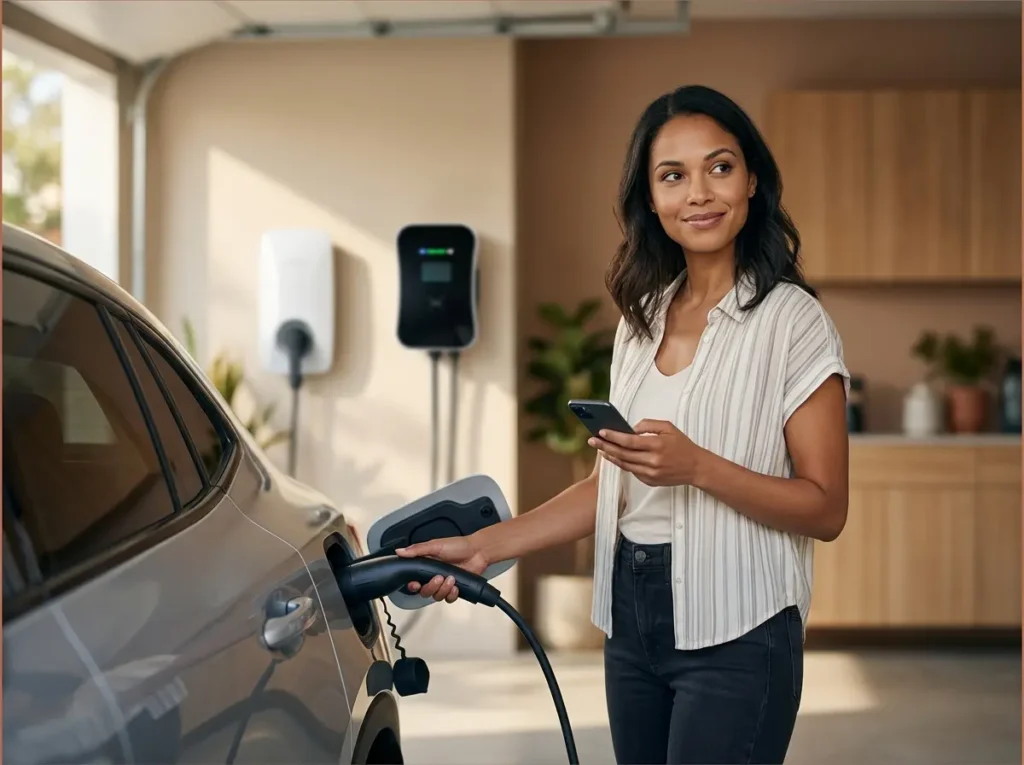
Many homeowners ask about the best EV charger for home use. The answer depends on your vehicle, driving habits, and electrical capacity.
Several features should be considered before choosing a charger:
- Charging speed
- Smart Wi-Fi features
- Weather resistance
- Cable length
- Power output
- Safety certifications
- Warranty coverage
A certified electrician can recommend equipment that matches both your vehicle and your home’s electrical system.
Should You Choose Level 1 or Level 2 Charging?
Level 1 charging uses a standard household outlet. It works well for drivers with short daily commutes but charges slowly.
Level 2 charging requires professional installation. It delivers much faster charging and is the preferred choice for most homeowners. Overnight charging becomes practical, making daily driving more convenient.
Common Mistakes Homeowners Make When They Install EV Charger Equipment
Trying to save money with a DIY installation often creates bigger problems later. Electrical mistakes may not appear immediately but can become dangerous over time.
Common installation mistakes include:
- Using the wrong breaker size
- Installing undersized wiring
- Overloading the electrical panel
- Poor grounding
- Incorrect charger placement
- Ignoring local permits
- Skipping safety testing
Professional installation helps avoid these issues and protects your investment.
How Long Does Electric Vehicle Charger Installation Take?
Most electric vehicle charger installation projects are completed within a few hours. However, the timeline depends on the home’s electrical system.
Factors that affect installation include:
- Distance from electrical panel
- Panel upgrades
- Wall construction
- Permit requirements
- Charger model
- Wiring complexity
If the electrical panel requires upgrading, the project may take additional time.
What Is Included in EV Home Charging Setup?
A complete EV home charging setup includes much more than simply mounting the charger.
Most professional installations include:
- Electrical inspection
- Load calculation
- Dedicated circuit installation
- Charger mounting
- Wiring
- Breaker installation
- System testing
- Safety verification
- User demonstration
This complete approach helps ensure years of dependable charging.
How Can You Keep Your Charger Working Properly?
Like any electrical equipment, chargers benefit from routine care. Good EV charger maintenance helps extend equipment life and improve reliability.
Simple maintenance includes checking the charging cable for damage, keeping the unit clean, inspecting mounting hardware, and ensuring ventilation remains clear.
If you notice overheating, unusual noises, slow charging, or repeated breaker trips, contact a qualified electrician immediately. Small problems are often easier and less expensive to fix before they become serious.
Signs Your Charger Needs Professional Service
Watch for these warning signs:
- Charger stops unexpectedly
- Breaker trips repeatedly
- Burn marks around the outlet
- Loose charging connector
- Error lights remain on
- Charging becomes unusually slow
Ignoring these symptoms can lead to larger electrical issues.
Is Professional Installation Worth the Investment?
Although professional installation costs more than attempting a DIY project, it provides long-term value. Proper installation reduces repair costs, protects expensive vehicles, and lowers the risk of electrical damage.
A professionally installed charger also offers better performance and peace of mind. You know the system has been inspected, tested, and installed according to current safety standards.
For most homeowners, that confidence is well worth the investment.
FAQ
Is it safe to install an EV charger without an electrician?
Most Level 2 chargers require a dedicated circuit and high-voltage electrical work. Installing one without proper training increases the risk of electrical hazards and code violations. Hiring a certified electrician ensures safe installation and reliable performance.
How much time does professional EV charger installation take?
Most installations take between two and six hours. The exact time depends on the distance from the electrical panel, wiring requirements, and whether any electrical upgrades are needed before the charger can be installed safely.
Do I need a panel upgrade before installing an EV charger?
Not always. A professional electrician will inspect your home’s electrical panel first. If there is enough available capacity, no upgrade may be needed. Older homes sometimes require panel improvements to safely support EV charging.
What maintenance does an EV charger need?
Routine EV charger maintenance includes checking cables for wear, keeping the charger clean, inspecting mounting hardware, and watching for warning lights or charging problems. Regular inspections help prevent unexpected failures and extend the life of the equipment.
Can any electrician install an EV charger?
While many licensed electricians can perform the work, choosing a certified electrician for EV charger installation provides added confidence. They understand manufacturer requirements, electrical codes, load calculations, and best practices for safe, efficient installation.