Businesses often need electrical work to keep operations running safely and efficiently. Understanding the commercial electrician charge Indianapolis businesses typically pay can help with budgeting and planning. Costs vary based on the type of work, the size of the property, and the complexity of the electrical system. Whether you need routine maintenance, repairs, or a full electrical upgrade, knowing what affects pricing can help you make informed decisions before hiring a contractor.
What Is the Average Commercial Electrician Charge in Indianapolis?
The average commercial electrician charge Indianapolis businesses encounter depends on the service provided. Small electrical repairs may cost a few hundred dollars, while larger projects can reach several thousand dollars. Most commercial electricians charge either an hourly rate or a project-based fee.
Commercial electrical work often requires specialized skills and equipment. Because of this, costs are usually higher than residential electrical services. Businesses should also consider permit fees, materials, and inspection requirements when estimating total project costs.
Typical commercial electrical services include:
- Electrical troubleshooting
- Lighting installation
- Panel upgrades
- Circuit additions
- Emergency repairs
- Warehouse electrical work
- Office electrical system maintenance
Why Are Commercial Electrical Services More Expensive?
Commercial electrical systems are larger and more complex than residential systems. They handle greater electrical loads and must meet strict safety standards. This increases labor requirements and project complexity.
A Certified commercial electrician Indianapolis professional must understand local building codes and commercial electrical regulations. Many projects also require permits and inspections, which can increase overall costs.
Businesses often need electrical work completed without disrupting operations. This may require after-hours service or expedited scheduling, which can affect pricing as well.
What Factors Affect Commercial Electrician Costs?
Several factors influence the final price of commercial electrical services. Understanding these variables can help business owners prepare realistic budgets.
Property Size and Electrical System Complexity
Larger buildings require more wiring, circuits, and equipment. A small office may need only minor repairs, while a large warehouse may require extensive electrical infrastructure.
Complex electrical systems take longer to inspect and repair. Additional labor hours usually increase overall project costs.
Type of Electrical Service Needed
Different services come with different pricing structures. Simple repairs are generally less expensive than system upgrades or new installations.
Examples include:
- Outlet replacement
- Lighting repairs
- Panel upgrades
- Electrical rewiring
- Generator connections
- Equipment wiring
Projects involving specialized commercial equipment often require additional expertise and labor.
Emergency Service Requirements
Electrical emergencies can occur at any time. Businesses facing power outages or electrical hazards may need immediate assistance.
Emergency service calls usually cost more than scheduled appointments. Nights, weekends, and holidays often carry premium rates due to urgent response requirements.
Permits and Inspections
Many commercial electrical projects require permits. Local authorities may also require inspections before work can be completed.
Permit costs vary based on project scope. These fees should be included when estimating the total project budget.
How Much Do Office Electrical Repair Costs Typically Run?
Understanding office electrical repair costs is important for businesses that rely on consistent power and technology systems. Offices often require repairs related to lighting, outlets, circuits, and electrical panels.
Small repairs may cost between a few hundred and several hundred dollars. More extensive repairs involving wiring or panel upgrades can cost significantly more depending on the building’s size.
Common office electrical repairs include:
- Faulty outlets
- Circuit breaker issues
- Lighting replacement
- Network equipment power connections
- Conference room electrical upgrades
- Surge protection installation
Office environments often require work to be completed outside business hours. This can increase labor costs but helps minimize disruptions.
Lighting System Repairs in Office Buildings
Lighting plays an important role in employee productivity and workplace safety. Faulty fixtures can increase energy consumption and create operational issues.
Repair costs depend on the number of fixtures, ceiling height, and fixture type. LED lighting upgrades may require a higher initial investment but often reduce long-term energy expenses.
Electrical Panel Repairs and Upgrades
Older office buildings may struggle to meet modern power demands. Electrical panel upgrades are often necessary when businesses add equipment or expand operations.
Panel work typically requires licensed professionals and permit approvals. Costs depend on panel capacity, installation requirements, and code compliance needs.
What Is Included in Warehouse Electrical Service Pricing?
Warehouse electrical service pricing varies based on building size, electrical load requirements, and operational needs. Warehouses often contain heavy equipment, storage systems, and specialized lighting.
These facilities generally require more extensive electrical systems than standard office spaces. As a result, project costs can be higher.
Common warehouse electrical services include:
- High-bay lighting installation
- Equipment wiring
- Electrical troubleshooting
- Panel upgrades
- Circuit installation
- Energy-efficient lighting retrofits
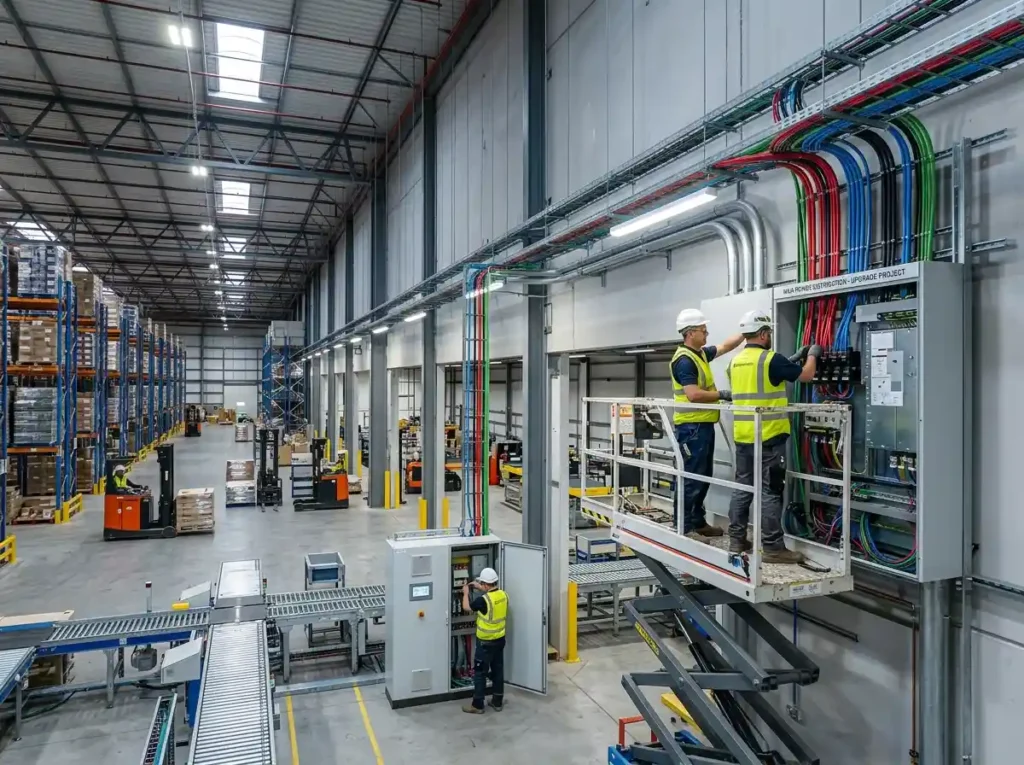
Many warehouse projects involve elevated work areas, which can increase labor requirements and equipment costs.
Electrical Upgrades for Growing Warehouses
As warehouse operations expand, electrical systems often need upgrades. New machinery, automation systems, and charging stations can increase power demands.
Electrical upgrades may include:
- Additional circuits
- Service panel expansion
- Transformer installation
- Equipment connections
- Distribution system improvements
The larger the electrical demand, the higher the project cost is likely to be.
Energy-Efficient Warehouse Lighting Solutions
Many warehouse owners invest in energy-efficient lighting systems to reduce utility expenses. LED lighting upgrades can lower energy consumption while improving visibility.
Installation costs depend on fixture quantity and facility size. However, many businesses recover these costs through long-term energy savings.
Why Hire a Certified Commercial Electrician in Indianapolis?
Working with a Certified commercial electrician Indianapolis professional offers several advantages. Commercial electrical systems require specialized knowledge that goes beyond residential experience.
Certified electricians understand:
- Commercial building codes
- Safety regulations
- Electrical load calculations
- Equipment installation requirements
- Inspection standards
Hiring qualified professionals helps reduce safety risks and minimizes the chance of costly mistakes.
Code Compliance and Safety Benefits
Commercial properties must meet local and national electrical codes. Failure to comply can lead to fines, failed inspections, and safety concerns.
Certified electricians stay current with changing regulations. They can identify potential issues before they become expensive problems.
Long-Term Cost Savings
While hiring experienced professionals may cost more upfront, it often reduces future repair expenses. Proper installation and maintenance help extend the life of electrical systems.
Businesses that invest in quality workmanship often experience fewer unexpected electrical failures.
How Are Commercial Electrical Projects Priced?
Commercial electrical projects are generally priced using one of two methods. Understanding these pricing models helps businesses compare estimates more effectively.
Hourly Pricing
Many electricians charge hourly rates for troubleshooting, repairs, and maintenance work. The final cost depends on the number of labor hours required.
Hourly pricing is common for:
- Diagnostics
- Minor repairs
- Emergency services
- Maintenance tasks
Complex issues can require additional time, increasing total costs.
Project-Based Pricing
Larger commercial jobs often use fixed project pricing. Contractors evaluate labor, materials, permits, and equipment before providing an estimate.
Project pricing is common for:
- Building rewiring
- Electrical upgrades
- Lighting retrofits
- New construction work
- Warehouse electrical installations
This approach provides cost predictability for business owners.
How Can Businesses Reduce Commercial Electrical Costs?
Managing electrical expenses starts with proactive planning. Businesses can often reduce costs by addressing issues before they become major repairs.
Preventive maintenance is one of the most effective strategies. Regular inspections help identify problems early and improve system reliability.
Additional cost-saving strategies include:
- Scheduling routine inspections
- Upgrading to LED lighting
- Replacing outdated electrical equipment
- Addressing minor issues promptly
- Investing in energy-efficient systems
These improvements can lower operating expenses while reducing emergency repair needs.
When Should You Schedule a Commercial Electrical Inspection?
Routine inspections help businesses maintain safe and reliable electrical systems. Many property owners wait until problems occur, but preventive inspections often save money over time.
Signs that an inspection may be needed include:
- Frequent breaker trips
- Flickering lights
- Burning odors
- Outdated electrical panels
- Equipment power issues
- Rising energy bills
Regular inspections can uncover hidden problems before they cause downtime or safety hazards.
What Questions Should You Ask Before Hiring a Commercial Electrician?
Choosing the right contractor is an important decision. Asking the right questions can help you compare providers and avoid unexpected costs.
Consider asking:
- Are you licensed and insured?
- Do you have commercial project experience?
- Can you provide references?
- Will permits be required?
- What is included in the estimate?
- Do you offer emergency services?
Clear communication helps ensure the project stays on budget and meets expectations.
FAQ
How much does a commercial electrician charge in Indianapolis?
The typical commercial electrician charge Indianapolis businesses pay depends on the service required. Minor repairs may cost a few hundred dollars, while larger upgrades can reach several thousand dollars. Factors such as labor, materials, permits, and project complexity all influence the final price. Obtaining multiple estimates can help businesses compare costs and services before making a hiring decision.
Why are office electrical repair costs different from residential repairs?
Office electrical repair costs are often higher because commercial systems are larger and more complex. Offices may have dedicated circuits, networking equipment, advanced lighting systems, and higher power demands. Commercial electrical work must also comply with stricter building codes and safety regulations. These factors typically increase labor requirements and project costs compared to residential electrical services.
What affects warehouse electrical service pricing?
Several factors influence warehouse electrical service pricing, including building size, equipment requirements, electrical load demands, and lighting systems. Warehouses often require specialized wiring and high-capacity electrical infrastructure. Additional costs may include panel upgrades, equipment connections, permits, and safety inspections. Larger facilities generally require more labor and materials, increasing overall project expenses.
Should businesses hire a certified commercial electrician?
Yes. A Certified commercial electrician Indianapolis professional has the training and experience needed to handle commercial electrical systems safely. Certified electricians understand local codes, permitting requirements, and commercial equipment installation standards. Their expertise helps reduce safety risks, avoid costly mistakes, and ensure projects pass inspections without unnecessary delays.
How often should commercial electrical systems be inspected?
Most businesses benefit from periodic electrical inspections, especially older properties or facilities with heavy equipment usage. Regular inspections help identify worn components, overloaded circuits, and potential safety concerns before they become major issues. The ideal inspection schedule depends on the property’s age, industry requirements, and electrical demand levels. Preventive inspections often reduce long-term maintenance costs.
Can energy-efficient upgrades lower electrical expenses?
Yes. Energy-efficient upgrades can significantly reduce operating costs over time. LED lighting, updated electrical equipment, and modern control systems often consume less electricity while improving performance. Although installation costs may require an upfront investment, many businesses recover those expenses through lower utility bills, reduced maintenance needs, and improved system efficiency.